Care
Steamer Not Producing Steam
Six causes, in the order they are actually likely. Most steamers declared dead are not.
By Scooter M., enthusiast, crease control · Published
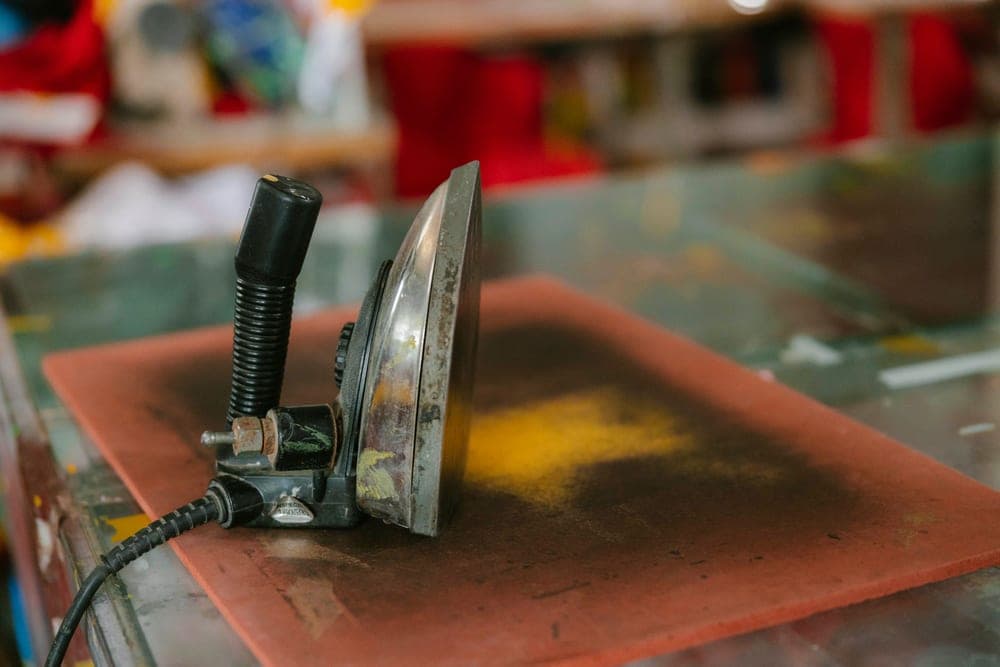
Check in this order: not fully heated, an air lock after a refill, the tank not seated, scale blocking the outlet, a tripped thermal cut-out, and only then a failed element. The first three cost nothing and account for most cases. Scale accounts for most of the rest, and it is fixable.
We earn a commission if you buy through the links on this page, at no extra cost to you. It does not change which steamer we rank first — the ranking comes from published specifications and the arithmetic on our method page. We have not tested these units. Full disclosure.
1. It has not finished heating
Published heat-up times on this site range from 10 seconds to 3 minutes. A machine that takes two minutes and is being judged after thirty seconds is working correctly. Check the figure for your model before anything else.
2. An air lock after a refill
Air trapped in the feed path stops water reaching the element. It is common immediately after a refill and it is the reason a machine that worked five minutes ago suddenly does not.
Fix: with the machine off and cool, tip it gently head-down and back a few times, reseat the tank, then heat it again. Several short trigger pulls often clear it faster than one long one.
3. The tank is not seated
Removable tanks have to click home; many machines will heat happily with the tank slightly proud and simply never draw water. Take it off and reseat it firmly.
4. Scale in the outlet
The most common genuine cause, and the one that looks most like a dead machine. If output faded gradually rather than stopping suddenly, this is almost certainly it.
Fix: descale it. Do this before spending anything — a heavily scaled steamer often comes back completely.
5. A tripped thermal cut-out
Most steamers have a thermal fuse or cut-out that interrupts the element if it runs dry or overheats. Some reset when the machine cools; some are one-time devices.
Fix: unplug it, let it cool completely for an hour, refill and try again. If it comes back, avoid running it dry — that is what tripped it.
6. A failed element or pump
Last on the list because it is genuinely uncommon. Suspect it when the machine draws power, gets warm, and produces nothing after descaling and a full cool-down. At that point it is a warranty claim if it has one.
When replacement is actually the answer
If the machine is out of warranty, descaling did not help, and it has already been repaired once, replacement is reasonable. If you are replacing it because you were forever refilling it, replace it with a standing unit rather than another handheld — that is a capacity problem, not a reliability one.
If it really is time to replace it
Ranked on published specifications. Tap a row for the full write-up; the price button goes to Amazon.
| # | Product | Best for | Spec score | Price |
|---|---|---|---|---|
| 1 | 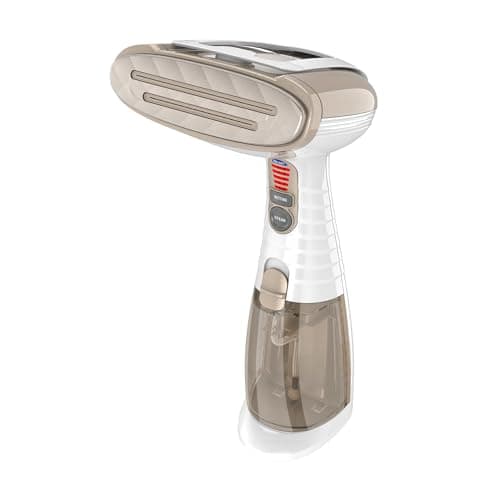 Conair Turbo ExtremeSteam GS59The most-bought handheld in the category, and its published specs explain that rather than contradict it. Conair Turbo ExtremeSteam GS59The most-bought handheld in the category, and its published specs explain that rather than contradict it. | The default handheld | 6.5/10 | |
| 2 | 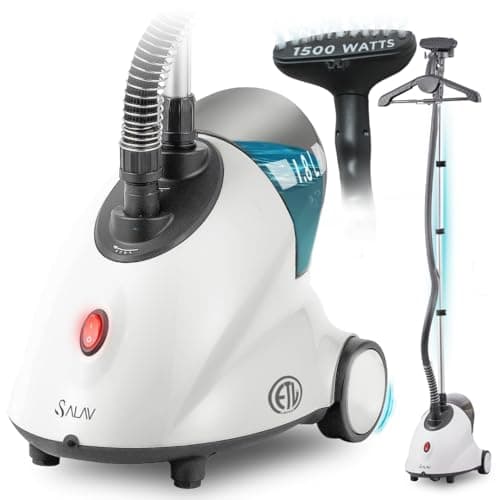 SALAV GS18 Full-Size Steamer1.8 liters on a 65-inch pole — the point where steaming stops being a chore. SALAV GS18 Full-Size Steamer1.8 liters on a 65-inch pole — the point where steaming stops being a chore. | A whole wardrobe at once | 4.4/10 |
Questions people actually ask
+Why is my steamer not producing steam?
Check in order: it has not finished heating, an air lock after a refill, the tank not seated properly, scale blocking the outlet, a tripped thermal cut-out, and only then a failed element. The first three cost nothing to fix.
+How do you fix an air lock in a garment steamer?
With the machine off and cool, tip it gently head-down and back a few times, reseat the tank, then heat it again. Several short trigger pulls usually clear it faster than one long one.
+Can a garment steamer be repaired?
Most domestic units are not economic to repair, which is why descaling is worth trying first — it fixes the most common genuine cause for the price of a bottle of vinegar. Commercial machines like the Jiffy are built to be serviced.