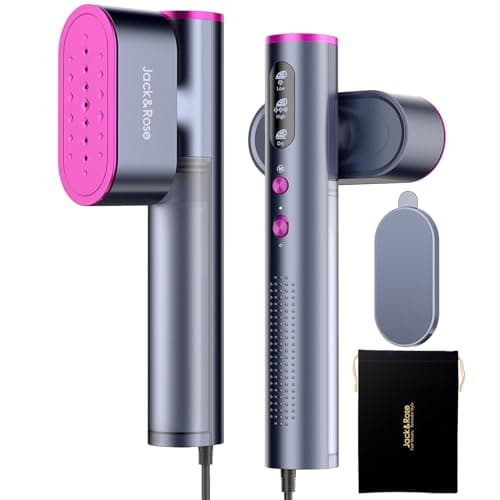
One specification decides this category, and most compact steamers quietly fail it.
By Scooter M., enthusiast, crease control · Published
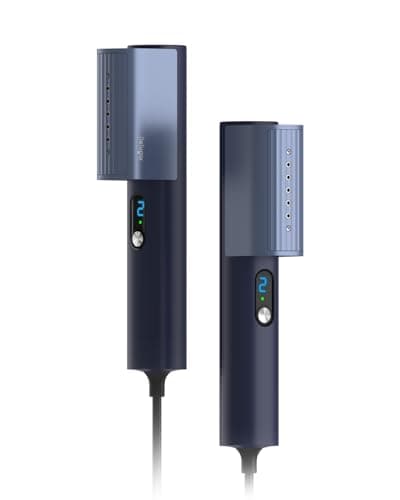
Check the published voltage before anything else. A steamer rated 120V only plugged into a European or Asian 230V socket through a plug adapter is a fire, not an inconvenience — an adapter changes the pin shape and nothing else. The Jack & Rose K1 publishes genuine 100-240V with a 15-second heat-up at 1.6 pounds, which is the travel specification done properly — a published range that comfortably spans both US and European mains. Worth knowing that Jack & Rose revised this listing in late October 2026: the title and the first bullet's headline moved from 100-220V to 100-240V, while the body of that bullet still reads 220. We publish the figure the title, the bullet headline and the structured voltage field agree on. The nesugar G3 Pro is the lightest thing here at 12.8 ounces.
We earn a commission if you buy through the links on this page, at no extra cost to you. It does not change which steamer we rank first — the ranking comes from published specifications and the arithmetic on our method page. We have not tested these units. Full disclosure.
Dual voltage versus a plug adapter
This is the single most consequential misunderstanding in the category. A plug adapter changes the physical shape of the pins so they fit a foreign socket. It does nothing to the voltage. A voltage converter steps 230 volts down to 120, and is a separate, heavier and more expensive device. A dual-voltage appliance handles both natively and needs only the adapter.
Read from each product's own listing, September 2026. Where a listing does not publish a voltage we say so rather than assuming.
Tank size in a hotel room
Travel steamers carry 70 to 150 ml, which is one to two garments per fill. That is a genuine constraint rather than a flaw: the whole point of the category is a body that fits in a carry-on, and a bigger tank means a bigger body. The nesugar's 70 ml is roughly one shirt front. If you are packing for a wedding rather than a meeting, take the Jack & Rose's 150 ml. The hotel steaming page covers what to do when the tank runs out, and what the bathroom can and cannot fix.
Is a travel steamer better than a travel iron?
For most packing lists, yes — and if you were hoping for a battery-powered one to skip the cord entirely, the cordless page sets out why that barely exists. A travel iron needs a surface, and a hotel ironing board is not guaranteed — a steamer works on the hanger, on the back of the bathroom door. The exception is a linen jacket or a shirt that has to look genuinely pressed rather than merely unrumpled, where nothing vertical will do. If that is your trip, a compact press like the Nori Press is dual voltage and puts creases in, which no steamer here can.
The 15-second club
Three of the five picks publish a 15-second heat-up, which is faster than anything in the full-size categories except the Rowenta Pure Force. Small tanks heat quickly — there is simply less water to bring to temperature. It is the one respect in which the travel category genuinely beats its bigger siblings.
The ranking
Ranked on published specifications. Tap a row for the full write-up; the price button goes to Amazon.
#
Product
Best for
Spec score
Price
1
Jack & Rose K1 Travel SteamerTrue 100-240V, 15 seconds to steam, 1.6 pounds — the travel spec sheet done right.
Dual voltage is the entire question for a travel steamer, and this one publishes 100-240V rather than the 120V-only that most compact units quietly ship with. In a European socket it works; a 120V unit on 230V is a fire. One note on the figure: Jack & Rose revised this listing in late October 2026, and the title and the first bullet's headline now both read 100-240V where they previously read 100-220V. The body of that same bullet still says 220, and the structured Voltage field reads a bare 240 volts. Three of the four sources now say 240, so that is what we publish.
Fifteen seconds is the joint-fastest published heat-up on this site. In a hotel room, before a dinner you are already late for, that is the number that matters.
150 ml is a hotel-room tank, not a wardrobe tank. Judge it as two garments per fill.
Good
Genuine 100-240V dual voltage, stated in the listing title and the first feature bullet
15-second published heat-up, joint-fastest here
Steamer and press plate in one 1.6 pound body
Not good
150 ml means refilling for anything beyond two garments
1,000W is modest — it will not fight linen
You still need the physical plug adapter for the country
Who should not buy it. Skip this if it will be your only steamer at home. It is built for a suitcase, and the tank says so.
2. Travel · A jacket pocket
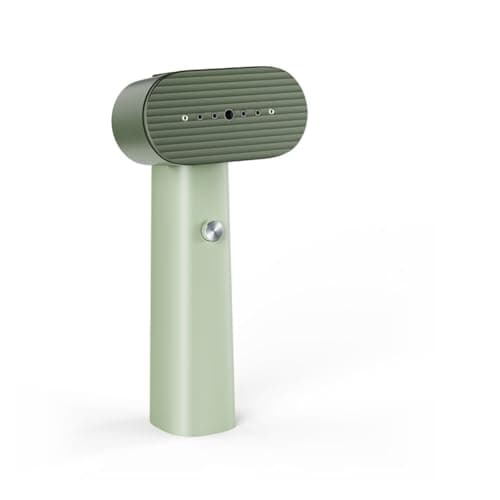
nesugar G3 Pro Palm Steamer
Twelve point eight ounces and 15 seconds — the smallest thing here that makes real steam.
Nexdoo does not publish tank capacity for this model, so that figure is excluded from the score rather than estimated.
What the numbers mean
Seven-tenths of a pound including a plate is a real engineering result. Most 2-in-1 units are over a pound and a half.
Nexdoo publishes no usable tank figure — the capacity field on the listing repeats the item weight, which is a data error rather than a specification. We score what is published and record the gap.
900 watts and 15 seconds put it level with units twice its size on the two specs that decide how a session feels.
Good
0.7 pounds including a press plate
15-second published heat-up
Steam and press in a genuinely pocketable body
Not good
No usable published tank capacity
900W caps what the plate can do
No published warranty term
Who should not buy it. Skip this if you want to know what you are buying. Until the tank figure is published, run time is a guess — and we do not guess.
The one to skip
Skip the Nexdoo G6 on the specification it does not publish. Seven-tenths of a pound with a press plate is a genuine achievement, but Nexdoo files the item weight in the capacity field, so there is no usable tank figure — and on a machine whose whole proposition is that it is tiny, run time is the number you most need. That is not a claim the unit is bad; it is that you cannot assess it, and we will not recommend a purchase we cannot assess.
Questions people actually ask
+Is a travel steamer better than a travel iron?
Usually. A steamer works on a hanger and needs no surface, and a hotel ironing board is not guaranteed. An iron still wins for linen and for any garment that needs a real crease. A compact press splits the difference and travels on dual voltage.
+Will a US clothes steamer work in Europe?
Only if the listing publishes a voltage RANGE that spans your destination — 100-240V, 110-240V and 100-220V all qualify. A plug adapter changes the pin shape and nothing else — a 120V heating element on 230 volts draws roughly four times its intended power. Check the published voltage, not the adapter.
+What is the best travel steamer for Europe?
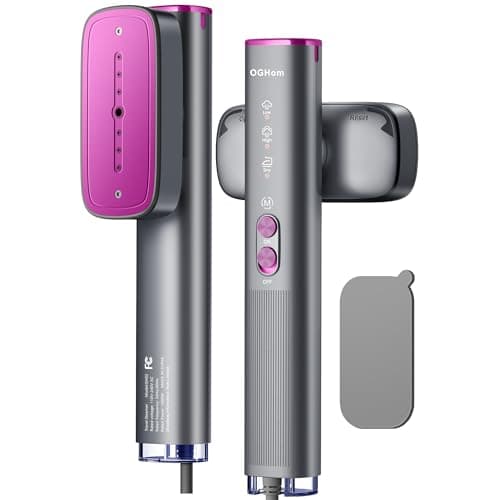
Among the models on this page, the Jack & Rose K1 and the OGHom GH02 both publish genuine dual voltage with a 15-second heat-up. The Jack & Rose carries 30 ml more tank; the OGHom is usually cheaper.
+Can you take a garment steamer in hand luggage?
An empty one, generally yes — it is an appliance, not a liquid or a battery. Empty the tank completely before you pack it, both because residual water is a spill risk and because airline rules on liquids in containers do not distinguish a water tank from a bottle. Check with your carrier for anything unusual.