Fabrics
Can You Steam Linen?
Yes, and it will help — but this is the one fabric where the honest answer is that an iron does it better.
By Scooter M., enthusiast, crease control · Published
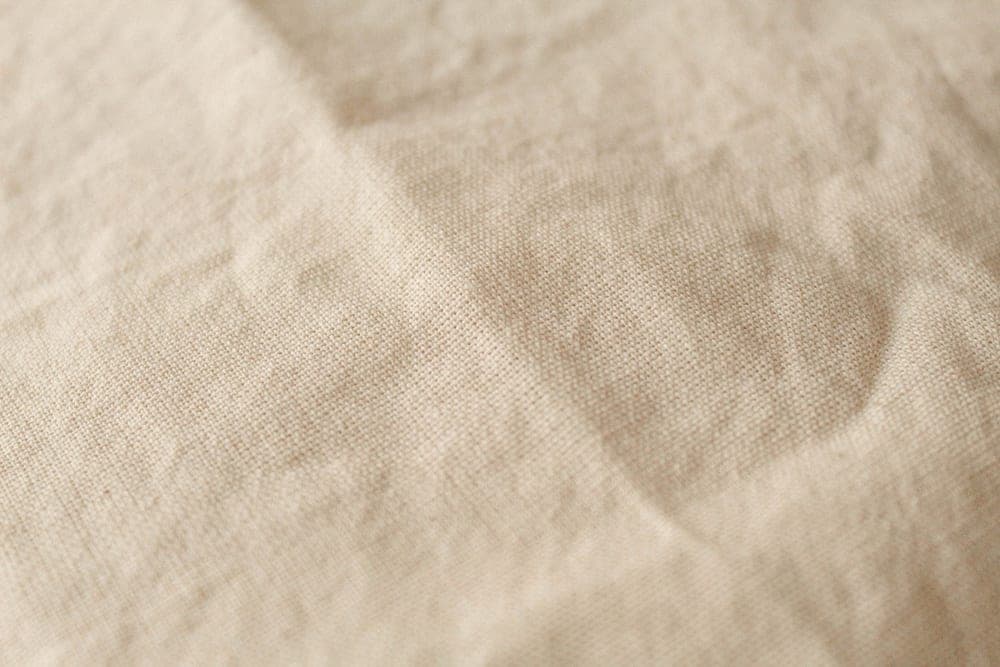
Yes, you can steam linen, and no, it will not look pressed afterwards. Steam relaxes flax fibers while they are damp, but with nothing pressing them into a new shape they spring back as they dry. Linen holds whatever form it dries in under pressure — which is why an iron, used on slightly damp fabric, is the tool that actually works.
We earn a commission if you buy through the links on this page, at no extra cost to you. It does not change which steamer we rank first — the ranking comes from published specifications and the arithmetic on our method page. We have not tested these units. Full disclosure.
The fiber reason
Flax is a bast fiber: long, stiff, highly crystalline cellulose with very little elasticity. That stiffness is why linen feels crisp and why it creases so sharply in the first place — the fiber has no springiness to recover with. Cotton, also cellulose, is softer and more elastic and forgives more.
Because the fiber has no elastic recovery, relaxing it is not enough. It has to be held in the new shape while it dries, and only contact and pressure do that. A vertical steamer supplies neither. This is not a limitation of any particular machine; it is what flax is.
What steam is genuinely good for on linen
- Taking the hard edge off travel creases — a linen jacket out of a suitcase looks meaningfully better after five minutes of steam, even though it is not pressed.
- Softening a garment you want to look relaxed. Rumpled linen is a legitimate look and steam gets it there faster than wearing does.
- Curtains and loose covers, where nobody expects a crease and taking them down to press is impractical.
- Between-wears refreshing, where the alternative is a full press you do not have time for.
How to get the most out of steam on linen
- 1Use high output and get closeFour to six inches on the highest setting. Linen tolerates heat and moisture far better than silk, and under-powered steam simply wets it.
- 2Pull the fabric taut with your free handTension is the only substitute for pressure available to a steamer. It is also the difference between a visible improvement and none.
- 3Work while the garment is still damp if you canStraight out of the wash, hung and steamed, linen behaves considerably better than it does bone dry.
- 4Accept the result or reach for the ironIf the shirt has to look pressed, it needs an iron on slightly damp fabric. There is no technique that gets you there vertically.
How to actually press linen
Damp, hot, and from the reverse. Linen takes the hottest setting on any domestic iron, and it wants moisture in the fiber — pressing bone-dry linen is slow and disappointing. Press on the reverse to avoid the sheen that a hot plate produces on the face, and hang the garment immediately rather than folding it while warm.
For table linen, a wide press does in three passes what an iron does in half an hour. The full linen verdict, with the iron recommendation, is here.
If you are steaming linen anyway
Ranked on published specifications. Tap a row for the full write-up; the price button goes to Amazon.
| # | Product | Best for | Spec score | Price |
|---|---|---|---|---|
| 1 | 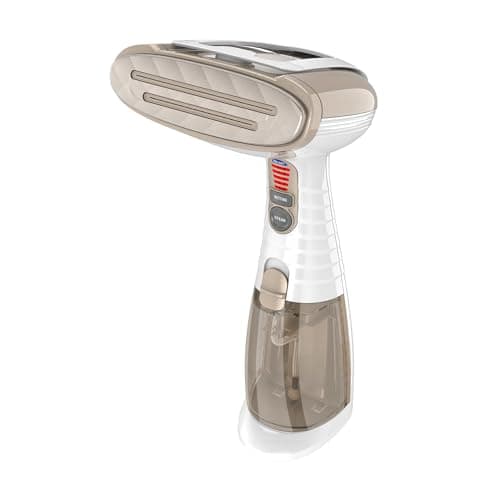 Conair Turbo ExtremeSteam GS59The most-bought handheld in the category, and its published specs explain that rather than contradict it. Conair Turbo ExtremeSteam GS59The most-bought handheld in the category, and its published specs explain that rather than contradict it. | The default handheld | 6.5/10 | |
| 2 | 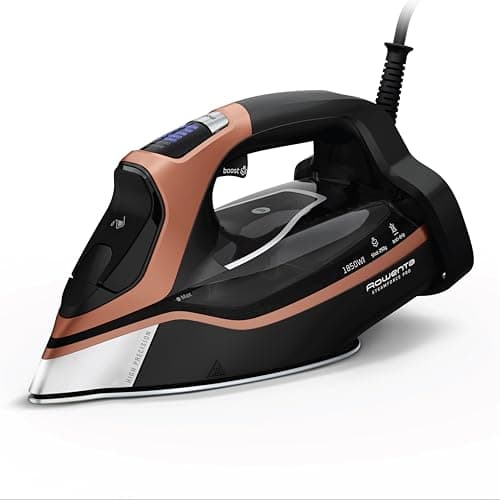 Rowenta Steam Force Pro DW95801,850 watts and a stainless soleplate — what you buy when the honest answer is 'iron'. Rowenta Steam Force Pro DW95801,850 watts and a stainless soleplate — what you buy when the honest answer is 'iron'. | The iron half of the argument | 8.3/10 |
Questions people actually ask
+Can you steam linen?
Yes, and it softens the creases — but it will not make linen look pressed. Flax fibers have almost no elastic recovery, so they need to be held in shape under pressure while drying, which a vertical steamer cannot do.
+Is a steamer better than an iron for linen?
No. Linen is the clearest case on this site where an iron wins. Press it slightly damp, on the reverse, on the hottest setting, and hang it immediately.
+How do you get wrinkles out of linen without an iron?
You reduce them rather than remove them. Steam at four to six inches on high while pulling the fabric taut, ideally while it is still damp from the wash. For a genuinely pressed finish there is no substitute for contact and pressure.
+Does steaming shrink linen?
Vertical steaming does not — shrinkage in linen comes from hot water and agitation in the wash, not from vapor. Saturating a lined or interfaced linen garment can pucker seams, which is two fabrics reacting differently rather than shrinkage in the linen itself.
Sources
- Textile Learner — properties of linen fiber — accessed September 2026