Ranked on the figures the makers publish, with the rubric shown in full — and one unit we would not buy at any price.
By Scooter M., enthusiast, crease control · Published
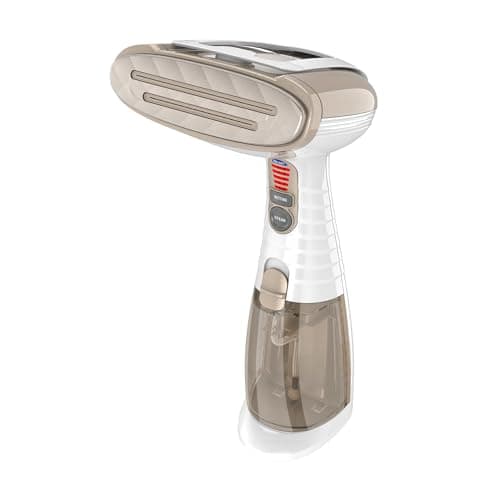
The Conair Turbo ExtremeSteam is the steamer most people should buy: 1,875 watts is the most power available on a US circuit, and the specification sheet is complete enough to check. If you want one machine instead of two, the Rowenta Pure Force steams vertically and presses horizontally with a published 10-second heat-up. If you steam a rail rather than a shirt, skip handhelds entirely and buy the SALAV GS18 for its 1.8-liter tank.
We earn a commission if you buy through the links on this page, at no extra cost to you. It does not change which steamer we rank first — the ranking comes from published specifications and the arithmetic on our method page. We have not tested these units. Full disclosure.
How this ranking was built
Every competing roundup in this category leads with a version of "we tested twenty units". We have not tested any, and we would rather say so than pretend. What we did instead is narrower and completely reproducible: read the published specification off each product's own listing, drop the figures that turned out to be data errors, and score what remains against the range its class actually spans.
Shortlist from the live category. Only currently-listed, currently-buyable models. A steamer we could not verify on a live listing is not on this page at all.
Read the published specifications — power, tank capacity, stated heat-up, weight, voltage, warranty — off each listing and record the URL and the date.
Drop unusable fields. Three listings file a runtime in the heat-up field and one repeats the item weight as the tank capacity. Those go in as gaps, not guesses.
1,875 watts is the practical ceiling for a plug-in appliance on a US 15-amp circuit, and this unit sits right at it. Power is what turns water into dry steam fast enough to relax a fiber instead of soaking it, so on a handheld this is the figure that matters most.
The trade is the tank. 7.3 fluid ounces is a shade over 200 ml, which Conair pairs with a stated 20 minutes of run time. Call it two or three shirts before a refill.
40 seconds to heat is ordinary for this power class, not fast. The Rowenta Pure Force publishes a tenth of that at the same wattage.
Good
1,875W is the most power available in a handheld on a US circuit
Three attachments in the box, including a fabric brush for wool and a crease tool
Two-year limited warranty, which is unusual at this price
Not good
The tank is small for the power — high output empties it faster
40-second heat-up is beaten by several cheaper units
Over two pounds in the hand, which tells after a few garments
Who should not buy it. Skip this if you steam a whole rail at a time. At full output the tank runs dry before you get through a week of shirts, and a standing unit with a two-liter tank costs about the same.
2. Handheld · One machine instead of two
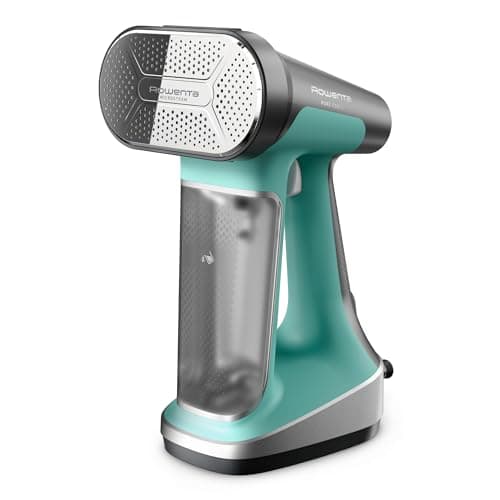
Rowenta Pure Force 2-in-1 DR8822
Steams vertically, presses horizontally, and publishes the fastest heat-up in this set by a factor of three.
Ten seconds to steam is the lowest published heat-up of anything on this page. If the thing that stops you steaming is the wait, this is the answer to it.
The horizontal plate is the real argument. A steamer relaxes a wrinkle; only contact and pressure will put a crease into a trouser leg or flatten a collar point. This does both, which is why for most wardrobes it genuinely replaces an iron and a board.
Three pounds is heavy for a handheld, and that weight is the soleplate. Judge it as a small iron that also steams, not as a light steamer that also presses.
Good
10-second published heat-up, the fastest on this site
Vertical steam and a horizontal press plate in one body
210 ml tank, larger than most 1,875W handhelds
Not good
Three pounds — the heaviest handheld here
A plate needs a surface, so it is not purely hang-and-go
Wider footprint than a pure steamer to store
Who should not buy it. Skip this if you only ever steam hanging garments. You would be carrying the weight of a soleplate you never put down.
3. Handheld · Dress shirts and tailoring
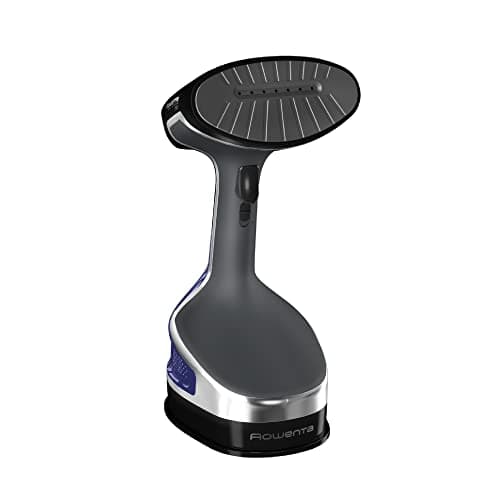
Rowenta XCEL Steam Force DR2020
Full 1,875W at 1.4 pounds — the best power-to-weight ratio on this site.
The interesting number here is a ratio. Every other 1,875W handheld we looked at is published between two and three pounds; this one is 1.4. Over a rail of shirts that difference is the whole experience.
Note a conflict inside Rowenta's own published data: the listing title advertises a 25-second heat-up, while the structured specification field on the same page reads 0.66 minutes — about 40 seconds. We score the specification field, because that is the figure Rowenta files rather than the one it markets. If you buy it expecting 25 seconds, expect to be disappointed by fifteen.
The 190 ml tank is small, and Rowenta pairs it with a stated 10 minutes of continuous steam — an honest figure rather than an optimistic one.
Good
1,875W at 1.4 pounds — the best power-to-weight figure here
Removable tank, so you refill at the tap rather than over the sink
10.8 inches tall, so it lives in a closet rather than a cupboard
Not good
190 ml is a small tank even by handheld standards
Rowenta's own title and specification field disagree about heat-up time
One-year warranty against Conair's two
Who should not buy it. Skip this if you want one machine that presses as well as steams. It is a pure vertical steamer with no plate — the Pure Force is the Rowenta that does both.
4. Standing · A whole wardrobe at once
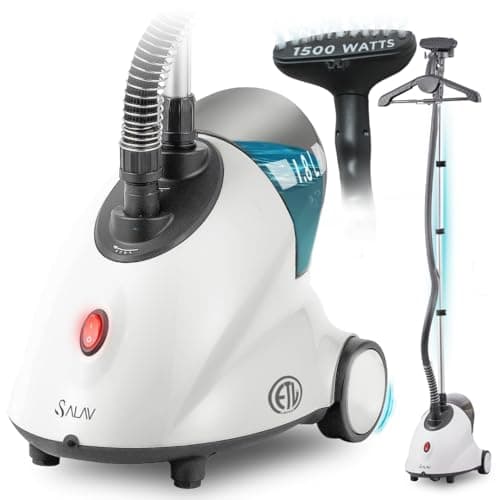
SALAV GS18 Full-Size Steamer
1.8 liters on a 65-inch pole — the point where steaming stops being a chore.
A 1.8 liter tank is roughly nine times what a good handheld carries. That is the entire argument for a standing steamer: fill it once and work through a rail without stopping.
SALAV publishes 60 minutes of steam per fill. Even discounted, that is an order of magnitude more than any handheld here.
Forty-five seconds to heat from 1,500 watts is respectable given the volume of water involved — a handheld is heating 200 ml, this is heating 1,800.
Good
1.8 liter tank — about an hour of continuous steam per the maker
65-inch pole holds a full-length dress or coat clear of the floor
1,500W with a published one-year warranty
Not good
Nine pounds and pole-mounted — this lives in one room
45-second heat-up is slower than the best handhelds
Assembly required, and the pole is what people complain about
Who should not buy it. Skip this if you steam two shirts a week. A standing unit you assemble and store is more machine than that job needs.
5. Handheld · The biggest tank in the class
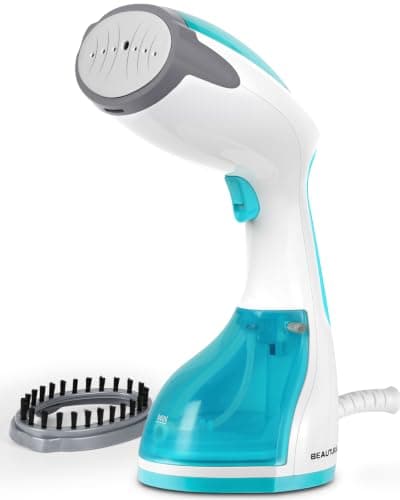
Beautural 1200W Handheld Steamer
260 ml on a 1,200W handheld — the most run time per fill here, bought with output.
Tank capacity decides whether steaming is pleasant or annoying, and this carries 260 ml against the 190 to 216 ml the 1,875W units manage. More minutes per fill, fewer trips to the sink.
1,200 watts is a real step down from 1,875. On linen and heavy cotton you will feel it — the steam is wetter and you will make more passes. On the synthetics and knits that make up most wardrobes the difference is small.
Two pounds and 30 seconds to heat are both mid-table. Nothing here is remarkable except the tank, and the tank is the point.
Good
260 ml — the largest handheld tank in this set
30-second published heat-up, faster than the 1,875W Conair
Auto shut-off published as part of a nine-point safety design
Not good
1,200W struggles where 1,875W does not — linen especially
Filling means carrying the whole unit to the tap
Two pounds in the hand, the same as the far more powerful Conair
Who should not buy it. Skip this if linen or heavy cotton is most of what you own. Below about 1,500 watts you make three passes where a stronger unit makes one.
6. Travel · Travel abroad
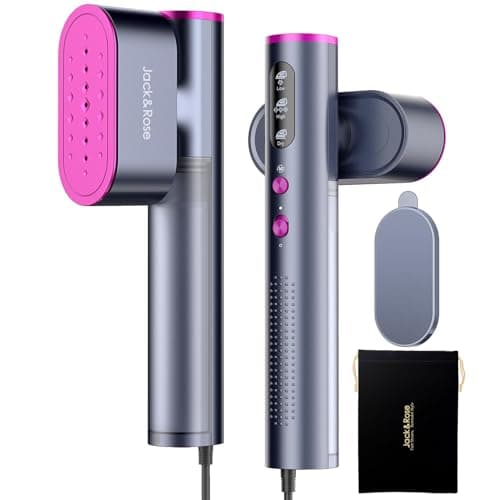
Jack & Rose K1 Travel Steamer
True 100-240V, 15 seconds to steam, 1.6 pounds — the travel spec sheet done right.
Dual voltage is the entire question for a travel steamer, and this one publishes 100-240V rather than the 120V-only that most compact units quietly ship with. In a European socket it works; a 120V unit on 230V is a fire.
Fifteen seconds is the joint-fastest published heat-up on this site. In a hotel room, before a dinner you are already late for, that is the number that matters.
150 ml is a hotel-room tank, not a wardrobe tank. Judge it as two garments per fill.
Good
Genuine 100-240V dual voltage, published on the listing
15-second published heat-up, joint-fastest here
Steamer and press plate in one 1.6 pound body
Not good
150 ml means refilling for anything beyond two garments
1,000W is modest — it will not fight linen
You still need the physical plug adapter for the country
Who should not buy it. Skip this if it will be your only steamer at home. It is built for a suitcase, and the tank says so.
7. Commercial · Buying once
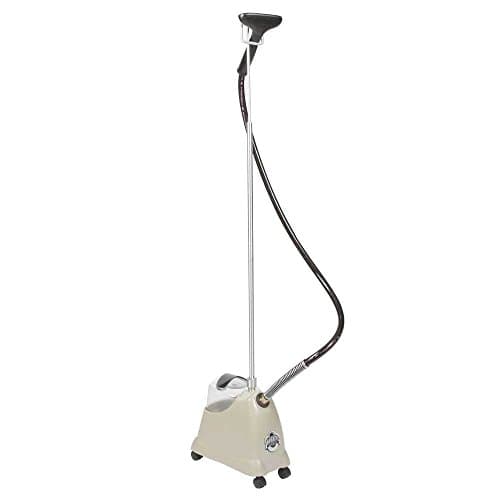
Jiffy J-2000 Commercial Steamer
2.84 liters, a metal boiler and a three-year warranty — the machine the dry cleaner owns.
The three-year warranty is the specification that separates this from everything else on the site. Every other unit here publishes one or two years, or nothing at all.
2.84 liters is the largest published tank in this set, and Jiffy rates the machine at roughly two hours of continuous steam.
Two minutes to heat is slow, and that is what heating nearly three liters in a metal boiler costs. This is a machine you switch on and then go and sort the rail.
Good
2.84 liter tank — the largest here
Three-year warranty, three times the category norm
Metal boiler rather than a molded plastic tank
Not good
Two-minute heat-up, the slowest here
1,300W is lower than the 1,800W domestic uprights
Costs several times what a good handheld costs
Who should not buy it. Skip this if the machine will sit idle most weeks. It is built for daily use and the price only makes sense against that.
8. Handheld · Nothing we would recommend it for
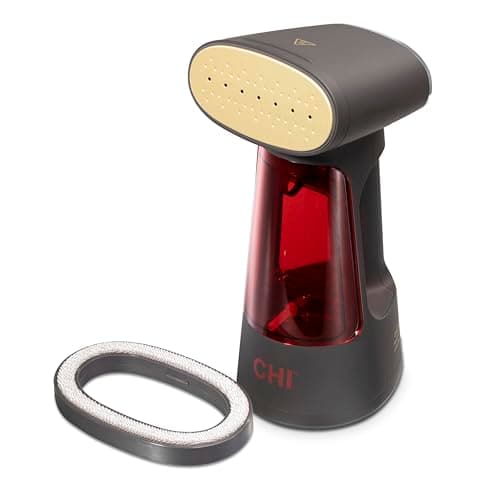
CHI Deluxe Digital 3-in-1
The skip. A digital display and a two-year warranty do not answer 1,000 watts in a 2.9 pound body.
This is the weakest power-to-weight figure in the whole set: 1,000 watts in a body heavier than the 1,875W Conair. Whatever the display is doing, it is not making steam.
The two-year warranty is genuinely good and the 220 ml tank is respectable. Neither fixes the arithmetic.
We include it because a roundup where everything is recommended recommends nothing, and because it is the unit most likely to be bought on the strength of a brand name earned somewhere else.
Good
Two-year published warranty, matched here only by Conair
220 ml tank is adequate
Digital temperature settings, which some fabrics genuinely benefit from
Not good
1,000W in a 2.9 pound body — the worst power-to-weight ratio here
Heavier than every more powerful handheld in this set
Buying a hair-tools brand for a garment steamer is paying for the name
Who should not buy it. Skip this one outright. The Beautural gives you more tank and more power for less, and the Conair gives you nearly twice the wattage at less weight.
The one to skip
The CHI Deluxe Digital 3-in-1 is the unit on this page we would not buy. One thousand watts in a 2.9-pound body is the worst power-to-weight figure in the whole set — it is heavier than the 1,875 W Conair while producing barely half the steam. The two-year warranty is genuinely good and the 220 ml tank is fine. Neither fixes the arithmetic, and the brand's reputation was earned making hair tools, not garment steamers. The full comparison against Rowenta works through where CHI does win, because on three of five published figures it does.
What Reddit actually says, and why we do not quote it
"Best clothes steamer reddit" is a real and frequent search, and the honest answer is that we are not going to reproduce a thread as though it were data. Aggregated forum sentiment is unattributable, unverifiable and trivially astroturfed — including by sites like this one. What we can tell you is the pattern that shows up whenever the question is asked seriously: people who bought a cheap handheld for a full wardrobe are disappointed, and people who bought a standing unit for the same job are not. That matches the tank arithmetic exactly, which is the only reason we mention it.
Consumer Reports, and what a paywall means for this page
Consumer Reports does buy and test clothes steamers, and its ratings are members-only. We are not going to reproduce or paraphrase them — that would be taking the value of work we did not do and did not pay for. If you want lab-tested durability data, subscribe to them; it is a reasonable amount of money for a real answer. What this page offers instead is the part they do not publish: every specification side by side, with the arithmetic shown and the gaps named.
Before you buy, check the fabric
A steamer is the wrong purchase for a wardrobe that is mostly linen, and it is a risky one for velvet and suede. Two minutes on the fabric matrix will tell you whether the thing you are buying it for can actually take steam, and the steamer-versus-iron hub settles the cases where an iron simply wins. If you are buying for a specific job — a wedding dress, a suit, curtains, a work or school uniform, hats, blocking knitting, bedding — those pages narrow the field further. Buying your first one, the beginner's guide covers the two specs that decide whether it disappoints you. Still deciding whether to buy at all, is it worth it answers that before you spend, and the budget guide covers the cheap end.
Questions people actually ask
+What is the best garment steamer?
On published specifications, the Conair Turbo ExtremeSteam — 1,875 W is the most power available in a handheld on a US circuit, and its specification sheet is complete. If you steam more than three garments at a time, the SALAV GS18's 1.8-liter tank matters more than any handheld's wattage.
+What is the best brand for a garment steamer?
There is no single best brand, but the published data does separate them. Jiffy publishes a three-year warranty against a category norm of one. Rowenta and Conair both reach 1,875 W. SALAV owns the large-tank uprights. The brand comparison sets out what each is genuinely good at.
+Is an expensive garment steamer worth it?
It buys tank capacity and warranty, not steam. The Jiffy J-2000 costs several times a good handheld and produces less power — what you are paying for is a metal boiler, 2.84 liters and three years of cover. If the machine runs daily that pays back. If it runs monthly it does not.
+How long does a garment steamer take to heat up?
Published figures on this page run from 10 seconds to 3 minutes. Handhelds cluster around 20-40 seconds; standing units take 30-50 because they are heating liters rather than milliliters; the Jiffy takes 2 minutes for the same reason. Treat any figure in a listing title with suspicion — check the structured specification field, which is often different.
+Do I need distilled water in a garment steamer?
It depends on your water and your machine. Some makers require it and void the warranty without it; others explicitly permit tap water. The distilled water page works through when it genuinely matters and when it is an upsell.