Fabrics
Can You Steam Polyester?
Yes, and it is one of the fabrics steam handles better than an iron does — because polyester melts.
By Scooter M., enthusiast, crease control · Published

Yes — and steam is the better tool for polyester than an iron. Polyester is a thermoplastic: it softens with heat rather than simply relaxing, so a hot soleplate in direct contact glazes the surface or melts it outright. Vertical steam never touches the fabric, which removes the risk entirely. Medium setting, about six inches, and give set fold lines time.
We earn a commission if you buy through the links on this page, at no extra cost to you. It does not change which steamer we rank first — the ranking comes from published specifications and the arithmetic on our method page. We have not tested these units. Full disclosure.
The fiber reason
Polyester is a synthetic polymer extruded as a filament. Unlike cotton or wool it has a real softening point, and above it the fiber surface deforms rather than relaxing. That is what "glazing" is: a patch where the fiber surface has melted flat and now reflects light differently from the fabric around it. It is permanent.
The same thermoplastic behavior makes polyester heat-settable, which is why pleats in a polyester skirt survive washing when the same pleats in cotton would not — and also why a fold line set into a polyester garment during storage is stubborn.
Settings
| Garment | Setting | Distance | Notes |
|---|---|---|---|
| Blouse or shirt | Medium | 6" | Relaxes quickly; one pass usually enough |
| Dress | Medium | 6" | Work top to bottom, hem held taut |
| Graduation gown | Medium | 6" | Hang it two days early — set fold lines take time |
| Event tablecloth | Medium-high | 4-6" | Hang over a rail; steams beautifully at volume |
| Fleece or performance knit | Low-medium | 8" | Piled synthetics mat if you go close |
Will steam remove wrinkles from polyester?
Everyday wrinkles, easily — polyester is springy and comes back fast. Set fold lines are different. A gown or a tablecloth that has been folded flat for weeks has creases that were effectively heat-set by time and pressure, and steam releases those slowly. The reliable approach is time rather than force: hang the garment a day or two early, steam it, then leave it hanging overnight. Gravity finishes what the steam started.
Blends
Most "cotton" shirts on the high street are cotton-polyester blends, and they behave like the more fragile of the two: treat a 60/40 blend as polyester, not as cotton. That means a medium setting rather than the high one you would use on pure cotton, and no iron in direct contact without a pressing cloth. The cotton page covers where the line falls, and the rayon page covers the viscose blends that look like cotton and are not. Poly-cotton is also what almost every work and school uniform is made of, which is why steam suits them so well.
Steamers that suit polyester
Ranked on published specifications. Tap a row for the full write-up; the price button goes to Amazon.
| # | Product | Best for | Spec score | Price |
|---|---|---|---|---|
| 1 | 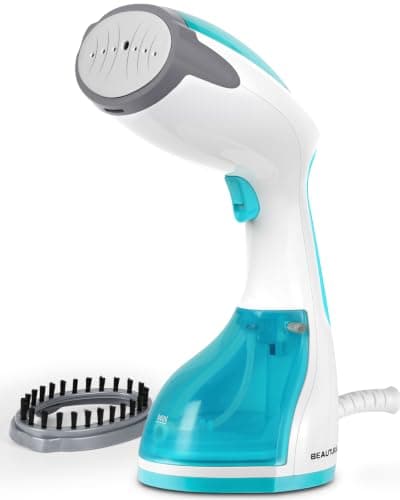 Beautural 1200W Handheld Steamer260 ml on a 1,200W handheld — the most run time per fill here, bought with output. Beautural 1200W Handheld Steamer260 ml on a 1,200W handheld — the most run time per fill here, bought with output. | The biggest tank in the class | 5.7/10 | |
| 2 | 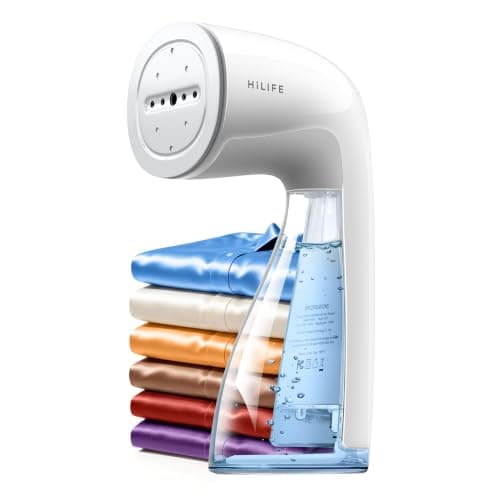 HiLIFE HL9 1100W Steamer300 ml, 1,100 watts and 30 seconds — the HL7's three weaknesses answered. HiLIFE HL9 1100W Steamer300 ml, 1,100 watts and 30 seconds — the HL7's three weaknesses answered. | The largest tank on a mid-power handheld | 6.2/10 |
Questions people actually ask
+Can you steam polyester?
Yes, and steam is safer for it than an iron. Polyester is a thermoplastic that glazes or melts under direct heat, while vertical steam never touches the fabric. Use a medium setting from about six inches.
+Will steam remove wrinkles from polyester?
Everyday wrinkles come out quickly. Set fold lines from long storage take much longer — hang the garment a day or two early, steam it, and leave it hanging overnight to finish.
+What steamer setting for polyester?
Medium, from about six inches. Polyester does not need high output and close range is where thermoplastics take damage from heat.
+Can you iron polyester?
Only on the lowest setting through a pressing cloth, and it is the wrong tool. A hot soleplate in contact with polyester glazes the surface permanently. Steam instead.
Sources
- Textile Learner — properties of polyester fiber — accessed September 2026