Fabrics
Can You Steam Silk?
Yes — and steam is far safer for silk than an iron. The risk is water, not heat.
By Scooter M., enthusiast, crease control · Published
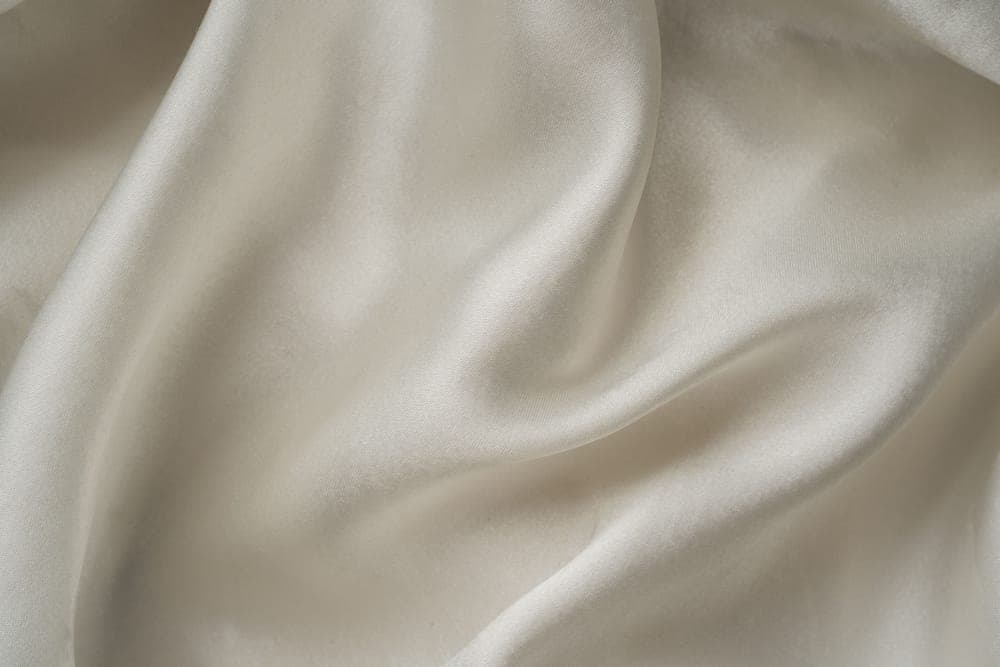
Yes, you can steam silk — on the lowest setting, from six to eight inches, with the head never touching the fabric. Steam is materially safer for silk than an iron, because silk's real enemy is direct heat on a dry fiber. What you are guarding against is water spotting: condensate landing as droplets rather than vapor, which dries as a visible ring.
We earn a commission if you buy through the links on this page, at no extra cost to you. It does not change which steamer we rank first — the ranking comes from published specifications and the arithmetic on our method page. We have not tested these units. Full disclosure.
Why silk behaves the way it does
Silk is a protein fiber — a continuous filament of fibroin, not a spun staple like cotton. Two properties follow, and both matter here. It is highly absorbent, taking up moisture readily, which is why a droplet spreads and leaves a mark rather than sitting on the surface. And its smooth filament structure is what produces the characteristic sheen, which is also why any local disturbance to the surface shows so plainly.
Direct heat is worse. Silk scorches at a lower temperature than cotton and the damage is a permanent yellowing rather than a wrinkle. This is precisely why a steamer — which never touches the fabric — is the better tool.
Settings
| Garment | Setting | Distance | Inside out? | Notes |
|---|---|---|---|---|
| Blouse or shirt | Lowest | 6-8" | Preferably | Hold the hem taut; work downward |
| Scarf | Lowest | 8" | No | Steam it flat over a hanger, not held in the hand |
| Dress | Lowest | 6-8" | Yes | Start inside the skirt so spotting lands where it will not show |
| Lining in a jacket | Low | 6" | n/a | Steam the lining before the outer fabric |
| Tie | Lowest | 8-10" | No | Never press a tie flat — you will kill the roll of the edges |
What goes wrong, and what to do about it
Water spotting
The classic silk failure: a pale ring where a droplet landed and dried. It is caused by working too close, by a cold head spitting condensate at start-up, or by a machine that needs descaling. The fix is prevention — let the head warm fully before it goes near the garment, and keep six inches between them. Rayon and viscose, which are made to imitate silk, spot in exactly the same way and for the same reason.
If it has already happened, the counter-intuitive answer often works: dampen the whole panel evenly with a fine mist and let it dry flat. A spot is visible because it is a boundary; remove the boundary and the mark usually disappears. Test on a seam first.
Sheen change
Almost always caused by contact. If the head touched, or if you pressed it against the fabric to "help", you have flattened the filament surface locally. Steaming from the reverse and letting the garment dry hanging recovers some of it; heavy contact marks do not fully come back.
Steamer or iron for silk?
Steamer, comfortably. An iron on silk requires a low setting, a pressing cloth and constant movement, and one moment of inattention leaves a scorch that cannot be repaired. A steamer never touches the fiber. The only case for an iron is a silk garment that needs a genuine crease, and even then it is a pressing cloth and the lowest setting on the dial. The full comparison is here.
Which steamer for silk
Not the most powerful one. What matters is controllable low output and a tank large enough that you can work slowly rather than rushing, because rushing is what ruins silk. See also the delicates roundup, and satin and chiffon, which share silk's failure modes.
Steamers that suit silk
Ranked on published specifications. Tap a row for the full write-up; the price button goes to Amazon.
| # | Product | Best for | Spec score | Price |
|---|---|---|---|---|
| 1 | 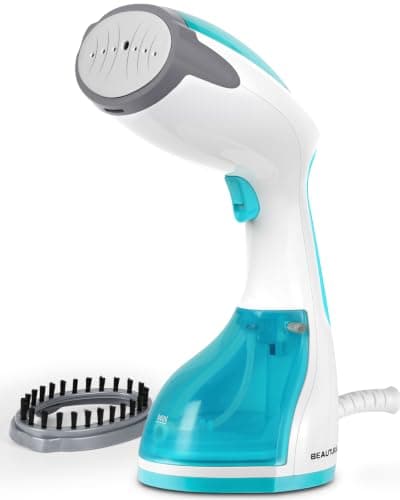 Beautural 1200W Handheld Steamer260 ml on a 1,200W handheld — the most run time per fill here, bought with output. Beautural 1200W Handheld Steamer260 ml on a 1,200W handheld — the most run time per fill here, bought with output. | The biggest tank in the class | 5.7/10 | |
| 2 | 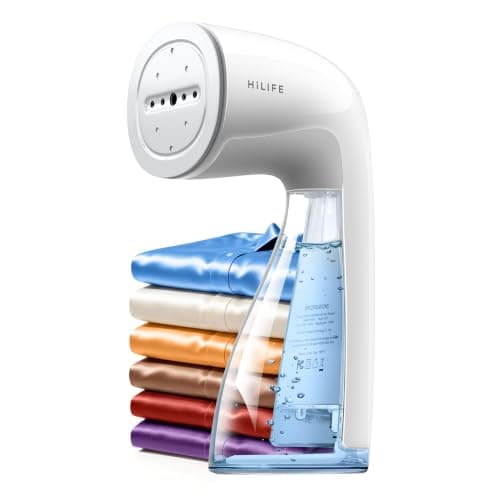 HiLIFE HL9 1100W Steamer300 ml, 1,100 watts and 30 seconds — the HL7's three weaknesses answered. HiLIFE HL9 1100W Steamer300 ml, 1,100 watts and 30 seconds — the HL7's three weaknesses answered. | The largest tank on a mid-power handheld | 6.2/10 |
Questions people actually ask
+Can you steam silk?
Yes. Use the lowest setting from six to eight inches and never let the head touch the fabric. Steam is safer for silk than an iron, because silk scorches under direct dry heat.
+Will a steamer ruin silk?
Only through water spotting — condensate landing as droplets rather than vapor. Let the head heat fully before it goes near the garment, keep six inches of distance, and test an inside seam first.
+How do you get wrinkles out of silk?
Hang it and steam from six to eight inches on the lowest setting, holding the hem lightly taut so the fabric has tension to straighten into. Silk relaxes quickly; a second pass is rarely needed.
+How do you remove a water spot from silk?
Dampen the whole panel evenly with a fine mist and let it dry flat. A water spot is visible because of its edge — remove the edge and the mark usually goes with it. Test on an inside seam first.
Sources
- Textile Learner — properties of silk fiber — accessed September 2026
- FTC Care Labeling Rule, 16 CFR Part 423 (eCFR) — accessed September 2026