Fabrics
Can You Steam Velvet?
Yes, from the reverse, never from the front. Pile crush is permanent and it happens on contact.
By Scooter M., enthusiast, crease control · Published
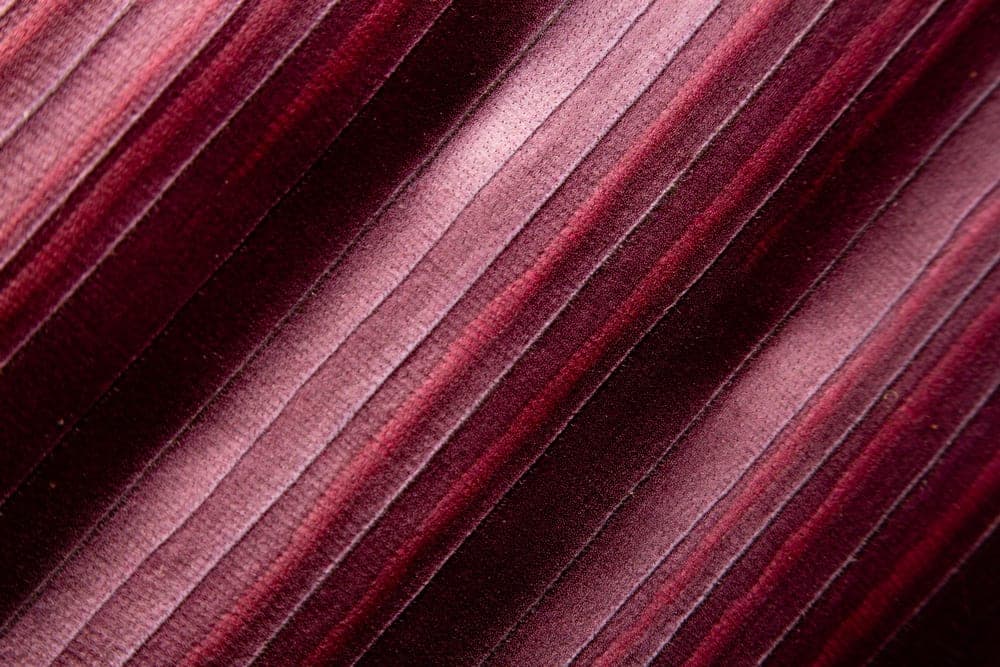
Yes, but only from the reverse. Velvet is a pile fabric: thousands of short upright fibers standing off a backing. Anything that presses them over — a steam head, an iron, a hand — flattens them, and a flattened patch reflects light differently for good. Steam from the back of the fabric at four to six inches and let the rising vapor lift the pile from underneath.
We earn a commission if you buy through the links on this page, at no extra cost to you. It does not change which steamer we rank first — the ranking comes from published specifications and the arithmetic on our method page. We have not tested these units. Full disclosure.
What pile is and why it is fragile
In a woven velvet, extra warp yarns are lifted into loops and then cut, producing a dense field of short upright ends. The look — that shifting depth of color as you turn it — comes entirely from those ends standing up and catching light along their length. Crush them flat and they reflect from the side instead, which reads as a pale, shiny bruise.
Nothing is broken when this happens. The pile is bent, not destroyed, which is why steam from behind can often lift it again. Contact under heat and moisture at the same time is what makes it set permanently.
The technique
- 1Turn the garment inside outNon-negotiable. You are steaming the backing, not the pile.
- 2Hang it and work from four to six inchesClose enough that the vapor penetrates the backing, far enough that nothing touches.
- 3Work upward where you canRising steam through the backing lifts the pile from the root, which is exactly the effect you want.
- 4Brush the pile gently while dampA soft clothes brush, in one direction, on the face, while there is still moisture in the fabric. This is what restores the nap.
- 5Hang until fully dry before folding or wearingDamp pile takes an impression from anything it touches — including a chair.
Crushed velvet is a different fabric
"Crushed velvet" has been deliberately and permanently flattened in a pattern as a finish. Steaming it from the reverse and brushing it will partially lift that pattern out, which is not what you want. Steam crushed velvet minimally, from the back, and do not brush it.
Velvet curtains and upholstery
Curtain velvet is heavy and you usually cannot reach the reverse while it hangs. Work at a greater distance — eight inches or so — accept that it is slower, and never rest the head against the cloth. The curtains page has the wider technique. Upholstery velvet, fixed to a frame, is a job for a specialist rather than a garment steamer.
Steamers that suit velvet
Ranked on published specifications. Tap a row for the full write-up; the price button goes to Amazon.
| # | Product | Best for | Spec score | Price |
|---|---|---|---|---|
| 1 | 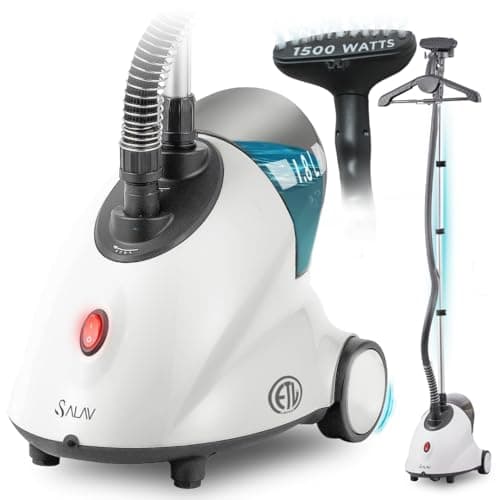 SALAV GS18 Full-Size Steamer1.8 liters on a 65-inch pole — the point where steaming stops being a chore. SALAV GS18 Full-Size Steamer1.8 liters on a 65-inch pole — the point where steaming stops being a chore. | A whole wardrobe at once | 4.4/10 | |
| 2 |  Beautural 1200W Handheld Steamer260 ml on a 1,200W handheld — the most run time per fill here, bought with output. Beautural 1200W Handheld Steamer260 ml on a 1,200W handheld — the most run time per fill here, bought with output. | The biggest tank in the class | 5.7/10 |
Questions people actually ask
+Can you use a steamer on velvet?
Yes, from the reverse only. Steam the backing at four to six inches and let the vapor lift the pile from underneath. A steam head touching the pile crushes it, and the mark is permanent.
+How do you get crush marks out of velvet?
Steam from the reverse, then brush the pile gently in one direction with a soft clothes brush while it is still damp. The fibers are bent rather than broken, so this often works.
+Can you iron velvet?
Not on the face, ever. Some sewers press velvet face-down on a needle board, which supports the pile — that is a specialist tool and not something to improvise with a towel.
+Can you steam velvet curtains?
Yes, but you usually cannot reach the reverse while they hang, so work from about eight inches and never rest the head on the cloth. It is slower than steaming a garment and worth the patience.
Sources
- Textile Learner — velvet fabric properties — accessed September 2026