Fabrics
Can You Steam Satin?
Yes — turn it inside out first, because the thing you are protecting is the shine.
By Scooter M., enthusiast, crease control · Published
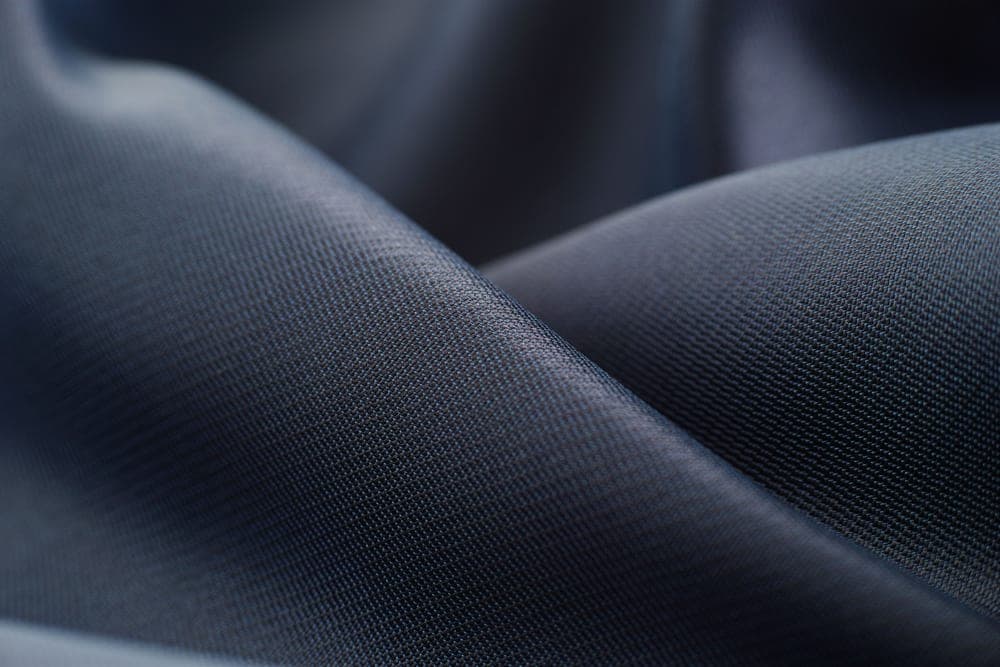
Yes — turn the garment inside out and steam the reverse, on a low setting from six to eight inches. Satin is a weave that produces its shine by floating long yarns across the surface; anything that disturbs those floats leaves a dull patch. Steaming from the back means any sheen change lands where nobody looks.
We earn a commission if you buy through the links on this page, at no extra cost to you. It does not change which steamer we rank first — the ranking comes from published specifications and the arithmetic on our method page. We have not tested these units. Full disclosure.
Satin is a weave, not a fiber
In a satin weave, each warp yarn passes over several weft yarns before going under one. That produces long, smooth floats on the face, and it is those floats lying parallel and uninterrupted that create the characteristic sheen. The fiber underneath can be silk, polyester, acetate or a blend, and it decides the heat rules — but the sheen risk belongs to the weave and is the same in all of them.
Disturb the floats — press them, catch them, melt them — and light scatters instead of reflecting. That reads as a dull or shiny patch depending on the angle, and it does not come back.
Settings
| Fiber | Setting | Distance | Extra risk |
|---|---|---|---|
| Polyester satin | Low-medium | 6" | Glazing, but only from an iron |
| Silk satin | Lowest | 6-8" | Water spotting as well as sheen change |
| Acetate satin | Lowest | 8" | Acetate has a low heat tolerance — treat as the most fragile |
If the label does not say, treat it as acetate: work at the lowest setting and the greatest distance, and test an inside seam.
What goes wrong
Almost every satin failure is contact. The head touched, or something rested against the damp fabric before it dried — a hanger bar, a chair back, an arm. Damp satin takes an impression readily and keeps it. Hang the garment clear of everything until it is completely dry.
The second failure is over-wetting, which on a lined satin dress shows up as puckering along the seams where face and lining dried at different rates. Work further back and make more passes rather than closer ones.
Steamer or iron for satin?
Steamer, and it is not close. Ironing satin means pressing directly on the floats that make it satin, through a cloth, at a temperature the fiber underneath may not tolerate. A steamer never touches the surface. If a satin garment genuinely needs pressing — a hem, a facing — press from the reverse through a cloth on the lowest setting the fiber allows.
Steamers that suit satin
Ranked on published specifications. Tap a row for the full write-up; the price button goes to Amazon.
| # | Product | Best for | Spec score | Price |
|---|---|---|---|---|
| 1 | 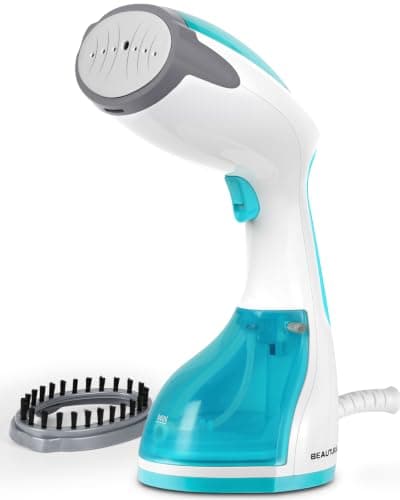 Beautural 1200W Handheld Steamer260 ml on a 1,200W handheld — the most run time per fill here, bought with output. Beautural 1200W Handheld Steamer260 ml on a 1,200W handheld — the most run time per fill here, bought with output. | The biggest tank in the class | 5.7/10 | |
| 2 | 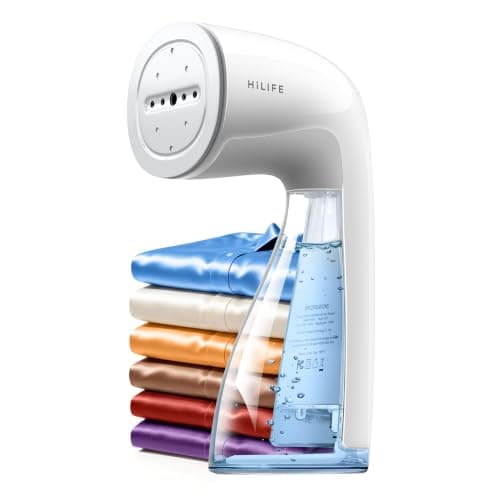 HiLIFE HL9 1100W Steamer300 ml, 1,100 watts and 30 seconds — the HL7's three weaknesses answered. HiLIFE HL9 1100W Steamer300 ml, 1,100 watts and 30 seconds — the HL7's three weaknesses answered. | The largest tank on a mid-power handheld | 6.2/10 |
Questions people actually ask
+Can you steam satin?
Yes, inside out, on a low setting from six to eight inches. Satin's shine comes from long floating yarns on the surface, so keeping the steam on the reverse protects the thing you are trying to preserve.
+How do you get wrinkles out of satin?
Turn the garment inside out, hang it clear of anything it could touch, and steam from six to eight inches on low. Leave it hanging until completely dry — damp satin takes an impression from whatever rests against it.
+Why does my satin have a dull patch?
Something touched it. Pressing, a steam head, or a hanger bar against damp fabric disturbs the surface floats so they scatter light instead of reflecting it. It is not reversible, which is why steaming from the reverse matters.
Sources
- Textile Learner — satin fabric properties — accessed September 2026
- FTC Care Labeling Rule, 16 CFR Part 423 (eCFR) — accessed September 2026