A competition costume is four incompatible materials sewn together, and the glue holding the sparkle on is the part that fails first.
By Scooter M., enthusiast, crease control · Published
Buy a compact unit you can hold at a distance, and steam from the inside wherever possible. A competition costume is usually spandex or lycra with tulle, mesh, appliqué and glued rhinestones on it — and the glue is the weak point, not the fabric. Work on a low setting from eight inches, never let the head touch, and keep steam off the stones. The Jack & Rose K1 leads because comp weekends happen in dressing rooms and it is dual voltage at 1.6 pounds with a 15-second heat-up.
We earn a commission if you buy through the links on this page, at no extra cost to you. It does not change which steamer we rank first — the ranking comes from published specifications and the arithmetic on our method page. We have not tested these units. Full disclosure.
The hazard is the trim, not the fabric
The stretch fabric underneath a dance costume is tough, forgiving and steams easily. Everything attached to it is not. This is the inverse of most garment care, and it is why costumes get damaged by people who steam clothes competently.
What is on a costume, and how it responds
Element
Steam?
What goes wrong
Spandex / lycra base
Yes, low
Little. It is the robust part. High heat can degrade elastane over time
Glued rhinestones and crystals
Keep steam off
Hot-fix adhesive softens and stones drop. The single most common costume disaster
Sewn-on sequins
Yes, from the reverse
Generally fine. Plastic sequins can curl under direct heat
Glued sequins and appliqué
Keep steam off
Same adhesive problem as rhinestones
Tulle and mesh skirting
Yes — steam is ideal
Nothing, if you work at a distance. Tulle lifts into the head if you are close
Foil and metallic prints
Low, from the reverse
Lifts and cracks under direct heat
Feathers and marabou
Yes, briefly
Steam actually revives them. Do not saturate
Velvet and velour panels
From the reverse only
Pile crushes permanently under contact — see velvet
Elastic straps and gussets
Low
Sustained heat shortens the life of elastic
If a single garment mixes several of these, work to the most fragile one on it. That is the rule everywhere on this site and it matters most here, because costumes mix more materials than anything else people own.
How to steam a costume
1Turn it inside out if the outside is stonedThe base fabric conducts the steam through to the wrinkles without exposing the adhesive. This one habit prevents most costume damage.
2Hang it and let the steamer reach full temperatureA head that has not finished heating spits water, and a droplet on a satin or velvet panel is a visible mark. Wait for the ready light.
3Work the skirt and tulle first, from eight inchesTulle needs almost nothing — a pass at a distance and it drops. Get too close and it will lift toward the head and can snag.
4Do the bodice from the inside, avoiding stoned panels entirelyIf a stoned area is genuinely creased, steam the fabric around it and let the heat migrate rather than aiming at the stones.
5Hang it to dry fully before it goes in a bagA damp costume in a garment bag creases worse than it started and can transfer color between panels.
What this job needs from a machine
Costume steaming happens in a dressing room, a hotel or the back of a car — almost never at home with time to spare. That changes which specifications matter:
Fast heat-up. Fifteen to thirty seconds. You are steaming between numbers, not on a Sunday afternoon.
Light and compact. It lives in a costume bag alongside everything else.
Low setting available. The base fabric wants gentle heat and the trim wants less.
Any-angle operation. Dressing rooms rarely offer a good place to hang anything, so you will be holding the garment and the steamer at once.
Dual voltage if you compete internationally. A plug adapter changes the pin shape, not the voltage, and a 120 V unit on a 230 V supply destroys itself instantly.
Small tank, accepted. 70 to 150 ml covers a costume or two, which is the actual job.
Why the picks are what they are
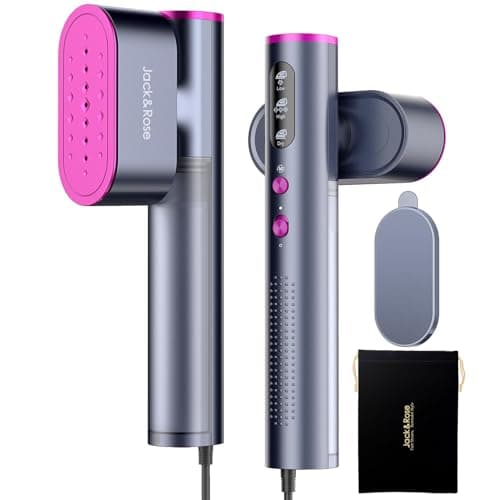
The Jack & Rose K1 leads on the travel specification done properly: genuine 100-240 V dual voltage, a published 15-second heat-up, 150 ml and 1.6 pounds. For a comp weekend that combination is hard to beat. It publishes no warranty term, which is normal at this size and still a real cost.
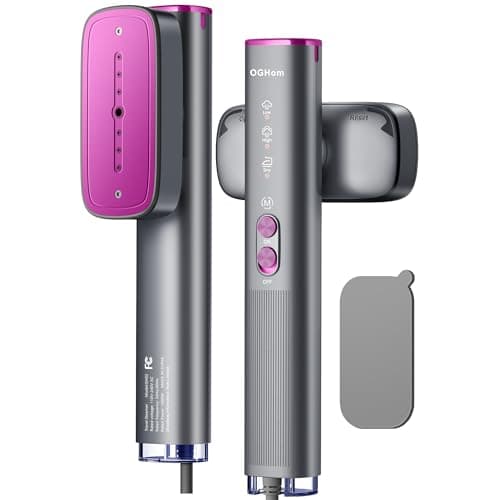
The OGHom GH02 is the cheaper dual-voltage option — 110-240 V, 1,000 W, 15 seconds — and it adds a small press plate, which is occasionally useful on a costume's woven trim. Its 120 ml tank is the smallest of the dual-voltage units, so expect one costume per fill, and it publishes no warranty.
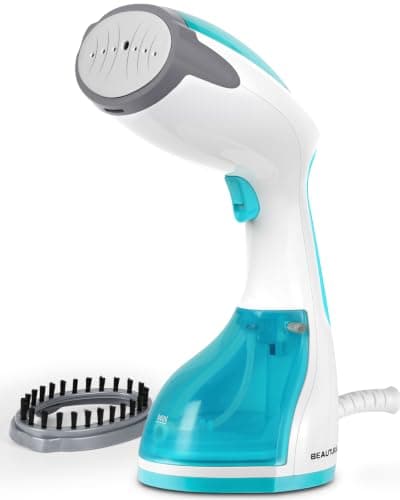
The Beautural 1200W is the choice for a studio or a costume closet rather than a bag: 260 ml and a published 2-pound weight, with the low-end control these fabrics want. It is 120 V only, so it stays home if you compete abroad.
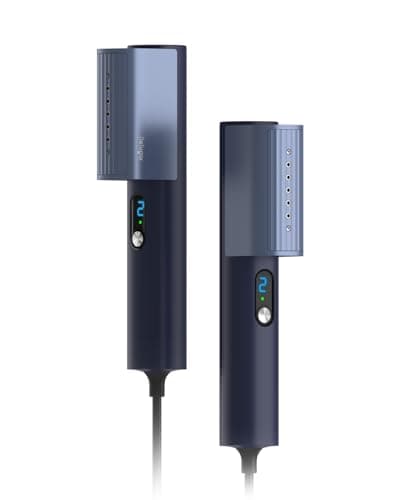
The nesugar G3 Pro is the one that genuinely disappears into a bag at 0.8 pounds — the lightest thing on this site. The trade is a 70 ml tank, which is roughly one costume before a refill, and a listing that says only "global voltage adaptation" without publishing a range, so confirm before flying with it.
The picks
Ranked on published specifications. Tap a row for the full write-up; the price button goes to Amazon.
#
Product
Best for
Spec score
Price
1
Jack & Rose K1 Travel SteamerTrue 100-240V, 15 seconds to steam, 1.6 pounds — the travel spec sheet done right.
Dual voltage is the entire question for a travel steamer, and this one publishes 100-240V rather than the 120V-only that most compact units quietly ship with. In a European socket it works; a 120V unit on 230V is a fire.
Fifteen seconds is the joint-fastest published heat-up on this site. In a hotel room, before a dinner you are already late for, that is the number that matters.
150 ml is a hotel-room tank, not a wardrobe tank. Judge it as two garments per fill.
Good
Genuine 100-240V dual voltage, published on the listing
15-second published heat-up, joint-fastest here
Steamer and press plate in one 1.6 pound body
Not good
150 ml means refilling for anything beyond two garments
1,000W is modest — it will not fight linen
You still need the physical plug adapter for the country
Who should not buy it. Skip this if it will be your only steamer at home. It is built for a suitcase, and the tank says so.
2. Travel · Dual voltage on a budget
OGHom GH02 Travel Steamer
110-240V and a 15-second heat-up in the cheapest dual-voltage body here.
Tank capacity decides whether steaming is pleasant or annoying, and this carries 260 ml against the 190 to 216 ml the 1,875W units manage. More minutes per fill, fewer trips to the sink.
1,200 watts is a real step down from 1,875. On linen and heavy cotton you will feel it — the steam is wetter and you will make more passes. On the synthetics and knits that make up most wardrobes the difference is small.
Two pounds and 30 seconds to heat are both mid-table. Nothing here is remarkable except the tank, and the tank is the point.
Good
260 ml — the largest handheld tank in this set
30-second published heat-up, faster than the 1,875W Conair
Auto shut-off published as part of a nine-point safety design
Not good
1,200W struggles where 1,875W does not — linen especially
Filling means carrying the whole unit to the tap
Two pounds in the hand, the same as the far more powerful Conair
Who should not buy it. Skip this if linen or heavy cotton is most of what you own. Below about 1,500 watts you make three passes where a stronger unit makes one.
4. Travel · A jacket pocket
nesugar G3 Pro Palm Steamer
Twelve point eight ounces and 15 seconds — the smallest thing here that makes real steam.
Nine and a half inches long, an inch and a half deep, and under a pound. It is closer to a large marker pen than an appliance.
The tank is 70 ml, the smallest in this set by a distance — roughly one shirt front. The size is the feature and the tank is the price of it.
900 watts in something this small is a genuinely good ratio, and the 15-second heat-up matches the best here.
Good
0.8 pounds — the lightest unit on this site
15-second published heat-up
Global voltage adaptation published by the maker
Not good
70 ml tank — about one garment per fill
Small tanks mean frequent refills, which slows a session badly
Not enough for anything structured
Who should not buy it. Skip this if you steam more than one or two things at a time. You will spend the session at the tap.
Questions people actually ask
+Can you steam a dance costume with rhinestones?
Steam it from the inside, not the front. Hot-fix rhinestones are held on by heat-activated adhesive, and steam reactivates it — a stoned bodice steamed from the outside will shed stones. Turn the costume inside out and let the heat migrate through the base fabric.
+What is the best steamer for dance costumes?
A compact, fast-heating handheld you can hold at a distance. The Jack & Rose K1 suits competition travel best — genuine 100-240 V dual voltage, a 15-second heat-up and 1.6 pounds. For a studio rather than a bag, a larger-tank handheld like the Beautural 1200W is easier to live with.
+Can you steam spandex and lycra?
Yes, on a low setting. The stretch fabric is the robust part of a costume. Sustained high heat degrades elastane over time, so keep the setting low and keep moving rather than dwelling.
+How do you get wrinkles out of tulle?
Steam is the right tool and it needs very little — a pass from about eight inches and tulle drops. Do not work close: tulle is light enough to lift toward the head and can snag on it.
+Can you steam sequins?
Sewn-on sequins, yes, ideally from the reverse. Glued sequins and appliqué should be treated like rhinestones — keep steam off them, because the adhesive softens with heat. Plastic sequins can also curl if you aim direct heat at them.