Care
Garment Steamer Wattage and Running Cost
The arithmetic nobody in this category publishes, with the electricity price cited.
By Scooter M., enthusiast, crease control · Published
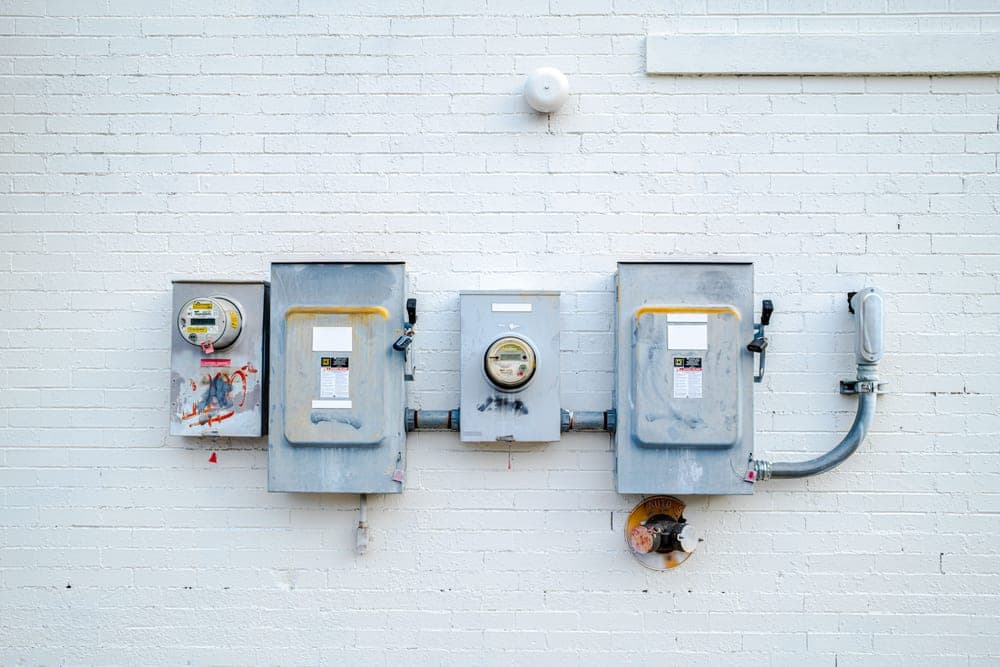
Garment steamers draw between 700 and 1,875 watts, and 1,875 is the practical ceiling for a plug-in appliance on a US 15-amp circuit. Running one is cheap: ten minutes at 1,875 W costs about 5.73 cents at the current US average residential rate of 18.34 cents per kilowatt-hour (June 2026, EIA). Wattage matters because it decides which fabrics you can handle — not because of the bill.
We earn a commission if you buy through the links on this page, at no extra cost to you. It does not change which steamer we rank first — the ranking comes from published specifications and the arithmetic on our method page. We have not tested these units. Full disclosure.
The arithmetic, shown
This is not complicated and almost nobody in the category publishes it, so here it is in full. Energy used in kilowatt-hours equals watts ÷ 1,000 × hours. Cost equals kWh × price per kWh.
1,875 W ÷ 1,000 = 1.875 kW. Ten minutes = 0.1667 hours. 1.875 × 0.1667 = 0.3125 kWh. At 18.34¢/kWh, that is 5.73¢.Electricity price: US average retail residential, June 2026, EIA Electric Power Monthly Table 5.6.A.
| Power | 5 minutes | 10 minutes | 30 minutes | 1 hour |
|---|---|---|---|---|
| 700 W | 1.07¢ | 2.14¢ | 6.42¢ | 12.84¢ |
| 1,100 W | 1.68¢ | 3.36¢ | 10.09¢ | 20.17¢ |
| 1,200 W | 1.83¢ | 3.67¢ | 11.00¢ | 22.01¢ |
| 1,500 W | 2.29¢ | 4.59¢ | 13.76¢ | 27.51¢ |
| 1,800 W | 2.75¢ | 5.50¢ | 16.51¢ | 33.01¢ |
| 1,875 W | 2.87¢ | 5.73¢ | 17.19¢ | 34.39¢ |
These are the true costs of the electricity consumed. Your rate will differ — substitute it into the formula above and the answer is still yours to check.
What that means over a year
Ten minutes twice a week on an 1,875 W handheld is 104 sessions a year, which comes to about $5.96. On a 1,500 W standing steamer used for thirty minutes every fortnight — twenty-six sessions — it is about $3.58. Neither figure should influence a purchase.
What each power band can actually do
| Power | Handles | Struggles with |
|---|---|---|
| 700-900 W | Jersey, polyester, light knits | Cotton shirting, tailoring |
| 1,000-1,200 W | Most everyday cotton and synthetics | Heavy twill, structured jackets |
| 1,500-1,800 W | Cotton, wool, most tailoring | Linen, which wants an iron regardless |
| 1,875 W | Everything a vertical steamer can do | Linen. Still linen |
Why standing steamers draw less and do more
A 1,500 W upright out-performs an 1,875 W handheld over any real session, and the reason is not power. The upright is heating 1.8 liters and can work for an hour; the handheld is heating 200 ml and stops after twenty minutes. Peak wattage measures how fast a small tank becomes steam, not how much steaming you can do. The full comparison is here.
Machines at the two ends of the range
Ranked on published specifications. Tap a row for the full write-up; the price button goes to Amazon.
| # | Product | Best for | Spec score | Price |
|---|---|---|---|---|
| 1 | 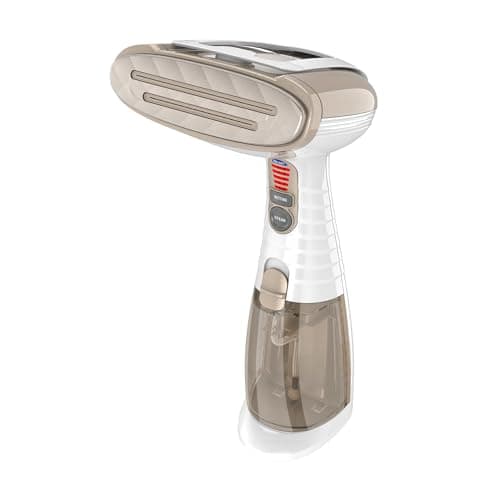 Conair Turbo ExtremeSteam GS59The most-bought handheld in the category, and its published specs explain that rather than contradict it. Conair Turbo ExtremeSteam GS59The most-bought handheld in the category, and its published specs explain that rather than contradict it. | The default handheld | 6.5/10 | |
| 2 | 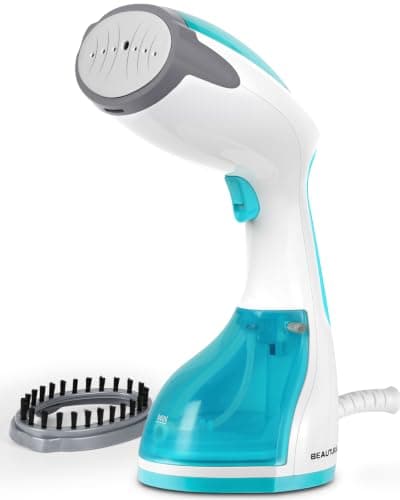 Beautural 1200W Handheld Steamer260 ml on a 1,200W handheld — the most run time per fill here, bought with output. Beautural 1200W Handheld Steamer260 ml on a 1,200W handheld — the most run time per fill here, bought with output. | The biggest tank in the class | 5.7/10 |
Questions people actually ask
+How many watts does a garment steamer use?
Between 700 and 1,875 watts. 1,875 is the practical ceiling for a plug-in appliance on a US 15-amp circuit, and several handhelds sit exactly there.
+How much does it cost to run a garment steamer?
Very little. Ten minutes at 1,875 W is about 5.73 cents at the US average residential rate of 18.34 cents per kilowatt-hour. Twice a week for a year comes to roughly $5.96.
+Will a garment steamer trip a breaker?
An 1,875 W unit draws about 15.6 amps at 120 volts, which is essentially all of a standard 15-amp circuit. Running one alongside a kettle or hair dryer on the same circuit will trip it.
+Is a higher wattage steamer better?
For fabric capability, yes — more watts means drier steam and fewer passes on cotton and wool. For run time, no: tank capacity decides that, and the biggest tanks are on mid-power machines.
Sources
- US EIA, Electric Power Monthly Table 5.6.A — average retail price of electricity — accessed September 2026