Fabrics
Can You Steam Cotton?
Yes — this is the fabric where the wattage on the box finally earns its place.
By Scooter M., enthusiast, crease control · Published
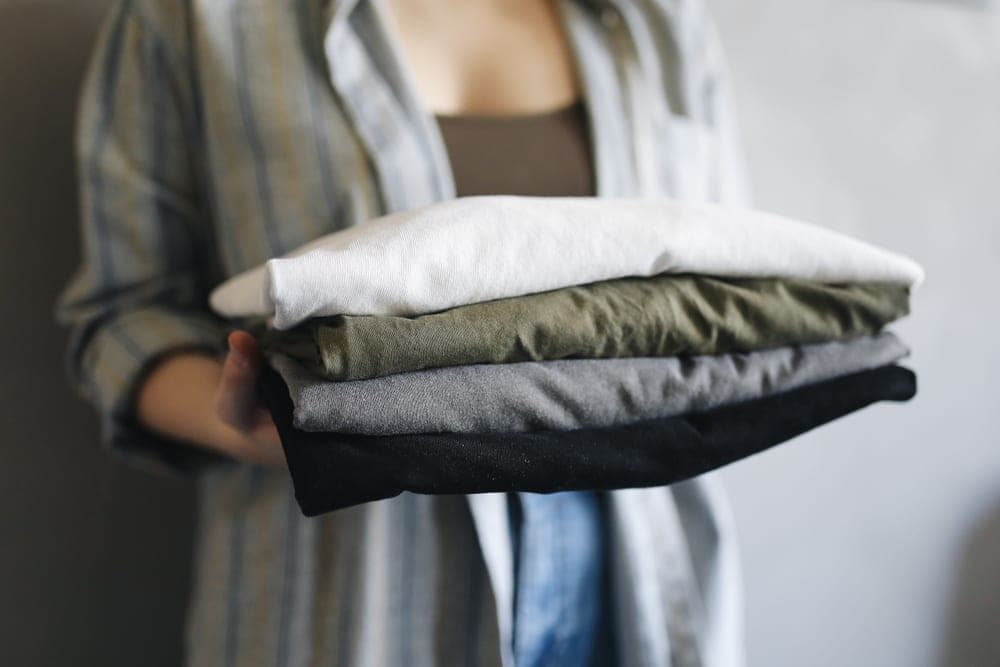
Yes — but cotton is the fabric that separates a real steamer from a fabric refresher. Cellulose fibers hold a wrinkle firmly and need genuine energy to release it. Above about 1,200 watts cotton steams well at four to six inches on a high setting. Below 1,000 watts you will make several passes and end up with damp, slightly-less-wrinkled cotton, which is the experience that convinces people steamers do not work.
We earn a commission if you buy through the links on this page, at no extra cost to you. It does not change which steamer we rank first — the ranking comes from published specifications and the arithmetic on our method page. We have not tested these units. Full disclosure.
Why cotton needs more than silk does
Cotton is a cellulose staple fiber with a twisted, ribbon-like cross-section. It is absorbent and it holds hydrogen bonds firmly in whatever configuration it dried in — which is why a shirt that dried crumpled in a machine stays crumpled. Breaking those bonds takes moisture and heat together, in quantity.
Cotton does have more elastic recovery than linen, which is why steam achieves something on cotton and comparatively little on flax. But it has far less than wool, which is why steaming a cotton shirt takes real effort where a wool jacket almost does itself.
Settings by weight
| Cloth | Setting | Distance | Realistic outcome |
|---|---|---|---|
| Jersey / T-shirt | Medium | 6" | Fully smooth, one pass |
| Poplin shirt | High | 4-6" | Smooth body and sleeves; collar still needs pressure |
| Oxford cloth | High | 4" | Good, with tension held. Two passes likely |
| Twill / chino | High | 4" | Softened, not sharp. A crease needs an iron |
| Canvas / heavy drill | High | 4" | Marginal. This is iron territory |
Tension is half the technique
On cotton more than any other fabric, holding the cloth taut with your free hand is what makes steam work. A loose panel moves away from the vapor and takes the wrinkle with it. Grip the hem or the cuff, pull gently, and run the head downward. If you take one habit from this site, take that one.
Where cotton becomes iron territory
The crossover is structure, not fiber. A cotton shirt body steams well. A cotton collar, cuff or placket does not, because those are multi-layer constructions that need contact and pressure to lie flat. A cotton trouser crease cannot be made vertically at all. This is exactly the split covered on the dress shirts page, and it is why a 2-in-1 with a press plate is genuinely useful for a cotton-heavy wardrobe.
Steamers with enough output for cotton
Ranked on published specifications. Tap a row for the full write-up; the price button goes to Amazon.
| # | Product | Best for | Spec score | Price |
|---|---|---|---|---|
| 1 | 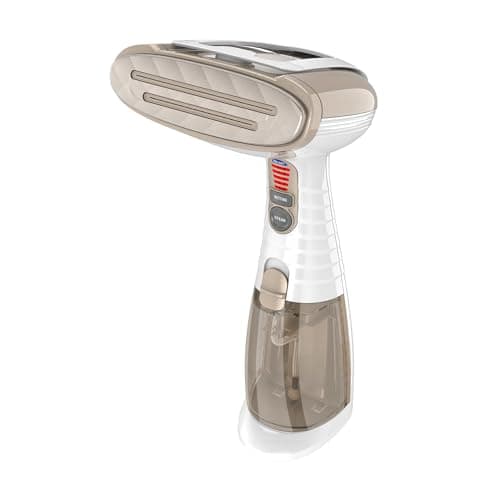 Conair Turbo ExtremeSteam GS59The most-bought handheld in the category, and its published specs explain that rather than contradict it. Conair Turbo ExtremeSteam GS59The most-bought handheld in the category, and its published specs explain that rather than contradict it. | The default handheld | 6.5/10 | |
| 2 | 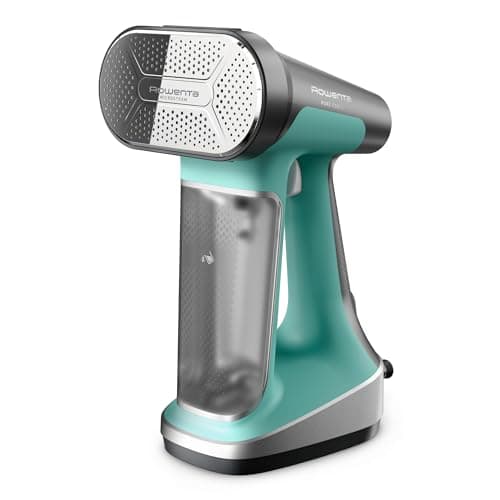 Rowenta Pure Force 2-in-1 DR8822Steams vertically, presses horizontally, and publishes the fastest heat-up in this set by a factor of three. Rowenta Pure Force 2-in-1 DR8822Steams vertically, presses horizontally, and publishes the fastest heat-up in this set by a factor of three. | One machine instead of two | 6.3/10 |
Questions people actually ask
+Can you steam cotton?
Yes, with enough power. Above about 1,200 watts cotton steams well at four to six inches on high. Below 1,000 watts you tend to wet the fabric rather than smooth it.
+What steamer setting for cotton?
High, from four to six inches, with the fabric held taut. Cotton tolerates heat and moisture well — the constraint is output, not delicacy.
+Can a steamer replace an iron for cotton shirts?
For the body and sleeves, yes. For collars, cuffs and plackets, no — those are multi-layer constructions that need contact and pressure. A 2-in-1 with a press plate covers both.
+Why does my steamer just make cotton damp?
Almost always insufficient power. A 700 W element cannot supply enough energy to break cotton's hydrogen bonds quickly, so the water arrives before the heat does. It is a specification problem rather than a technique problem.
Sources
- Textile Learner — properties of cotton fiber — accessed September 2026
- Cotton Incorporated — textile resources — accessed September 2026