Two uprights with the same wattage and the same tank. Everything that separates them is in the fields one of them leaves blank.
By Scooter M., enthusiast, crease control · Published
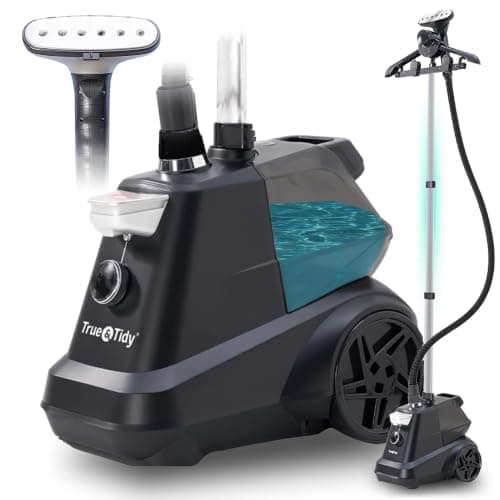
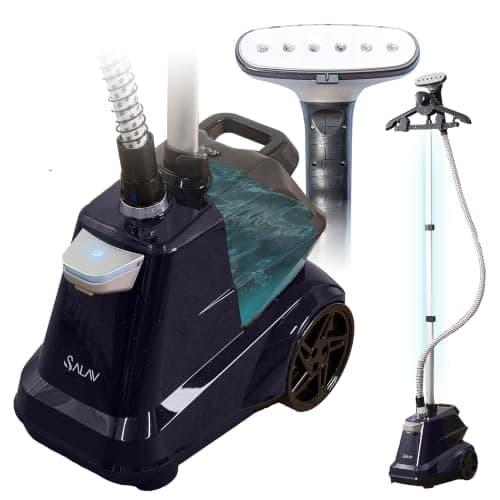
These two are the closest pair on the whole site. Both publish 1,800 watts. Both publish a 3,000 ml tank. They weigh within a tenth of a pound of each other. The differences are three: the SALAV X3A heats in 45 seconds against the SX3's 50, publishes a one-year warranty where True & Tidy publishes none, and sits at a lower price. On published data there is no argument here — buy the SALAV unless the True & Tidy is meaningfully cheaper on the day you look.
We earn a commission if you buy through the links on this page, at no extra cost to you. It does not change which steamer we rank first — the ranking comes from published specifications and the arithmetic on our method page. We have not tested these units. Full disclosure.
Side by side, on published figures
SALAV X3A against True & Tidy SX3, read from the live listings, September 2026
SALAV X3A
True & Tidy SX3
Power
1,800 W
1,800 W
Tank
3,000 ml
3,000 ml
Heat-up
45 s
50 s
Weight
12 lb
12.1 lb
Warranty
1 year
Not published
Minutes of steam per fill
About 104
About 104
Spec score
7.8
7.4
Minutes per fill is arithmetic: a 1,875 W element boils roughly 30 ml a minute and the rate scales with power, so 1,800 W converts about 28.8 ml a minute. Three liters is therefore about an hour and three quarters, on both machines, because the machines are the same on the figures that decide it.
Why two uprights are this alike
This is common at the full-size end and worth understanding before you shop it. A 1,800 W element, a 3-liter tank, a telescopic pole and a hose is close to a standard parts list, and several brands buy from the same manufacturing base and differentiate on finish, accessories and support. When two listings publish the same four figures to the same precision, the right response is not to look for a hidden difference in steam quality. It is to look at what each brand is willing to put in writing.
The warranty is the actual difference
SALAV publishes a one-year warranty. True & Tidy publishes no warranty term on this listing. On a machine with a boiler, a pump and a hose — three things that fail — the difference between a stated year and nothing stated is the most valuable line in the table.
A standing steamer is also the form factor where this matters most. A handheld that dies is a small annoyance; a 12-pound upright that dies in month eight is a return, a box and a phone call. The compare hub sets out which brands publish a term and which do not, and the pattern holds here: SALAV is an established name in this category and True & Tidy is newer to it.
Five seconds and a tenth of a pound
The other two differences are real and small. 45 seconds against 50 is inside the noise of how long it takes to hang a garment. Twelve pounds against 12.1 is nothing at all — both of these are machines you wheel rather than carry, and both are at the heavy end of the domestic upright range.
What is worth noting is that the SALAV takes the better figure in all three comparisons. There is no trade here, no axis on which the True & Tidy is ahead on published data. That is unusual and it is the reason this page reaches a straight verdict where most of our head-to-heads do not.
Where both of them sit against the field
Three liters at 1,800 W is roughly an hour and three quarters of continuous steam — the longest of any machine on this site except the commercial Jiffy, which carries 2.84 liters but draws only 1,300 W and therefore runs even longer. Against a handheld the comparison is not close: the best-scoring handheld here manages 6.3 minutes per fill.
If you are choosing between these two, you have already made the decision that matters — handheld or standing — and you made it correctly for anyone steaming a rail, curtains or bedding. The cheaper SALAV GS18 at 1.8 liters is the other sensible domestic option, and for most households it is enough.
The verdict, and the one thing that would change it
Buy the SALAV X3A. It matches the True & Tidy on the two figures that decide how a standing steamer performs, beats it on heat-up, and publishes the warranty the other one does not. On the prices we saw when this page was written the SALAV was also the cheaper machine, which makes the decision unusually simple.
The thing that would change it: price. Both of these move, and if the True & Tidy is substantially the cheaper on the day you look, you are buying the same 1,800 W and the same three liters and paying for them with the warranty. That is a legitimate trade for some people. Check the live prices below rather than trusting any figure in this paragraph, because the prices on this site are timestamped and yours will not be.
The two compared
Ranked on published specifications. Tap a row for the full write-up; the price button goes to Amazon.
#
Product
Best for
Spec score
Price
1
SALAV X3A Commercial-Style SteamerThree liters, 1,800 watts and foot pedals — a commercial layout at a domestic price.
Three liters is the largest tank we found outside the true commercial machines, and 1,800 watts is the practical ceiling for a US household circuit at this size.
Foot pedals matter more than they sound. Steaming a rail means constantly starting and stopping, and doing that without setting the head down is the difference between an hour and ninety minutes.
Seventy and a half inches tall. Measure the ceiling before you buy — this is nearly six feet of assembled pole.
Good
3 liter tank, the largest here outside the Jiffy
1,800W — the most power of any standing unit in this set
Foot pedal control, rare below commercial prices
Not good
Twelve pounds and 70.5 inches — it does not get put away
45 seconds to heat three liters, so it is not a grab-and-go
One-year warranty against the Jiffy's three
Who should not buy it. Skip this if your ceilings are low or your storage is a closet. Seventy inches assembled is a piece of furniture.
2. Standing · The SALAV X3A's closest match
True & Tidy SX3 Standing Steamer
The same three liters and 1,800 watts, five seconds slower to heat, no published warranty.
Spec for spec this sits alongside the SALAV X3A: 1,800 watts, three liters, seventy and a half inches. The published differences are a 50-second heat-up against 45, and 12.1 pounds against 12.
Those margins are inside the noise of how a maker measures. Choose on price and stock, not on the spec sheet.
True & Tidy publishes no warranty term on this listing where SALAV does. That is the one difference we would actually act on.
Good
3 liter tank and 1,800W, matching the class leaders
Slightly narrower footprint than the SALAV
Straightforward pole-and-hanger design
Not good
No published warranty term
50-second heat-up, the slowest standing unit here
12.1 pounds
Who should not buy it. Skip this if the SALAV X3A is available at a similar price. Same specifications, and SALAV publishes a warranty.
Questions people actually ask
+Is the SALAV X3A better than the True & Tidy SX3?
On published specifications, yes, on every axis that differs. Both are 1,800 W with a 3,000 ml tank and weigh within a tenth of a pound of each other. The SALAV heats in 45 seconds against 50 and publishes a one-year warranty where the True & Tidy publishes none.
+Why do these two standing steamers have identical specs?
A 1,800 W element with a 3-liter tank, a telescopic pole and a hose is close to a standard parts list at the full-size end of this category, and brands differentiate on finish, accessories and support rather than on the core figures. When the numbers match, compare what each brand puts in writing.
+How long do they run on one tank?
About an hour and three quarters each. Three liters at 1,800 W converts to roughly 28.8 ml a minute using the arithmetic applied across this site, which is about 104 minutes of continuous steam. In normal stop-start use it is considerably longer.
+Do I need 3 liters?
Only if you steam a rail, curtains or bedding in one session. For a household doing a few garments at a time, the 1.8-liter SALAV GS18 is about an hour of steam and costs less. Three liters is a capacity for people who would otherwise refill mid-job.