Fabrics
Can You Steam Cashmere?
Yes — and of everything you could do to a cashmere sweater, steam is among the gentlest. The danger is what you do next.
By Scooter M., enthusiast, crease control · Published
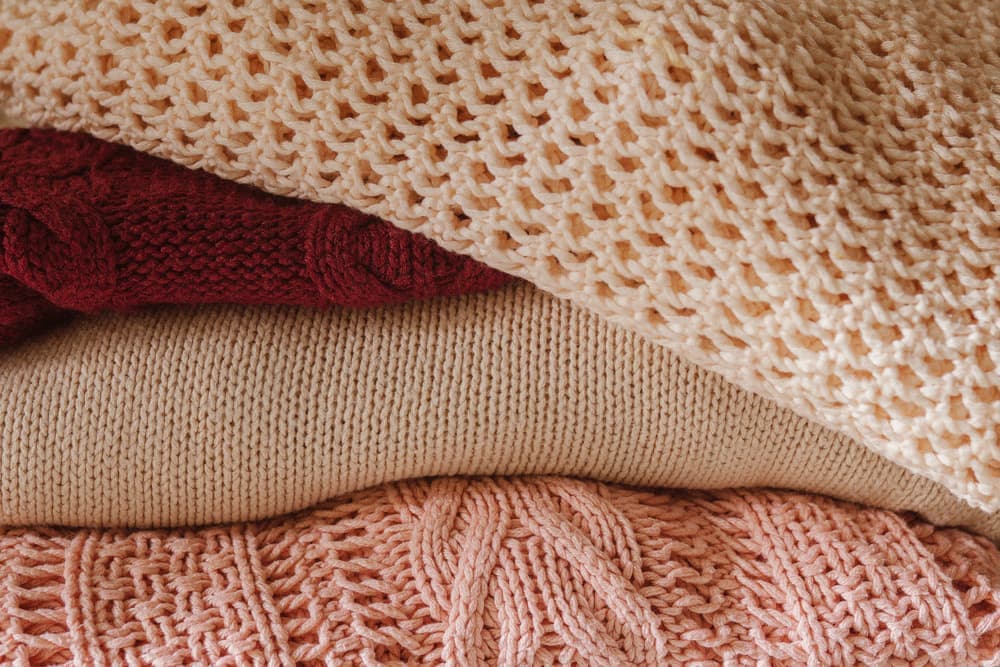
Yes. Cashmere is a protein fiber like wool, so it relaxes under steam and recovers its own shape — exactly the behavior that makes steam the right tool. Work on a low setting from six to eight inches, further back than you would for wool, because cashmere is a much finer fiber. Then the part that actually matters: lay it flat to dry, never hang it.
We earn a commission if you buy through the links on this page, at no extra cost to you. It does not change which steamer we rank first — the ranking comes from published specifications and the arithmetic on our method page. We have not tested these units. Full disclosure.
Why cashmere wants a lighter touch than wool
Cashmere is goat hair rather than sheep wool, and the difference that matters here is diameter. Cashmere runs roughly 11 to 18 microns, where merino wool is typically over 24. It is a substantially finer fiber, which is exactly why it feels the way it does — and why the same steam output that is comfortable on a wool suit is more than a cashmere knit needs.
Everything else follows wool's playbook. It is a protein fiber with natural crimp and real elastic recovery, so relaxing it with moisture lets it spring back toward its resting shape on its own. You are not forcing anything straight; you are letting the fiber do it.
The drying mistake that ruins sweaters
This is the whole page in one paragraph. Cashmere is almost always knitted, and a knit holds a lot of moisture and has very little structural resistance to its own weight. A damp cashmere sweater on a hanger elongates — the shoulders pull, the body drops, the sleeves lengthen — and because the fiber has been relaxed by the moisture, it sets in that stretched shape as it dries.
So: steam it flat on a table, or steam it on a hanger and then immediately lay it flat. Do not hang it damp, do not wear it damp, and do not drape it over a rail. This is the same rule as wool knitwear, and it matters more here because the fiber is finer and the garment usually cost more.
Settings
| Garment | Setting | Distance | Dry it |
|---|---|---|---|
| Sweater or crewneck | Low | 6-8" | Flat, always |
| Scarf or wrap | Low | 8" | Flat |
| Cardigan | Low | 6-8" | Flat, buttons fastened so the front hangs true |
| Cashmere-blend coat | Medium | 4-6" | Hanging is fine — a woven coat has structure a knit does not |
A cashmere-blend overcoat is a woven, tailored garment and behaves like wool tailoring. The flat-dry rule is about knits.
Blends behave like the other fiber, not like cashmere
Most garments sold as cashmere are not entirely cashmere, and the label is worth reading before you decide how to treat one. A cashmere-wool blend behaves like wool and tolerates a slightly higher setting. A cashmere-silk blend inherits silk's water-spotting risk and wants the head further back. A cashmere-polyester or cashmere-acrylic blend contains a thermoplastic, which means an iron can glaze it even though the cashmere content would not.
The safe general rule across this whole site applies here too: treat a blend as the more fragile of its fibers. A 70/30 cashmere-silk sweater gets the silk treatment, not the cashmere one.
Steaming as an alternative to washing
This is the most useful thing steam does for cashmere, and it is rarely framed this way. Cashmere should be washed as seldom as you can manage — every wash is an opportunity for felting, stretching or shrinkage, and the fiber does not need it the way cotton does. Wool-family fibers resist odor reasonably well on their own.
Steam sits neatly in that gap. It relaxes the wrinkles a day of wear puts in, knocks back the smell, and does none of the things that damage cashmere in a wash. A sweater steamed and rested between wears can go a great deal longer before it genuinely needs cleaning. What steam does not do is remove a mark — a stain still needs proper cleaning, and on cashmere that usually means a specialist rather than a machine.
Reviving a sweater that has already stretched
If a cashmere garment has been hung damp at some point and has grown, it is often recoverable, because the fiber has elastic memory rather than permanent damage. The method is the same one used to steam it in the first place, applied deliberately:
- 1Lay it flat and steam the stretched areaLow setting, six to eight inches. You are relaxing the fiber so it can move, not soaking it.
- 2Ease it back into shape with your handsWork the length back in gently while the fiber is relaxed — shoulders in, body up, sleeves shortened. Do not pull; persuade.
- 3Leave it flat until bone dryThis is where the new shape sets. Moving it to a hanger at this point undoes the whole exercise.
It will not fix a garment that has been felted by hot water — that is genuine fiber damage and it is not reversible. But ordinary hanging stretch usually comes most of the way back.
Pilling, and what steam does not fix
Steam relaxes wrinkles and freshens a garment. It does not remove pills — those are tangled loose fibers on the surface and they need a comb or a fabric shaver. It also does not clean; steam knocks back odor, which is genuinely useful on a fiber you want to wash as rarely as possible, but a mark still needs proper cleaning.
Steamer or iron for cashmere?
Steamer, clearly. An iron on a fine knit flattens the loft that makes cashmere warm and soft, and on a fiber this fine the risk of glazing is real. If a cashmere garment genuinely needs pressing — a blend jacket's lapel facing, say — use a pressing cloth on a low setting and press from the reverse.
Steamers with the control cashmere wants
Ranked on published specifications. Tap a row for the full write-up; the price button goes to Amazon.
| # | Product | Best for | Spec score | Price |
|---|---|---|---|---|
| 1 | 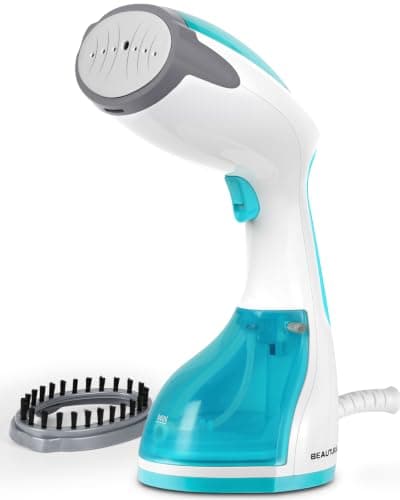 Beautural 1200W Handheld Steamer260 ml on a 1,200W handheld — the most run time per fill here, bought with output. Beautural 1200W Handheld Steamer260 ml on a 1,200W handheld — the most run time per fill here, bought with output. | The biggest tank in the class | 5.7/10 | |
| 2 | 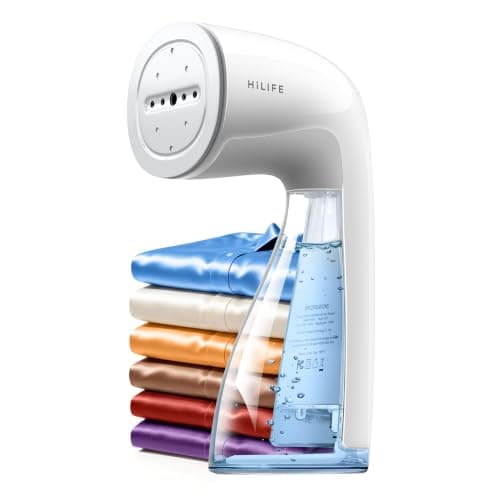 HiLIFE HL9 1100W Steamer300 ml, 1,100 watts and 30 seconds — the HL7's three weaknesses answered. HiLIFE HL9 1100W Steamer300 ml, 1,100 watts and 30 seconds — the HL7's three weaknesses answered. | The largest tank on a mid-power handheld | 6.2/10 |
Questions people actually ask
+Can you steam cashmere?
Yes, and it is one of the safest things you can do to it. Use a low setting from six to eight inches. The important part comes after: lay the garment flat to dry rather than hanging it, because a damp knit stretches under its own weight.
+Will steaming shrink cashmere?
No. Shrinkage and felting in animal fibers come from agitation in hot water, and a vertical steamer supplies neither. What does damage a cashmere sweater is hanging or wearing it while it is still damp.
+How do you get wrinkles out of a cashmere sweater?
Steam it flat on a table from six to eight inches on a low setting, gently easing the knit back into shape with your hand, then leave it flat until completely dry. Cashmere's natural crimp does most of the work.
+Does steaming remove pills from cashmere?
No. Pills are tangled surface fibers and need a cashmere comb or a fabric shaver. Steam relaxes wrinkles and freshens, which is a different job.
Sources
- Textile Learner — types of textile protein fibers (cashmere fineness) — accessed September 2026
- The Woolmark Company — wool care guidance — accessed September 2026