Steamer vs Iron
Steamer vs Iron for Knitwear
This is the least ambiguous verdict on the site. An iron does not press a sweater — it destroys the structure that makes it one.
By Scooter M., enthusiast, crease control · Published
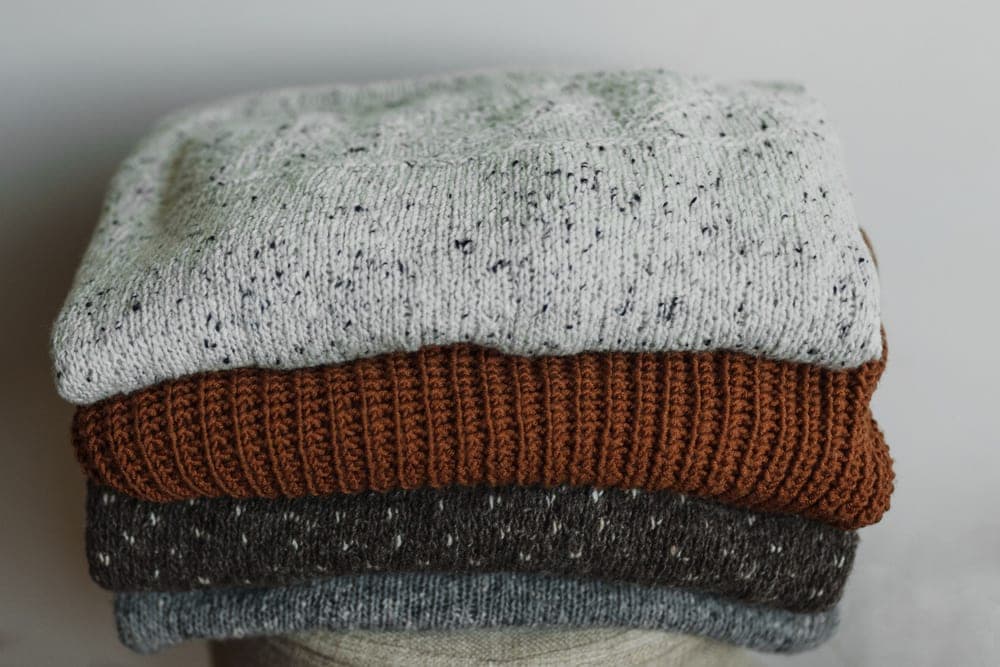
Steamer. Every time. A knit is not a flat cloth — it is a fabric made of interlocking loops, and the air trapped in and between those loops is what makes a sweater warm, soft and thick. An iron applies heat *and pressure*, and the pressure crushes that structure flat. The garment comes out thinner, shinier and colder, and it does not recover. Steam relaxes the yarn without touching it, which is the only intervention a knit actually needs.
We earn a commission if you buy through the links on this page, at no extra cost to you. It does not change which steamer we rank first — the ranking comes from published specifications and the arithmetic on our method page. We have not tested these units. Full disclosure.
What loft is, and why pressure kills it
A woven fabric is two sets of yarns crossing at right angles under tension — flat, stable, and largely unchanged by being pressed. A knit is one continuous yarn looped through itself, and those loops stand proud of the fabric plane. The space they enclose is the point: it holds air, air is the insulator, and that is why a thin merino sweater is warmer than a much heavier cotton shirt.
Now put an iron on it. Heat softens the fiber, pressure flattens the loops, and the fabric cools in its new compressed state. You have not removed wrinkles from the sweater so much as converted it into a thinner, denser, less warm piece of cloth. On wool it also frequently produces a permanent shine, because the flattened fiber surface reflects light in a way the round one did not.
What steam does instead
Steam is heat and moisture with no mechanical force. Applied to a knit at a distance, it relaxes the yarn enough for the loops to move, and the fiber's own elastic recovery — very strong in wool and cashmere, present in most others — pulls the fabric back toward its resting shape. The wrinkle disappears because the fabric returns to the geometry it was knitted in. Nothing is compressed and nothing is set.
You can also help it along by hand, which you cannot do with an iron. Steam the area, then ease the knit gently into shape with your fingers while it is warm and relaxed. That combination fixes things an iron cannot touch at all — a stretched cuff, a bagged elbow, a rolled hem.
The verdict, by knit
| Garment | Tool | Setting | Note |
|---|---|---|---|
| Wool or cashmere sweater | Steamer | Low, 6-8" | Flat on a table; flat to dry |
| Cotton jersey T-shirt | Steamer, iron acceptable | Medium, 4-6" | The one knit an iron will not ruin — jersey has little loft to lose |
| Chunky or cable knit | Steamer | Low, 8" | The most loft on this list, so the most to lose |
| Ribbed knit | Steamer | Low, 6" | Never stretch ribbing flat — the rib is supposed to contract |
| Merino base layer | Steamer | Low, 6-8" | Usually needs nothing but a hang and a light pass |
| Sweatshirt / fleece | Steamer | Medium, 6" | Synthetic pile crushes exactly like velvet under an iron |
| Knitted dress | Steamer | Low-medium, 6" | Steam it on the hanger, then lay it flat before it dries |
There is no row in this table where an iron is the better tool. Jersey is the only one where it is merely harmless.
The rule that matters more than the tool
Even done with the right instrument, there is one way to ruin a knit while steaming it, and it accounts for most of the sweaters people think steam damaged: hanging it while it is damp.
A knit has very little resistance to being stretched lengthways — that is what the loop structure does — and a damp knit has less still, because the moisture has relaxed the fiber. Hang it wet and its own weight elongates it: shoulders pull down, the body drops, the sleeves grow. It then dries in that shape, and the shape sets.
So the rule is short. Steam knits flat on a table, and dry them flat. If you steam on a hanger because it is easier, take the garment down the moment you finish and lay it out. This applies to every knit in the table above, and it applies most severely to the ones you care about most.
If a sweater has already stretched
- 1Lay it flat and steam the stretched areaLow setting, six to eight inches, until the yarn is relaxed and slightly warm to the touch. You are not trying to wet it.
- 2Work the shape back with your handsEase the length back in — sleeves shortened, body up, shoulders in. Persuade, do not pull; the fiber will move while it is relaxed.
- 3Pin or measure against a garment that fitsLay a sweater that fits properly beside it and match the dimensions. Guessing at this stage is how you end up with a sweater that is the wrong shape in a new way.
- 4Leave it flat until completely dryThis is when the shape sets. Moving it to a hanger before it is bone dry undoes everything you just did.
This works on ordinary hanging stretch. It does not work on felting — a wool knit that has been agitated in hot water has physically matted, and no amount of steam reverses that.
When you genuinely need an iron on a knit
Two narrow cases, both of which want a pressing cloth and no weight on the iron. A collar or placket on a knitted polo is a woven-like detail that sometimes wants to be sharp; press it from the reverse through a cloth. A fused hem or a knitted garment's woven trim occasionally needs the same treatment. Everything else is steam.
Note what is not on that list: the body of the garment, the sleeves, the ribbing, and anything with visible loft. If you find yourself pressing a large area of a knit, you are doing the thing this page warns about.
Steaming instead of washing
Knitwear — particularly in wool-family fibers — should be washed as seldom as you can manage, because every wash risks felting, shrinkage or stretch. Steam covers most of what a wash was going to do: it relaxes the wrinkles from a day of wear, kills the smell, and puts the garment back in shape. A sweater steamed and rested between wears goes much longer before it genuinely needs cleaning.
What steam does not do is remove pills — those are tangled surface fibers and need a comb or a fabric shaver — or shift a mark. For those, a different tool. If you made the garment yourself, steam blocking is the same physics applied deliberately at the finishing stage.
Steamers with the low-end control knits want
Ranked on published specifications. Tap a row for the full write-up; the price button goes to Amazon.
| # | Product | Best for | Spec score | Price |
|---|---|---|---|---|
| 1 | 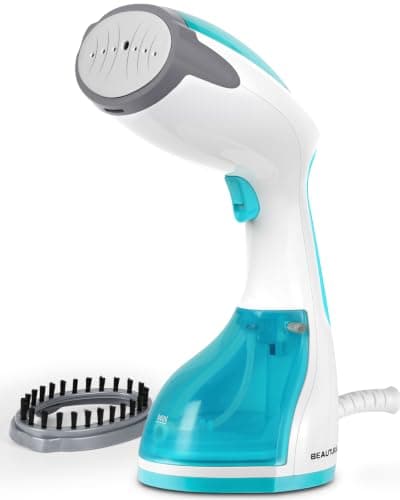 Beautural 1200W Handheld Steamer260 ml on a 1,200W handheld — the most run time per fill here, bought with output. Beautural 1200W Handheld Steamer260 ml on a 1,200W handheld — the most run time per fill here, bought with output. | The biggest tank in the class | 5.7/10 | |
| 2 | 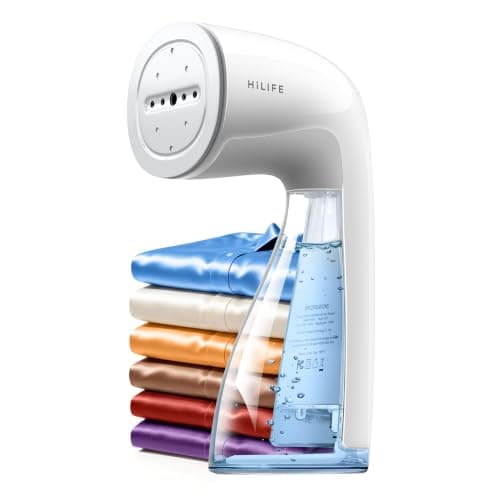 HiLIFE HL9 1100W Steamer300 ml, 1,100 watts and 30 seconds — the HL7's three weaknesses answered. HiLIFE HL9 1100W Steamer300 ml, 1,100 watts and 30 seconds — the HL7's three weaknesses answered. | The largest tank on a mid-power handheld | 6.2/10 | |
| 3 | 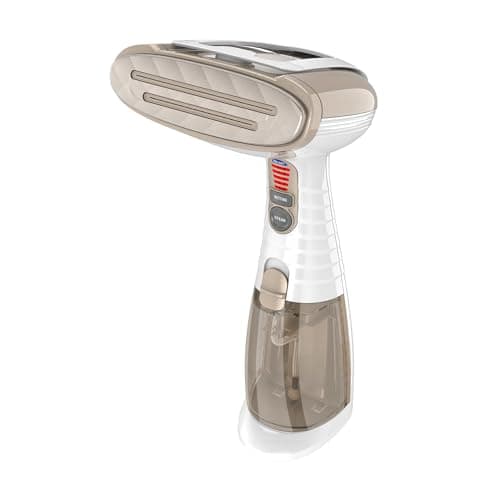 Conair Turbo ExtremeSteam GS59The most-bought handheld in the category, and its published specs explain that rather than contradict it. Conair Turbo ExtremeSteam GS59The most-bought handheld in the category, and its published specs explain that rather than contradict it. | The default handheld | 6.5/10 |
Questions people actually ask
+Can you iron a sweater?
You can, and you should not. An iron applies pressure as well as heat, and pressure crushes the loops that hold air in a knit — the thing that makes it warm and thick. The garment comes out thinner and often shiny, and it does not recover. Use a steamer.
+How do you get wrinkles out of a sweater without an iron?
Lay it flat, steam from six to eight inches on a low setting, ease it into shape by hand while the yarn is relaxed, and leave it flat until it is completely dry. The fiber's own elastic recovery does most of the work.
+Can you steam a wool sweater?
Yes — it is the correct tool for one. Wool relaxes under moisture and springs back toward its knitted shape. Work at a distance on a low setting and dry the garment flat, never on a hanger.
+Why did my sweater stretch after steaming?
Almost certainly because it was hung up while damp. A wet knit elongates under its own weight and then dries in the stretched shape. Steam it flat, or take it off the hanger and lay it out immediately afterward.
+Is a steamer good for knitwear?
It is the best tool available for it. Steam relaxes the yarn without compressing it, and it lets you reshape the garment by hand while it is warm — something no iron can do.
Sources
- FTC Care Labeling Rule, 16 CFR Part 423 (eCFR) — accessed September 2026