Fabrics
Can You Steam Rayon?
Yes — but rayon is the one common fabric that gets measurably weaker the moment it is wet, so the margin for over-steaming is thin.
By Scooter M., enthusiast, crease control · Published
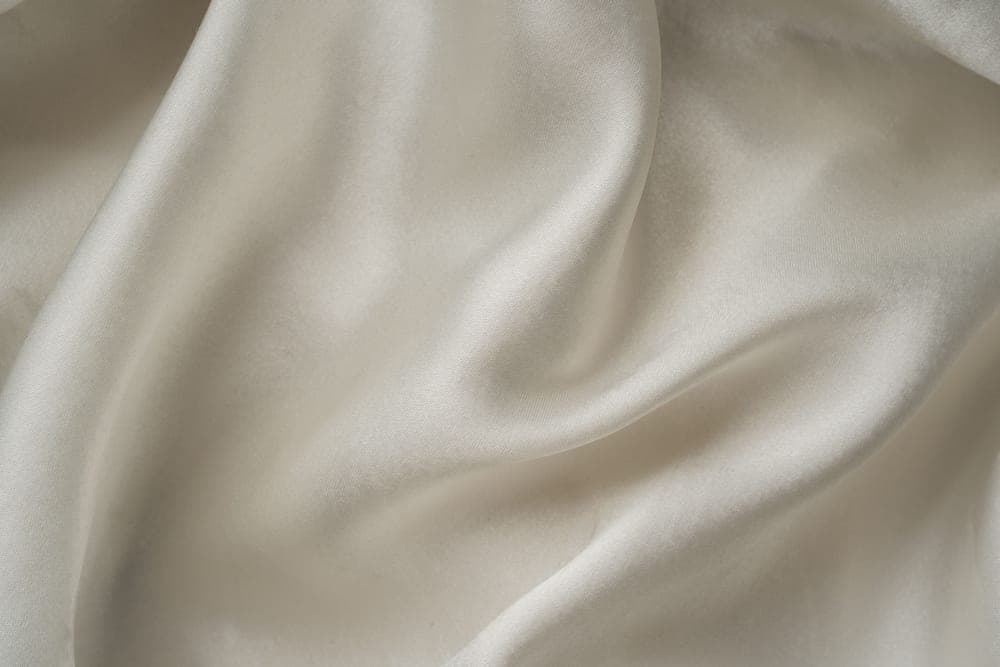
Yes, with a lighter hand than almost anything else. Rayon — sold as viscose, and closely related to modal and lyocell — is regenerated cellulose, and it has an unusual property: it loses roughly 30 to 50 per cent of its strength when wet. A saturated rayon garment hanging under its own weight is therefore genuinely at risk of stretching. Work low, from six to eight inches, in brief passes, and never soak it.
We earn a commission if you buy through the links on this page, at no extra cost to you. It does not change which steamer we rank first — the ranking comes from published specifications and the arithmetic on our method page. We have not tested these units. Full disclosure.
The one property that changes everything
Most fabrics do not care much about being briefly damp. Rayon does. Published tensile figures put viscose rayon at roughly 1.5 to 2.4 grams per denier dry, falling to about 0.7 to 1.2 wet — a drop that can exceed a factor of two. It also elongates readily, around 25 per cent dry and 30 per cent wet.
Put those two together and you have the rayon failure mode: a wet fiber that is both weaker and stretchier, in a garment hanging from a hanger with gravity pulling on it. That is how a rayon dress comes off the hanger longer than it went on, with dropped shoulders and a wavy hem.
Water spotting is the second risk
Rayon is highly absorbent, which is part of why it feels cool and drapes well. It is also why a droplet of condensate spreads and dries as a visible ring, much as it does on silk. Let the head come fully up to temperature before it goes near the garment, so it delivers vapor rather than spitting water.
If a spot does appear, the same fix applies as on silk: dampen the whole panel evenly with a fine mist and let it dry flat, so there is no boundary left to see. Test an inside seam first.
Settings
| Fabric | Setting | Distance | Watch for |
|---|---|---|---|
| Viscose / rayon dress | Low | 6-8" | Stretching if it gets properly wet |
| Rayon blouse | Low | 6-8" | Water spotting |
| Modal (knit, often in tees) | Low-medium | 6" | Knit stretch — dry it flat |
| Lyocell / Tencel | Medium | 6" | More wet strength than viscose; the most forgiving of the family |
| Rayon-polyester blend | Medium | 6" | Behaves like the more fragile fiber — treat as rayon |
If the label says only "viscose" or "rayon", assume plain viscose and use the most cautious column.
The rayon family, and why the name on the label matters
"Rayon" is a category rather than a single fiber, and the members behave differently enough to change how you steam them. All are regenerated cellulose — wood pulp chemically reformed into fiber — but the process differs and so does the wet strength.
| Name on the label | What it is | How to treat it |
|---|---|---|
| Viscose / rayon | The original process; the weakest when wet | Most cautious — low, distant, brief |
| Modal | A stronger variant, common in knit tees and underwear | Low-medium; dry flat because it is usually knitted |
| Lyocell / Tencel | A newer solvent process with the best wet strength of the family | The most forgiving — medium is fine |
| Bamboo viscose | Bamboo pulp put through the viscose process | Treat as viscose, whatever the marketing says |
| Acetate / triacetate | A different chemistry, often mistaken for this family | Lowest setting and the greatest distance — low heat tolerance |
If a label says only "rayon", assume viscose and use the most cautious approach. Makers name the better processes when they can, because they are a selling point.
How to tell rayon from silk and cotton
This matters because the mistakes come from misidentification. Rayon is deliberately made to imitate silk, and it is frequently assumed to be cotton when it is woven into a shirt. Both mistakes lead someone to steam it harder than they should.
- It drapes heavily for its weight. Rayon hangs and flows in a way cotton of the same thickness does not — that fluid drape is the main reason it exists.
- It feels cool to the touch and stays cool, because it is highly absorbent.
- It creases readily and softly — rounded wrinkles rather than the sharp folds linen makes.
- It darkens visibly where it gets damp, more than cotton does, which is your practical warning signal while steaming.
- The label is the only certainty. Where a garment is unlabeled and you are unsure, treat it as the most fragile candidate and work from further back.
The rayon you did not know you owned
Rayon and viscose are extremely common as jacket and coat linings, which means a great many people steam rayon regularly without knowing it. If you follow the standard advice for a wool suit and steam the lining first, you are steaming rayon — usually a thin, tightly woven panel that wets quickly.
That is not a reason to avoid it. It is a reason to use brief passes on the lining rather than dwelling, and to hang the jacket to dry properly afterward. A saturated lining inside a structured jacket dries slowly and can pucker along the seams where it meets a face fabric that dried faster.
Do not put an iron on it dry
Rayon scorches at a lower temperature than cotton and shines easily under direct pressure. If a rayon garment genuinely needs pressing, do it on a low setting through a pressing cloth, from the reverse. For almost every rayon garment a steamer is the better instrument, precisely because it never touches the surface.
Steamers that suit rayon
Ranked on published specifications. Tap a row for the full write-up; the price button goes to Amazon.
| # | Product | Best for | Spec score | Price |
|---|---|---|---|---|
| 1 | 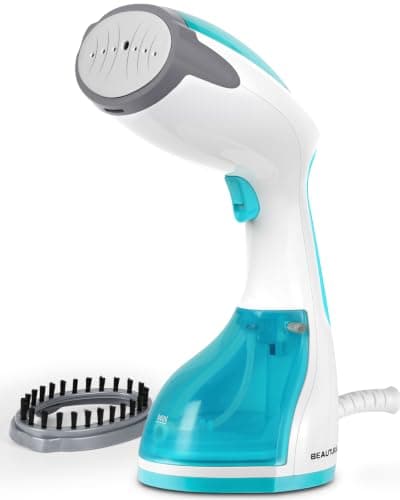 Beautural 1200W Handheld Steamer260 ml on a 1,200W handheld — the most run time per fill here, bought with output. Beautural 1200W Handheld Steamer260 ml on a 1,200W handheld — the most run time per fill here, bought with output. | The biggest tank in the class | 5.7/10 | |
| 2 | 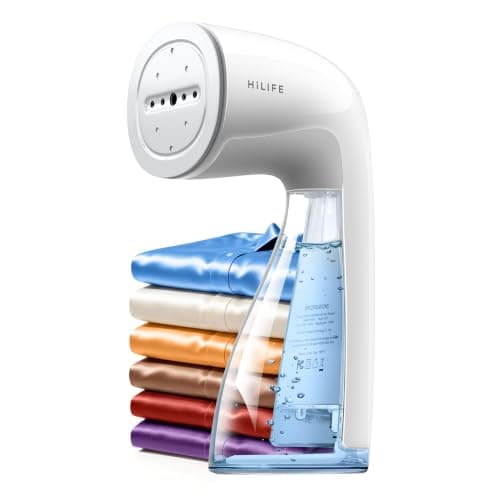 HiLIFE HL9 1100W Steamer300 ml, 1,100 watts and 30 seconds — the HL7's three weaknesses answered. HiLIFE HL9 1100W Steamer300 ml, 1,100 watts and 30 seconds — the HL7's three weaknesses answered. | The largest tank on a mid-power handheld | 6.2/10 |
Questions people actually ask
+Can you steam rayon?
Yes, on a low setting from six to eight inches in brief passes. The key is not to saturate it: rayon loses roughly 30 to 50 per cent of its strength when wet, so a soaked garment left hanging can stretch out of shape.
+Can you steam viscose?
Viscose is rayon — the same fiber under a different trade name — so yes, with the same caution. Dampen rather than wet it, and let it dry before wearing.
+Why did my rayon dress stretch after steaming?
Almost certainly too much moisture plus gravity. Wet rayon is both weaker and stretchier than dry rayon, so a saturated garment hanging on a hanger elongates and then sets in that shape as it dries.
+Can you iron rayon?
Only on a low setting, through a pressing cloth, from the reverse. Rayon scorches at a lower temperature than cotton and shines readily under direct pressure, which is why a steamer is usually the better tool.
Sources
- Textile Learner — physical, chemical and mechanical properties of viscose rayon — accessed September 2026
- FTC Care Labeling Rule, 16 CFR Part 423 (eCFR) — accessed September 2026