Care
Steamer Left Marks on My Clothes
Most marks a steamer leaves are water and they disappear. One kind is permanent — and it is the one people mistake for a stain.
By Scooter M., enthusiast, crease control · Published
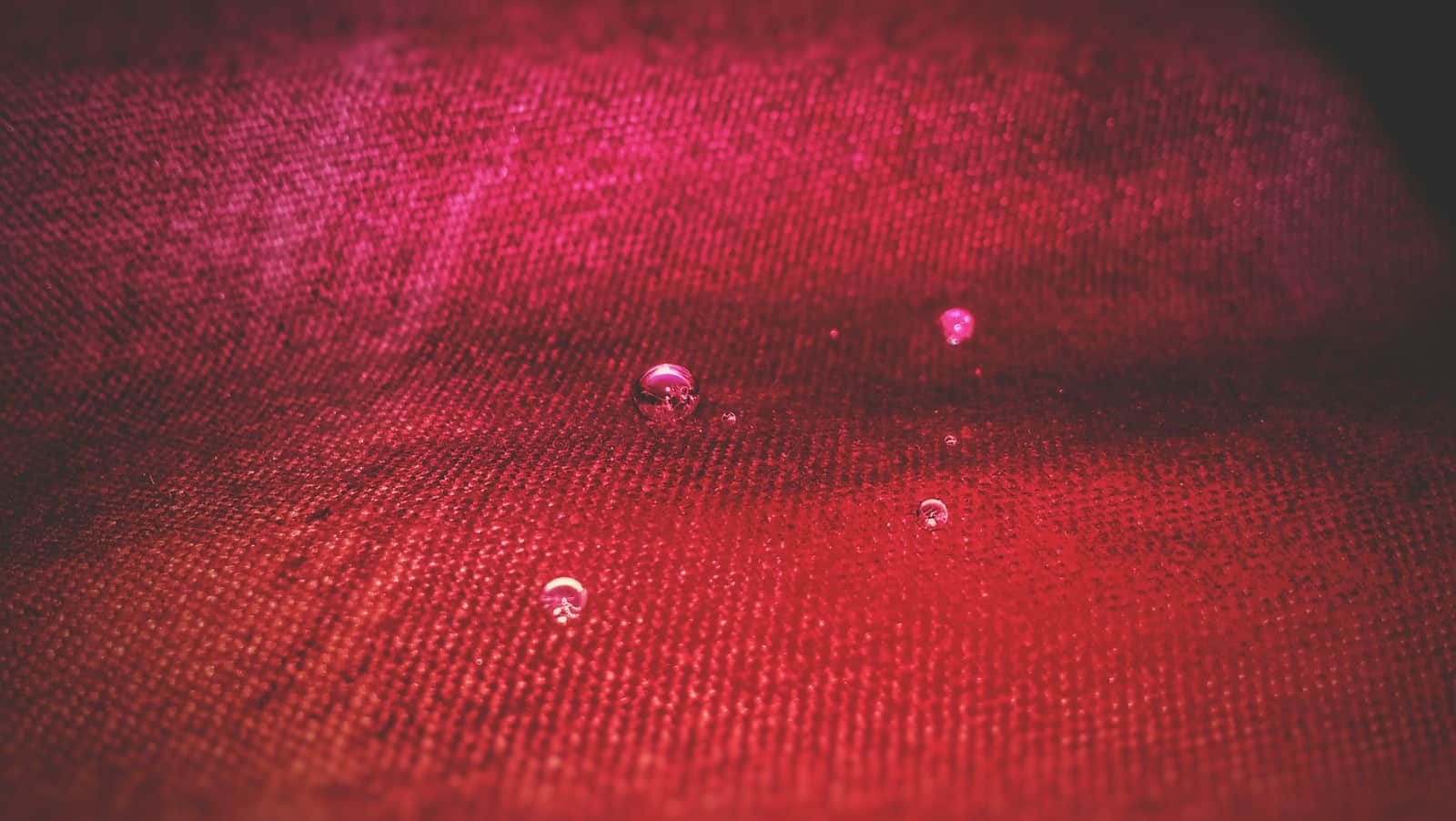
Identify the mark first, because three of the four come out and one does not. A pale ring or watermark is condensate and almost always disappears once the fabric dries evenly — it is not a stain. White or chalky deposits are mineral scale carried out of the machine; they brush or wash out. A dark damp patch is simply wet fabric and needs nothing but time. What does not come out is a shine or glaze, which is fiber flattened by heat and pressure — and that is not a steamer mark at all, because a steamer should never touch the cloth.
We earn a commission if you buy through the links on this page, at no extra cost to you. It does not change which steamer we rank first — the ranking comes from published specifications and the arithmetic on our method page. We have not tested these units. Full disclosure.
| What you see | What it is | Comes out? |
|---|---|---|
| Pale ring with a defined edge | A condensate droplet that dried unevenly | Yes — re-damp the panel evenly |
| White, chalky, brushes off | Mineral scale from the boiler | Yes — brush, then wash |
| Dark patch, no edge | The fabric is just wet | Yes — it dries |
| Brown or yellow speckles | Scale plus corrosion, or a dirty head | Usually — wash it; descale the machine |
| Shiny, flattened, catches the light | Glazing — crushed fiber | No. This is permanent |
| Crushed, matted pile | Pile flattened by contact | Rarely — see velvet |
The last two rows are contact damage. A garment steamer held off the fabric cannot cause them — they come from the head touching, or from an iron.
Water rings: why they form and how to remove them
A watermark is not a stain and nothing has been added to the fabric. It forms because a droplet landed rather than vapor, soaked a small area, and then dried from the outside inward — carrying the fibers' own finish and any dissolved minerals to the edge of the wet zone, where they concentrate into a visible ring. The middle dries clean, the boundary does not, and you see an outline.
The fix follows directly from the cause: remove the boundary. Dampen the whole panel evenly with a fine mist — the whole sleeve, the whole front — and let it dry flat and slowly. With no edge for the residue to collect at, there is no ring. On silk and satin, test an inside seam first, and on rayon go carefully, because wet rayon loses a large part of its strength.
White chalky marks: scale, not damage
If the marks are white, powdery and most visible on dark fabric, the machine is spitting mineral deposit. Every mineral in the water stays behind when the water leaves as steam, accumulates on the element and around the outlet, and eventually flakes loose and travels out with the vapor.
On the garment: let it dry, brush the deposit off with a soft brush, and wash normally if any residue remains. Nothing is damaged. On the machine: descale it, then decide whether your water is the underlying problem — the answer there is conditional on your manual and your local hardness rather than a blanket recommendation.
The mark that does not come out
Glazing is a permanent shine on the surface of the cloth, worst on worsted wool, polyester and anything with a smooth finish. It happens when heat and pressure together flatten the fiber surface, so it reflects light where the surrounding cloth scatters it. Once the fiber is flattened it stays flattened; no amount of steaming, washing or brushing restores it.
The important diagnostic point: a garment steamer used correctly cannot cause this, because glazing needs pressure and a steam head held six inches away applies none. If you are looking at a glazed patch, it came from the head being pressed against the fabric, or from an iron. The fabric matrix lists contact as the first of the four things that actually damage clothes.
The same logic covers crushed pile on velvet, velour and corduroy-type fabrics: contact flattens the nap permanently, which is why the velvet page says to steam from the reverse and never let the head touch.
Why your steamer is marking clothes at all
Marks are a symptom. Working through the causes in order of how often each is the real one:
- Using it before it is fully hot. A head below temperature delivers water rather than vapor. This is the single most common cause of water rings and it costs nothing to fix — wait for the ready light every time.
- Working too close. Closer is not stronger. Held against the cloth, the head delivers condensate. Six inches is the general working distance, eight or more on silk and chiffon.
- Overfilling the tank. A vessel with no headspace pushes water out with the steam. The spitting page ranks this properly.
- Tilting it past its intended angle. Many handhelds spit when held horizontally or upside down.
- Scale in the outlet. Narrows the passage, and flakes come out with the vapor.
- Letting the head touch the fabric. The only cause on this list that produces permanent damage.
Fabrics that mark most easily
| Fabric | Risk | Distance |
|---|---|---|
| Silk | Water spotting — the classic case | 6-8" |
| Satin | Spotting, plus sheen change on contact | 6-8" |
| Rayon and viscose | Spots readily; weak when wet | 6-8" |
| Chiffon | Marks and lifts toward the head | 8-10" |
| Velvet | Permanent pile crush on contact | Reverse only |
| Wool worsted | Glazing under heat and pressure | 4-6" |
| Polyester | Glazing from an iron, not from steam | 6" |
On anything you would be upset to lose, steam an inside seam for thirty seconds first and look at it dry. It is the most useful habit in this category and almost nobody does it.
When the machine is the problem
If marks appeared on a machine that never used to leave them, the cause is almost certainly scale, and descaling is the fix. If a unit spits water from cold every single time regardless of technique — overfilling ruled out, angle ruled out, descaled — then a failing seal or valve is a genuine possibility and the machine may be finished.
That is the only case on this page where replacement is the honest answer. If you are replacing, buy enough power that the steam arrives dry: below about 1,000 watts a steamer wets fabric rather than relaxing it, which is its own kind of marking.
If the machine is genuinely the problem
Ranked on published specifications. Tap a row for the full write-up; the price button goes to Amazon.
| # | Product | Best for | Spec score | Price |
|---|---|---|---|---|
| 1 |  Conair Turbo ExtremeSteam GS59The most-bought handheld in the category, and its published specs explain that rather than contradict it. Conair Turbo ExtremeSteam GS59The most-bought handheld in the category, and its published specs explain that rather than contradict it. | The default handheld | 6.5/10 | |
| 2 | 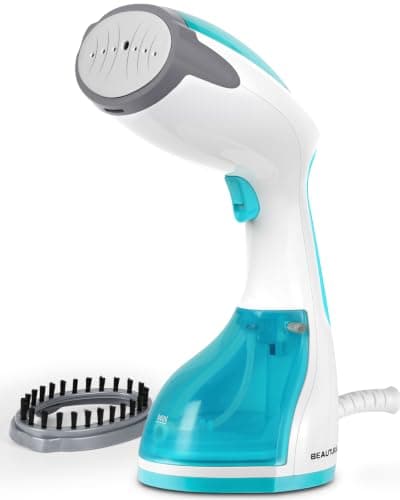 Beautural 1200W Handheld Steamer260 ml on a 1,200W handheld — the most run time per fill here, bought with output. Beautural 1200W Handheld Steamer260 ml on a 1,200W handheld — the most run time per fill here, bought with output. | The biggest tank in the class | 5.7/10 |
Questions people actually ask
+Will water marks from a steamer come out?
Almost always, yes — a watermark is condensate that dried unevenly, not a stain, and nothing has been added to the fabric. Dampen the whole panel evenly with a fine mist and let it dry flat, so there is no drying edge for residue to collect at.
+Why is my steamer leaving white marks on my clothes?
Mineral scale from the boiler, carried out with the steam. Let the garment dry, brush the deposit off and wash if any remains — nothing is damaged. Then descale the machine, and consider whether your water is the underlying cause.
+Can a steamer stain clothes permanently?
Not with water. The one permanent mark associated with steaming is glazing — a shine caused by heat and pressure flattening the fiber — and a steamer held off the fabric cannot cause it. If you are looking at a shine, it came from the head touching the cloth or from an iron.
+How do you get a water stain out of a dress after steaming?
Mist the whole panel evenly rather than targeting the ring, then let it dry flat and slowly. Targeting the mark with more steam usually makes a larger ring, because you add another wet area with another drying edge. Test an inside seam first on silk or satin.
+Why does my steamer spit water onto my clothes?
Most often because it was used before reaching full temperature, held too close, overfilled, or tilted past its intended angle. Scale in the outlet is the other common cause on an older machine.