Skip to content
Crease Control

Compare

Nori Press vs a Garment Steamer

One creates shape, the other removes wrinkles. They are not competitors so much as halves.

By Scooter M., enthusiast, crease control · Published

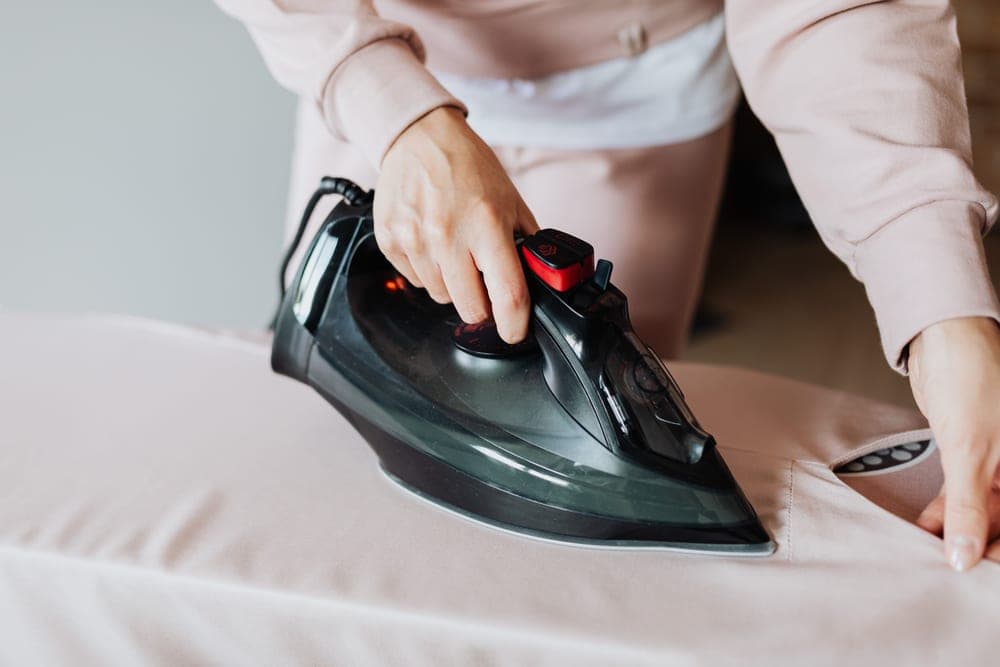
Fabric being pressed under a heated plate

The Nori Press clamps fabric between two heated plates, so it can create a crease and set a collar edge. A garment steamer emits vapor onto hanging fabric and never touches it, so it relaxes wrinkles across a whole garment in a fraction of the time. For a mixed wardrobe the steamer does far more of the work; the press does the twenty per cent the steamer cannot reach.

We earn a commission if you buy through the links on this page, at no extra cost to you. It does not change which steamer we rank first — the ranking comes from published specifications and the arithmetic on our method page. We have not tested these units. Full disclosure.

Side by side

Nori Press against a full-power handheld steamer
Nori PressConair Turbo ExtremeSteam
MechanismTwo heated plates clamp the fabricVertical steam, no contact
Power800 W1,875 W
Heat-up3 minutes40 s
Weight1.4 lb2.27 lb
Dual voltageYes, 120/220 VNo
Creates a creaseYesNo
Crisp collarYesNo
Whole dressNoYes
Velvet, pile, beadingNoYes
Speed per shirtSlowerAbout 2 minutes

The case for the press

It is the only portable device here that produces a genuine crease. If what frustrates you is a soft collar or a cuff that will not lie flat, no amount of steam solves it — that is a pressure problem, and this is a pressure tool that needs no board and travels on dual voltage.

The case for the steamer

It covers vastly more ground. A whole shirt in two minutes, a wool jacket that an iron would ruin, curtains in place, a dress on a hanger. It is also three times faster to get going — forty seconds against three minutes — which is the difference between using a thing and meaning to.

Who should buy which

  • Buy the press if you travel for work, need crisp collars, and are not steaming whole wardrobes on the road.
  • Buy the steamer if your wardrobe is tailoring, knitwear, dresses and synthetics, and soft collars do not bother you.
  • Buy a [2-in-1 handheld](/steamers/handheld) if you want one machine that does both at home. It is the honest middle and it is cheaper than owning two.
  • Buy both only if you genuinely travel with a formal wardrobe. Most people do not.

The two machines

Ranked on published specifications. Tap a row for the full write-up; the price button goes to Amazon.

#ProductBest forSpec scorePrice
1Nori PressNori PressA clamping press, not a steamer — dual voltage, 1.4 pounds, and the only thing here that puts a crease in.Creases a steamer cannot make3.6/10
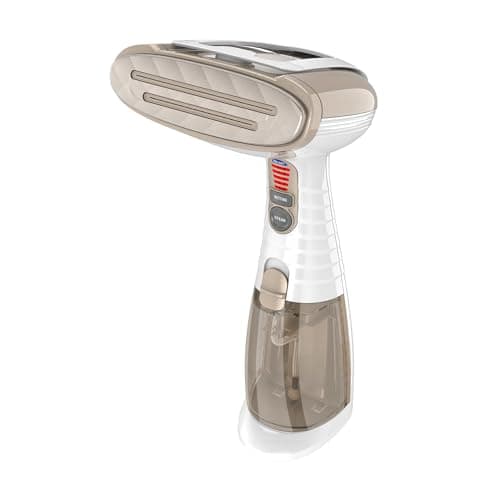
2Conair Turbo ExtremeSteam GS59Conair Turbo ExtremeSteam GS59The most-bought handheld in the category, and its published specs explain that rather than contradict it.The default handheld6.5/10

The picks in full

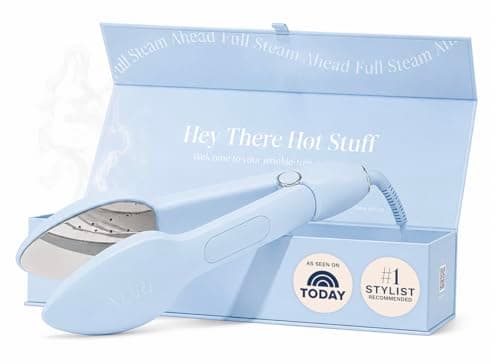
Nori Press — NORI product photo

1. Press · Creases a steamer cannot make

Nori Press

A clamping press, not a steamer — dual voltage, 1.4 pounds, and the only thing here that puts a crease in.

3.6/10Power 0.8Heat-up 1.1Portability 9.6

Computed from published specifications only — the rubric is published in full.

$119.99 · View on Amazon

#ad · how this is funded · price as of September 16, 2026

Published specifications

ModelNPG2
Power800 W
TankNot published
Heat-up3.0 min
Weight1.4 lb
Voltage120V / 220V (dual)
Dimensions14"L x 5.65"W x 3.15"H
WarrantyNot published

Source: NORI published specifications (Amazon listing), accessed September 2026.

NORI does not publish tank capacity for this model, so that figure is excluded from the score rather than estimated.

What the numbers mean

This is not a steamer and should not be judged as one. Two heated plates close on the fabric, which is the only mechanism on this site that creates a crease rather than removing one.

Dual voltage is published at 120 and 220 volts, which makes it a genuine travel option in a way most presses are not.

Three minutes to heat is the slowest published figure here, and 800 watts is modest. Both follow from heating two plates rather than boiling water.

Good

  • Puts creases in — no vertical steamer can do this
  • 120V and 220V published, so it travels
  • 1.4 pounds and 14 inches long

Not good

  • Three-minute published heat-up, the slowest here
  • 800W is low, so thick fabrics take several passes
  • No published tank capacity

Who should not buy it. Skip this if what you want is to hang a shirt up and hit it with steam. A press is a different job and a slower one.

Conair Turbo ExtremeSteam GS59 — Conair product photo

2. Handheld · The default handheld

Conair Turbo ExtremeSteam GS59

The most-bought handheld in the category, and its published specs explain that rather than contradict it.

6.5/10Power 10.0Tank 4.6Heat-up 7.3Portability 3.7

Computed from published specifications only — the rubric is published in full.

$69.73 · View on Amazon

#ad · how this is funded · price as of September 16, 2026

Published specifications

ModelGS59L
Power1,875 W
Tank216 ml
Heat-up40 s
Weight2.27 lb
Voltage110V
Dimensions8"L x 5.6"W x 13.6"H
WarrantyLimited 2 year.

Source: Conair published specifications (Amazon listing), accessed September 2026.

What the numbers mean

1,875 watts is the practical ceiling for a plug-in appliance on a US 15-amp circuit, and this unit sits right at it. Power is what turns water into dry steam fast enough to relax a fiber instead of soaking it, so on a handheld this is the figure that matters most.

The trade is the tank. 7.3 fluid ounces is a shade over 200 ml, which Conair pairs with a stated 20 minutes of run time. Call it two or three shirts before a refill.

40 seconds to heat is ordinary for this power class, not fast. The Rowenta Pure Force publishes a tenth of that at the same wattage.

Good

  • 1,875W is the most power available in a handheld on a US circuit
  • Three attachments in the box, including a fabric brush for wool and a crease tool
  • Two-year limited warranty, which is unusual at this price

Not good

  • The tank is small for the power — high output empties it faster
  • 40-second heat-up is beaten by several cheaper units
  • Over two pounds in the hand, which tells after a few garments

Who should not buy it. Skip this if you steam a whole rail at a time. At full output the tank runs dry before you get through a week of shirts, and a standing unit with a two-liter tank costs about the same.

Questions people actually ask

+Is the Nori Press better than a garment steamer?

It is a different machine. The press creates creases and sets collar edges, which no steamer can. A steamer covers a whole garment in two minutes and handles wool, velvet and hanging fabric, which no press can.

+Can the Nori Press replace a steamer?

Not for a mixed wardrobe. It has to be fed fabric a plate-width at a time, so a dress or a coat is slow, and anything with pile or beading is off limits entirely.

+Do I need both a press and a steamer?

Rarely. A 2-in-1 handheld steamer with a press plate covers both jobs at home for less than owning two machines. Both make sense only if you travel with a formal wardrobe.