Steamer vs Iron
Steam Press vs Steamer
A press is not a bigger iron and it is not a steamer with a plate. It is a third machine.
By Scooter M., enthusiast, crease control · Published
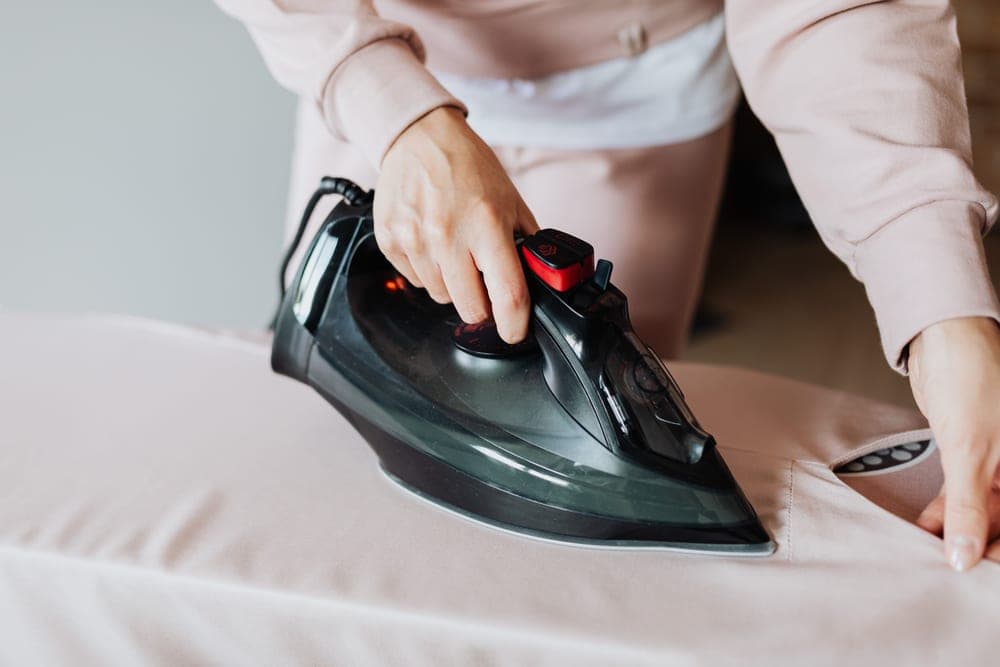
A press closes two heated surfaces on the fabric at once. That gives it two things neither a steamer nor an iron has: even pressure across a wide area in a single action, and no need for a board, because the lower plate is the surface. It is the best tool for flat cloth — shirts, table linen, bed linen — and useless on anything you cannot lay flat.
We earn a commission if you buy through the links on this page, at no extra cost to you. It does not change which steamer we rank first — the ranking comes from published specifications and the arithmetic on our method page. We have not tested these units. Full disclosure.
The three-machine comparison
| Press | Steamer | Iron | |
|---|---|---|---|
| Creates a crease | Yes | No | Yes |
| Needs a board | No | No | Yes |
| Works on hanging fabric | No | Yes | No |
| Covers a shirt back in one action | Yes | No | No |
| Handles velvet and pile | No | Yes, from the reverse | No |
| Handles linen tablecloths | Best tool | No | Slow |
| Storage | Table-sized, permanent | Drawer or corner | Iron plus board |
Where a press genuinely wins
- Volume flat work. A thirty-four-inch plate does a shirt back in one closure and a tablecloth in three. An iron takes eight passes and half an hour respectively.
- Consistency. Even pressure across the whole plate produces a more uniform finish than a hand-held soleplate, which presses harder wherever you lean.
- No board. For anyone without space for an ironing board, a press on a table is a genuine alternative rather than a compromise.
- [Linen](/steamer-vs-iron/linen). The fabric that most needs pressure is the one a press handles best.
Where it loses
Everything with shape. A tailored jacket, a gathered skirt, a pleated dress, curtains hanging at a window, anything with beading — a press has nothing to offer any of them, because it can only act on cloth laid flat between its plates. That is a large fraction of a typical wardrobe, which is why a press complements a steamer rather than replacing one.
A press, a portable press and a steamer
Ranked on published specifications. Tap a row for the full write-up; the price button goes to Amazon.
| # | Product | Best for | Spec score | Price |
|---|---|---|---|---|
| 1 | 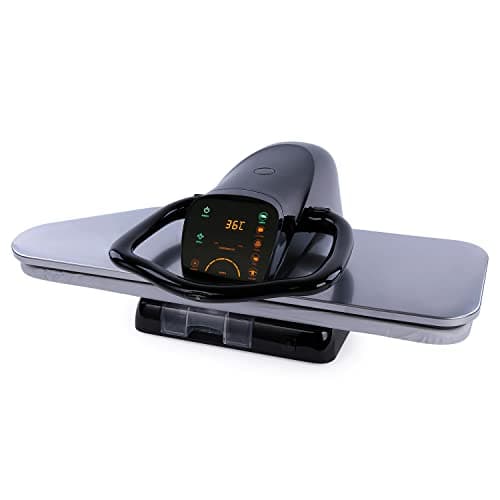 LACIEL 34-inch Steam Press1,800 watts across a 34-inch heated plate — for people who press a lot of flat cloth. LACIEL 34-inch Steam Press1,800 watts across a 34-inch heated plate — for people who press a lot of flat cloth. | Flat cloth by the dozen | 9.2/10 | |
| 2 | 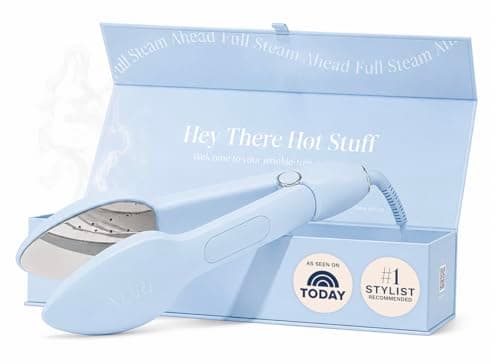 Nori PressA clamping press, not a steamer — dual voltage, 1.4 pounds, and the only thing here that puts a crease in. Nori PressA clamping press, not a steamer — dual voltage, 1.4 pounds, and the only thing here that puts a crease in. | Creases a steamer cannot make | 3.6/10 | |
| 3 | 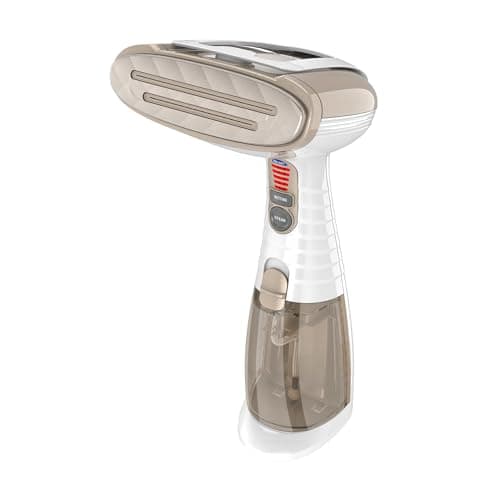 Conair Turbo ExtremeSteam GS59The most-bought handheld in the category, and its published specs explain that rather than contradict it. Conair Turbo ExtremeSteam GS59The most-bought handheld in the category, and its published specs explain that rather than contradict it. | The default handheld | 6.5/10 |
Questions people actually ask
+What is the difference between a steam press and a steamer?
A press clamps fabric between two heated surfaces, applying even pressure across a wide area — which is the only way to create a crease. A steamer emits vapor onto hanging fabric and never touches it, so it relaxes wrinkles but cannot set a shape.
+Is a steam press better than an iron?
For flat work — shirts, table linen, bed linen — yes: wider, faster and more consistent, and it needs no board. For anything with shape it is useless, where an iron at least reaches into a curve.
+Can a steam press do a suit jacket?
No. A jacket is a three-dimensional object and a press acts only on cloth laid flat. Steam the jacket instead.