Steamer vs Iron
Steaming vs Ironing Dress Shirts
Eighty per cent of a shirt is a steamer's job. The twenty per cent people look at is not.
By Scooter M., enthusiast, crease control · Published

Split it. Steam handles the body, back and sleeves of a cotton shirt in about two minutes with no board. Collars, cuffs and the front placket are multi-layer constructions that need contact and pressure, and no vertical steamer supplies either. If you want a shirt that reads as crisp rather than merely unrumpled, the collar has to be pressed.
We earn a commission if you buy through the links on this page, at no extra cost to you. It does not change which steamer we rank first — the ranking comes from published specifications and the arithmetic on our method page. We have not tested these units. Full disclosure.
Why the collar is different from the body
A shirt body is one layer of cloth. A collar is two layers of cloth plus an interlining, often fused, and the whole assembly has to lie flat as a single unit with a defined edge. Steam relaxes each layer independently; what makes them lie flat together is pressure applied while they cool. The same is true of cuffs and of the placket where the buttons sit.
That construction is also why a steamed collar looks soft rather than wrong. It is not damaged, it just has no set edge, which reads as casual. On a soft-collar or button-down shirt that is entirely fine. On a formal shirt with a fused collar it is visible.
What each tool does to the shirt, part by part
| Part | Steamer | Iron | Verdict |
|---|---|---|---|
| Back and body | Excellent — two minutes, no board | Good, slower | Steamer |
| Sleeves | Good, if the cuff is held taut | Good, and can add a sleeve crease if wanted | Steamer, unless you want a sleeve crease |
| Collar | Soft, no edge | Crisp, defined | Iron or press plate |
| Cuffs | Soft | Crisp | Iron or press plate |
| Placket | Wrinkles gone, not flat | Genuinely flat | Iron or press plate |
| Between the buttons | Steam reaches it easily | Fiddly | Steamer |
The two-machine problem, solved with one machine
This split is exactly what a 2-in-1 steamer-iron is for, and dress shirts are the strongest case for that form factor on the whole site. Steam the body vertically on the hanger, then flip the unit onto its plate and press the collar and cuffs against any flat surface. It is under three minutes for a whole shirt and there is no board involved. The 2-in-1 roundup compares the six worth considering.
The starch question
Starch is what makes a laundered shirt feel rigid, and it is applied and then set with an iron. A steamer cannot set starch — there is no pressure and no dry heat — so if the crispness you are chasing is really starch crispness, no steamer will produce it. That is worth knowing before you buy one expecting laundry-shop results.
One of each
Ranked on published specifications. Tap a row for the full write-up; the price button goes to Amazon.
| # | Product | Best for | Spec score | Price |
|---|---|---|---|---|
| 1 | 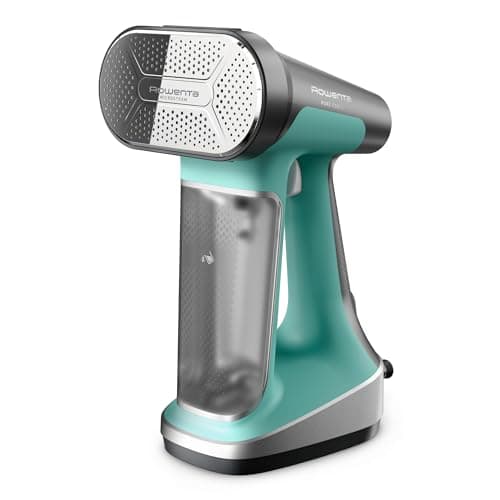 Rowenta Pure Force 2-in-1 DR8822Steams vertically, presses horizontally, and publishes the fastest heat-up in this set by a factor of three. Rowenta Pure Force 2-in-1 DR8822Steams vertically, presses horizontally, and publishes the fastest heat-up in this set by a factor of three. | One machine instead of two | 6.3/10 | |
| 2 | 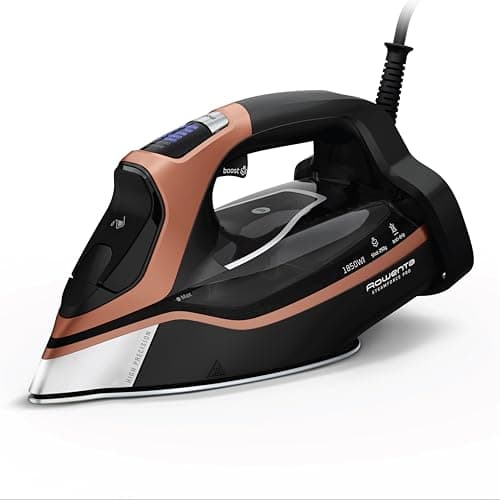 Rowenta Steam Force Pro DW95801,850 watts and a stainless soleplate — what you buy when the honest answer is 'iron'. Rowenta Steam Force Pro DW95801,850 watts and a stainless soleplate — what you buy when the honest answer is 'iron'. | The iron half of the argument | 8.3/10 |
Questions people actually ask
+Is a steamer better than an iron for shirts?
For the body and sleeves, yes — two minutes and no board. For collars, cuffs and the placket, no. Those are multi-layer constructions that need pressure, so most people are best served by doing both.
+Can you steam a dress shirt instead of ironing it?
You can, and it will look presentable rather than crisp. The collar will be soft because nothing has set its edge. On a soft-collar shirt that is fine; on a formal fused collar it shows.
+How do you get a crisp collar without an iron?
A press plate — either a 2-in-1 steamer-iron or a dedicated press. Crispness comes from pressure applied while the fabric cools, which is a mechanical requirement rather than a matter of technique.
Sources
- Textile Learner — properties of cotton fiber — accessed September 2026