Steamer vs Iron
Handheld Steamer vs Iron
Speed, storage and fabric safety against crispness and power. The ledger, both ways.
By Scooter M., enthusiast, crease control · Published
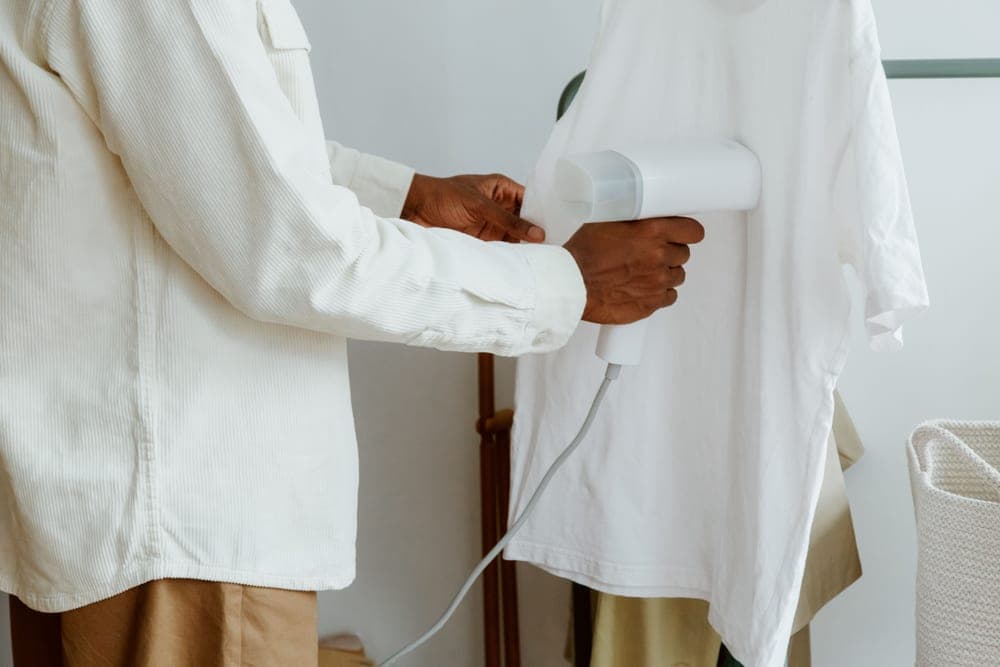
A handheld steamer wins on speed, storage, fabric safety and not needing a board. An iron wins on crispness, creases and heavy cotton. For most people the handheld gets used more often precisely because it is easier to start — an iron that requires setting up a board gets postponed. The 2-in-1 handheld with a press plate is the honest middle and covers most of both columns.
We earn a commission if you buy through the links on this page, at no extra cost to you. It does not change which steamer we rank first — the ranking comes from published specifications and the arithmetic on our method page. We have not tested these units. Full disclosure.
The ledger
| Handheld steamer | Iron | |
|---|---|---|
| Setup | 20-40 s heat-up, no board | Board out, iron heats, board away again |
| Time per shirt | About 2 minutes | 5-8 minutes for a proper job |
| Storage | Drawer-sized | Iron plus a board |
| Crisp collar | No | Yes |
| Trouser crease | No | Yes |
| Wool jacket | Correct tool | Risks glazing and flattening |
| Polyester | Correct tool | Risks melting |
| Linen | Softens only | Correct tool |
| Curtains in place | Yes | No |
| Between buttons and around beading | Yes | Awkward |
The specification that decides it
If you go handheld, wattage is what determines whether it replaces the iron for everyday use. At 700 watts you have a refresher and the iron stays. At 1,875 — the practical ceiling on a US 15-amp circuit — you have something that handles cotton shirts, wool and synthetics, and the iron comes out for collars and linen only.
The tank is what determines whether you keep using it
A handheld's 150 to 300 ml is two or three garments. That is fine for the job it is for. It becomes a problem the moment you try to do a week's laundry with one, which is the mismatch that ends with a steamer in a cupboard. If your real job is a rail, the answer is not an iron either — it is a standing steamer.
One of each, and the machine that is both
Ranked on published specifications. Tap a row for the full write-up; the price button goes to Amazon.
| # | Product | Best for | Spec score | Price |
|---|---|---|---|---|
| 1 | 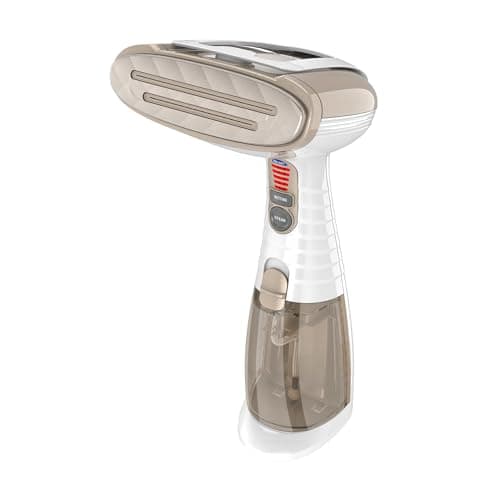 Conair Turbo ExtremeSteam GS59The most-bought handheld in the category, and its published specs explain that rather than contradict it. Conair Turbo ExtremeSteam GS59The most-bought handheld in the category, and its published specs explain that rather than contradict it. | The default handheld | 6.5/10 | |
| 2 | 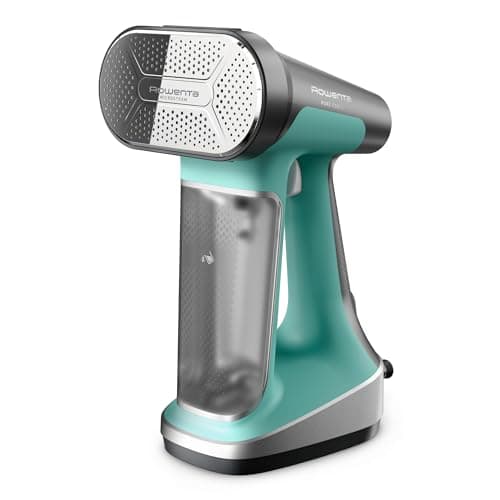 Rowenta Pure Force 2-in-1 DR8822Steams vertically, presses horizontally, and publishes the fastest heat-up in this set by a factor of three. Rowenta Pure Force 2-in-1 DR8822Steams vertically, presses horizontally, and publishes the fastest heat-up in this set by a factor of three. | One machine instead of two | 6.3/10 | |
| 3 | 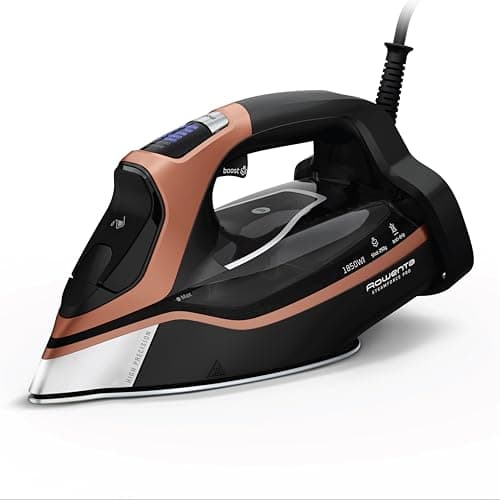 Rowenta Steam Force Pro DW95801,850 watts and a stainless soleplate — what you buy when the honest answer is 'iron'. Rowenta Steam Force Pro DW95801,850 watts and a stainless soleplate — what you buy when the honest answer is 'iron'. | The iron half of the argument | 8.3/10 |
Questions people actually ask
+Is a handheld garment steamer better than an iron?
For speed, storage, and for wool, silk and synthetics, yes. For crisp collars, trouser creases and linen, no. The handheld tends to get used more simply because starting it takes twenty seconds rather than five minutes.
+Can a handheld steamer replace an iron?
For a wardrobe of knitwear, tailoring and synthetics, largely. For crisp shirts and linen, no. A 2-in-1 with a press plate closes most of the gap in one device.
+Is a handheld steamer powerful enough?
At 1,875 watts, yes for everything except linen and heavy canvas. At 700 watts it is a refresher for knits and light synthetics, which is a legitimate tool but a different one.