Steamer vs Iron
Steam Iron vs Dry Iron
The dry iron is not obsolete. There are fabrics where moisture is the thing that ruins them.
By Scooter M., enthusiast, crease control · Published
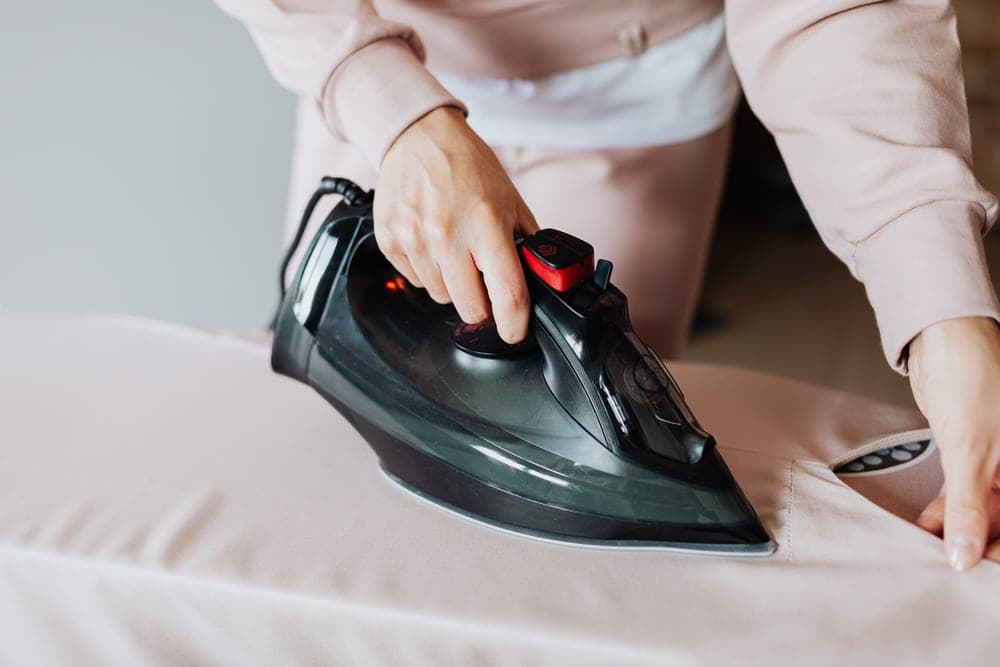
A dry iron supplies heat and pressure. A steam iron adds moisture, which breaks the hydrogen bonds holding a wrinkle far more effectively — so for cotton, linen and most everyday pressing the steam iron is simply better. The dry iron survives for the cases where moisture is the problem: water-spotting silks, some acetates, fusible interfacing and applied finishes.
We earn a commission if you buy through the links on this page, at no extra cost to you. It does not change which steamer we rank first — the ranking comes from published specifications and the arithmetic on our method page. We have not tested these units. Full disclosure.
What moisture actually does
Heat alone will eventually relax a wrinkle, but water does most of the work. Moisture penetrates the fiber and breaks the hydrogen bonds holding it in its bent position, so the fiber becomes plastic at a far lower temperature than dry heat would require. That is why a damp cotton shirt presses in a third of the time a dry one does, and why professional pressing is done on damp cloth.
When you want the moisture off
| Case | Why dry |
|---|---|
| Water-spotting silks | A droplet from the soleplate leaves a permanent-looking ring |
| Acetate and triacetate | Low heat tolerance and prone to water marking |
| Fusible interfacing | Steam can re-activate the adhesive and cause bubbling |
| Coated and waxed fabrics | Moisture lifts or clouds a surface finish |
| Setting a very sharp crease | A crease set dry after steaming holds better than one set wet |
The professional two-step
Tailors often steam first and then press dry. Steam relaxes the fiber; the dry pass then sets it in the new shape as the moisture leaves. It is why a properly pressed trouser crease outlasts one made in a single wet pass, and it is easy to copy at home: steam the leg, then run a dry iron down the fold.
Where neither belongs
Everything in the steamer's column: wool tailoring, polyester, satin, velvet and knitwear. An iron of either kind flattens, glazes or crushes all of them. The main verdict table has the full fabric list.
If an iron is what you need
Ranked on published specifications. Tap a row for the full write-up; the price button goes to Amazon.
| # | Product | Best for | Spec score | Price |
|---|---|---|---|---|
| 1 | 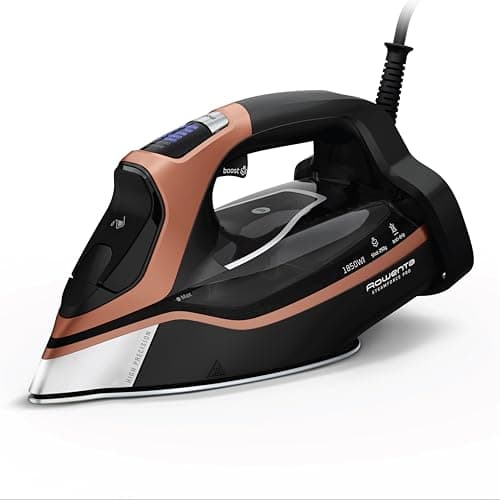 Rowenta Steam Force Pro DW95801,850 watts and a stainless soleplate — what you buy when the honest answer is 'iron'. Rowenta Steam Force Pro DW95801,850 watts and a stainless soleplate — what you buy when the honest answer is 'iron'. | The iron half of the argument | 8.3/10 | |
| 2 | 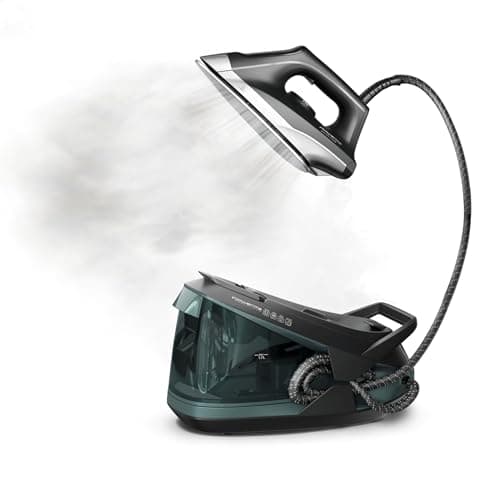 Rowenta Master Steam Station1,750 watts with a separate boiler — continuous steam a self-contained iron cannot sustain. Rowenta Master Steam Station1,750 watts with a separate boiler — continuous steam a self-contained iron cannot sustain. | Pressing volume without refilling | 5.8/10 |
Questions people actually ask
+Is a steam iron better than a dry iron?
For cotton, linen and most everyday pressing, yes — moisture breaks the bonds holding a wrinkle far more effectively than heat alone. A dry iron is better where moisture itself causes damage: water-spotting silks, acetate, fusible interfacing and coated fabrics.
+Do you need steam to iron?
Not always, but it makes almost everything faster. Pressing damp cotton takes roughly a third of the time and effort of pressing it dry, which is why professional pressing is done on damp cloth.
+Should I iron with steam or dry for a crease?
Steam first to relax the fiber, then set the crease with a dry pass. A crease set dry after steaming holds noticeably better than one made in a single wet pass.
Sources
- FTC Care Labeling Rule, 16 CFR Part 423 (eCFR) — accessed September 2026