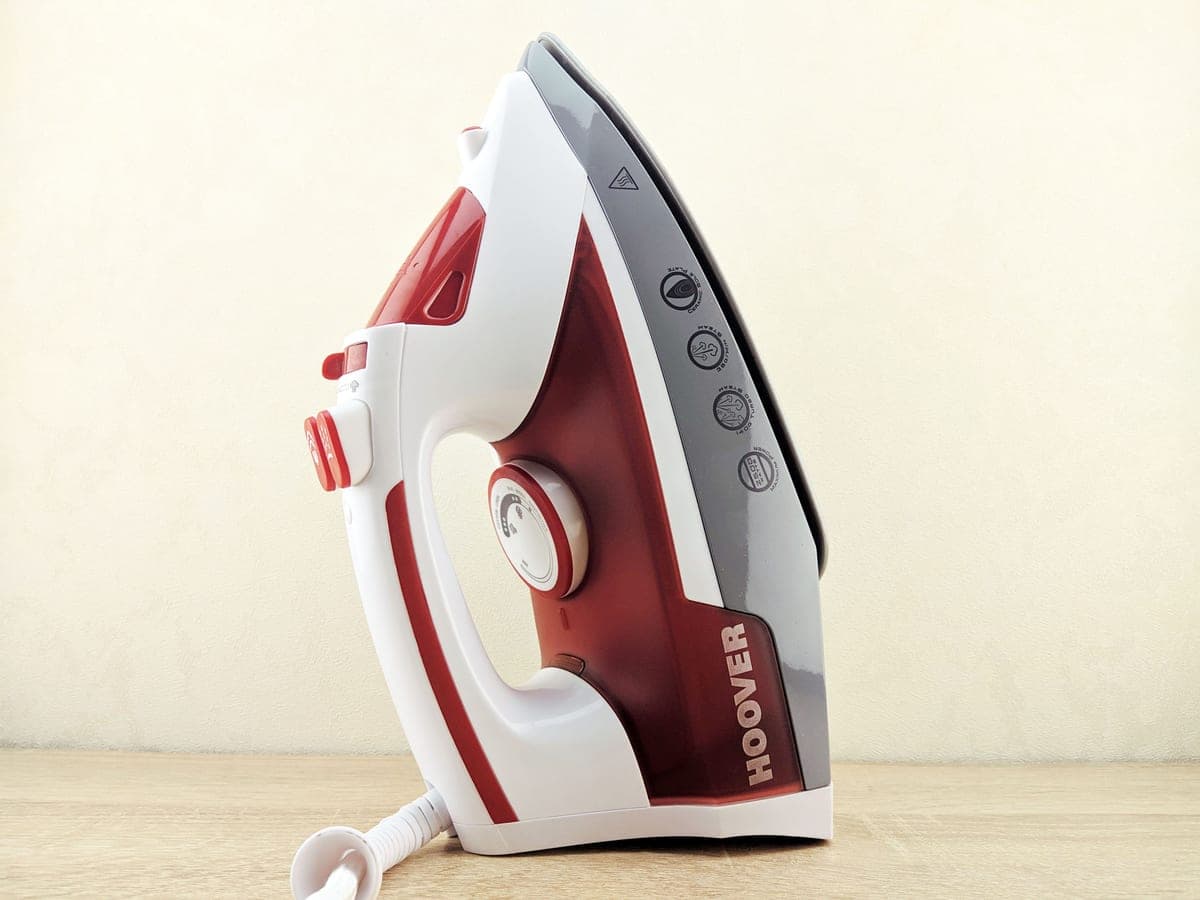
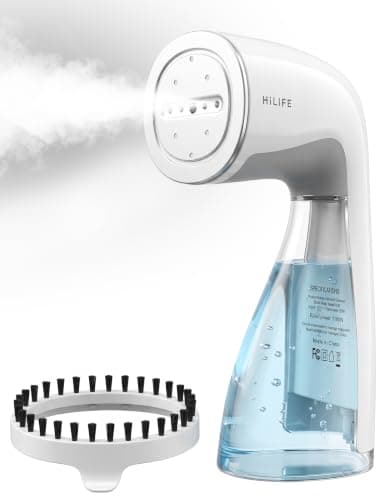
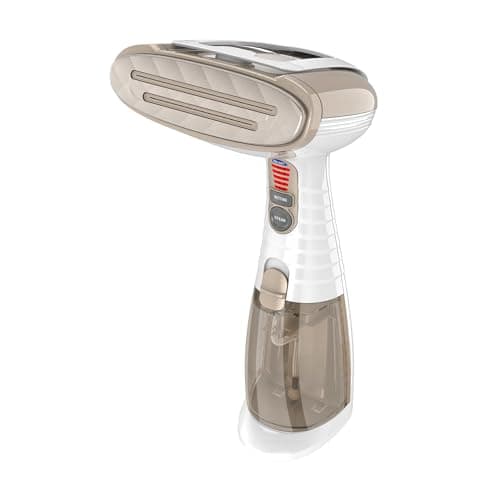
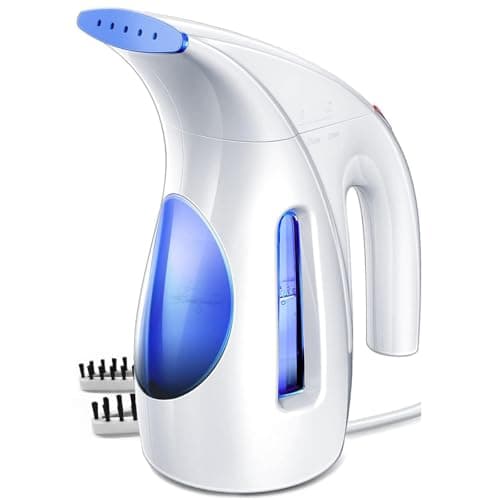
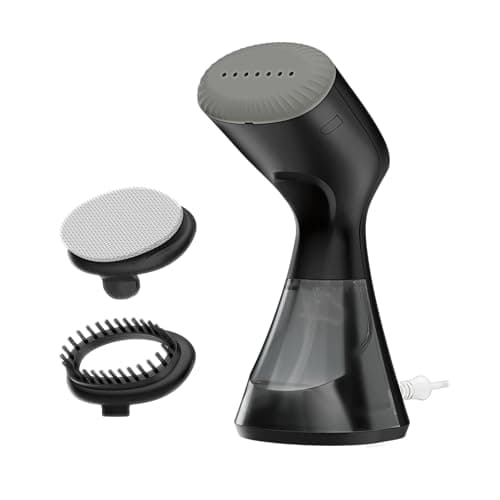
The interesting fight is not the flagship against the budget unit. It is the two 1,100-watt machines that agree on every figure they both publish, and disagree about which ones to publish at all.
By Scooter M., enthusiast, crease control · Published
Buy the HiLIFE HL9 if you steam for more than seven minutes at a time, and the Conair GS81 if you need to know what you are holding. They publish the same 1,100 watts and the same 30-second heat-up for about a dollar apart, and then each one goes quiet about a different thing: HiLIFE states a 300 ml tank and no weight; Conair states 1.3 pounds and no tank. If your budget reaches the flagship instead, the Conair Turbo ExtremeSteam GS59 is the most powerful machine in this comparison at 1,875 W, and the HiLIFE HL7 at 700 W is the one to avoid unless you only ever steam knitwear.
We earn a commission if you buy through the links on this page, at no extra cost to you. It does not change which steamer we rank first — the ranking comes from published specifications and the arithmetic on our method page. We have not tested these units. Full disclosure.
The published figures
All four machines, read from the live listings
Conair GS81
HiLIFE HL9
Conair GS59
HiLIFE HL7
Power
1,100 W
1,100 W
1,875 W
700 W
Tank
Not published
300 ml
216 ml
240 ml
Heat-up
30 s
30 s
40 s
120 s
Weight
1.3 lb
Not published
2.27 lb
1.7 lb
Warranty
Not published
Not published
2 years
Not published
Cord
8 ft
Not published
Not published
Not published
Score on published figures
6.1 (3 of 4)
6.2 (3 of 4)
6.5 (4 of 4)
2.9 (4 of 4)
Scores come from the rubric on /methodology, computed only over the figures each maker published — a missing figure is dropped rather than estimated, so the GS81 and the HL9 are each scored on three metrics and the two others on four.
The two middle columns are the story. 1,100 watts and 30 seconds, twice over, about a dollar apart — and then a mirrored silence. This happens often enough on this site to be worth naming: a listing publishes the figures that flatter the machine and omits the one that does not. The GS81 is light and says so while declining to mention how much water it holds; the HL9 holds the largest tank of any handheld in this registry and says so while declining to mention what it weighs.
The gap that costs you more: tank or weight?
Not symmetrical, and this is the answer to the question. A missing tank figure is the more expensive gap, because tank capacity is the figure that decides whether a handheld gets used or shelved. At 1,100 watts an element converts about 17.6 ml of water per minute by the arithmetic this site applies everywhere, so the HL9's 300 ml runs for about seventeen minutes — the longest of any handheld here that reaches 1,000 watts. That is a number you can plan a session around.
What Conair gives you instead is its own run-time claim: "up to 10 minutes of steam". Run the same arithmetic backwards and ten minutes at 1,100 W implies somewhere around 176 ml. That is an inference from Conair's claim rather than a specification, and this site does not print inferences in spec tables — but it is the only guide available, and it points at a tank a little over half the HiLIFE's. The honest summary is that the HL9 almost certainly runs the longer session, by a wide margin, and that Conair has not published the figure that would confirm it.
The weight gap cuts the other way but costs less. 1.3 pounds makes the GS81 the second-lightest handheld in this registry, behind only the 1.26-pound OGHom, and weight is the specification a user notices most because a handheld is held at arm's length for a whole session. HiLIFE's silence on it is irritating rather than disqualifying: the HL7 from the same maker and the same body family publishes 1.7 pounds, so the HL9 is unlikely to be far off — again an inference, again not printed as a figure.
The flagship question: is the GS59 worth double?
The Conair Turbo ExtremeSteam GS59 is the only machine in this comparison that publishes all four figures, and it wins the one that matters most: 1,875 watts, the practical ceiling for a US 15-amp circuit, against 1,100 for the two middle units. That is not a marginal upgrade. This site puts the floor for making woven cotton look pressed at 1,000 watts, so all three of these clear it — but clearing a floor and working comfortably above it are different things, and on a cotton dress shirt the difference is visible.
It costs that power back in run time. 216 ml at 1,875 W is about 7.2 minutes per fill, against the HL9's seventeen. So the flagship gives you a machine that does more per pass and asks you to refill it two and a half times as often, in a body a pound heavier. It also publishes a two-year warranty, which is unusual anywhere in this category and is the only published warranty term among all four units here.
Worth it if you steam woven cotton and work in short bursts; not worth it if you steam knitwear in long sessions, where you would be paying double for power you do not need and losing ten minutes of run time to get it. The handheld roundup ranks the whole class on the same figures.
The HL7 is the one to skip, and HiLIFE publishes why
The 700-watt HL7 sits at the power floor of this entire site, and its published 120-second heat-up is the slowest figure in the handheld class here by a factor of three. It scores 2.9 on four published figures, which is the lowest score of any fully documented handheld in the registry. Both of those numbers come from HiLIFE itself, which deserves some credit — the listing is honest about what the machine is.
What it is, is a knitwear and synthetics refresher. At 700 watts it will relax jersey, polyester and light knits perfectly well, and its 240 ml tank runs about 21 minutes because low output is the same thing as slow water consumption. It will not make a cotton shirt look pressed and it will do nothing at all for linen. The HL9 sits a few dollars above it with four hundred more watts, sixty more milliliters and a quarter of the wait, which makes the HL7 hard to recommend at any price gap this small — the same conclusion the HiLIFE brand page reaches.
Where the two brands actually differ
Conair publishes a warranty on its flagship and HiLIFE publishes none on anything. Two years against the retailer's returns window. At HiLIFE's prices that is part of the deal rather than a scandal, but it is a real difference in what you can fall back on.
HiLIFE builds the biggest handheld tanks and Conair builds the most powerful handheld heads. The 300 ml HL9 and the 1,875 W GS59 are the two ends of the same trade-off, and both brands have picked a side consistently across their range.
Conair prints an anti-drip claim; HiLIFE does not. Both Conair listings here state they resist spitting and leaking in their own copy. Neither HiLIFE listing makes any such claim. That is quoted, not verified — the spitting page sets out what such a claim is worth.
Conair ships attachments; HiLIFE ships a metal panel. The GS59 includes three attachments including a fabric brush and a crease tool, the GS81 includes a bristle brush and a cushion, and the HL9's listing leads instead on a metal plate on the head for pressing against fabric.
Both are available and priced in the same bracket at the bottom. The GS81 and the HL9 are within about a dollar of each other as this page is written, which is why the choice comes down to the missing figure rather than the money.
Who should buy which
The decision
If you
Buy
Steam for fifteen minutes or more at a stretch
HiLIFE HL9 — 300 ml, about 17 minutes per fill
Want the lightest of these in your hand
Conair GS81 — 1.3 lb, published
Refuse to buy a machine with an unpublished tank
HiLIFE HL9 — it is the one that tells you
Refuse to buy a machine with an unpublished weight
Conair GS81 — same, in reverse
Steam woven cotton shirting and want it to look pressed
Conair GS59 — 1,875 W, and it is the only one here that reaches properly above the floor
Want a published warranty
Conair GS59 — two years, the only warranty term published by either brand
Only ever refresh knitwear, and want to spend the least
HiLIFE HL7 — but read the skip note; the HL9 is a few dollars more for 400 more watts
Neither. All four publish 120 V only; the travel page has the dual-voltage units
Between the two 1,100-watt machines, the HiLIFE HL9 is the better buy for most people, and it wins on the one figure that predicts whether a handheld gets used: it holds nearly twice the water, on the arithmetic available. The Conair GS81 wins if you weigh a known 1.3 pounds above an unknown tank, which is a defensible preference rather than a mistake. We earn a commission on all four machines here, and the ranking is what the published figures support.
The four machines
Ranked on published specifications. Tap a row for the full write-up; the price button goes to Amazon.
#
Product
Best for
Spec score
Price
1
Conair 1100W Compact Steamer GS811.3 pounds and 30 seconds to steam — with a tank figure Conair does not publish.
Conair does not publish tank capacity for this model, so that figure is excluded from the score rather than estimated.
What the numbers mean
At 1.3 pounds this is the lightest full-size handheld here, and 1,100 watts handles the knits, synthetics and light cotton that make up most wardrobes.
Conair publishes no tank capacity for this model. That is a real hole in a spec sheet — tank size is the single best predictor of whether a session is pleasant — and it costs the unit a metric in our scoring rather than earning it a guess.
Nine inches tall. It fits in a drawer, which is most of the argument for a compact steamer.
Good
1.3 pounds, the lightest non-travel handheld here
30-second published heat-up
Nine inches tall — genuinely drawer-sized
Not good
No published tank capacity, so run time is unknowable from the specs
1,100W is mid-table output
Compact bodies mean small tanks, and the silence is not reassuring
Who should not buy it. Skip this if run time matters to you. Until Conair publishes a tank figure there is no way to know what you are buying.
2. Handheld · The largest tank on a mid-power handheld
HiLIFE HL9 1100W Steamer
300 ml, 1,100 watts and 30 seconds — the HL7's three weaknesses answered.
HiLIFE does not publish weight for this model, so that figure is excluded from the score rather than estimated.
What the numbers mean
This is what the HL7 should have been: four hundred more watts, sixty more milliliters of tank, and a quarter of the heat-up time.
300 ml is the biggest handheld tank in this set. On a mid-power unit that is the right pairing — lower output empties a tank more slowly, so a big tank becomes real run time rather than a heavier device you refill just as often.
HiLIFE publishes no weight for this model. That is a gap, not something to infer: we have not held one and will not estimate it, so portability goes unscored.
Good
300 ml — the largest handheld tank here
30-second published heat-up, four times faster than the HL7
Leak-proof design published explicitly, which matters on a horizontal pass
Not good
No published weight, so portability cannot be scored
1,100W still sits below what linen wants
120V only
Who should not buy it. Skip this if you plan to travel with it. It is 120V only, and a dual-voltage travel unit costs less than the transformer you would otherwise need.
3. Handheld · The default handheld
Conair Turbo ExtremeSteam GS59
The most-bought handheld in the category, and its published specs explain that rather than contradict it.
1,875 watts is the practical ceiling for a plug-in appliance on a US 15-amp circuit, and this unit sits right at it. Power is what turns water into dry steam fast enough to relax a fiber instead of soaking it, so on a handheld this is the figure that matters most.
The trade is the tank. 7.3 fluid ounces is a shade over 200 ml, which Conair pairs with a stated 20 minutes of run time. Call it two or three shirts before a refill.
40 seconds to heat is ordinary for this power class, not fast. The Rowenta Pure Force publishes a tenth of that at the same wattage.
Good
1,875W is the most power available in a handheld on a US circuit
Three attachments in the box, including a fabric brush for wool and a crease tool
Two-year limited warranty, which is unusual at this price
Not good
The tank is small for the power — high output empties it faster
40-second heat-up is beaten by several cheaper units
Over two pounds in the hand, which tells after a few garments
Who should not buy it. Skip this if you steam a whole rail at a time. At full output the tank runs dry before you get through a week of shirts, and a standing unit with a two-liter tank costs about the same.
4. Handheld · A first steamer, cheaply
HiLIFE HL7 700W Steamer
A 240 ml tank on 700 watts, and an honest reason it costs what it costs.
700 watts is the floor for a device that can still be called a garment steamer. It will relax a jersey T-shirt or a polyester blouse. It will not persuade a linen shirt, and no amount of technique changes that.
The tank is genuinely generous for the money at 240 ml, and that is a large part of why the listing reviews as well as it does — it runs a long time at a low output.
Two minutes to heat is the slowest published handheld figure here. That is what low wattage means: the same water, less energy per second, more waiting.
Good
240 ml tank at the bottom of the price range
1.7 pounds — light enough for a long one-handed session
Among the most-bought steamer listings in the category
Not good
700W is not enough for linen, heavy cotton or a structured jacket
Two-minute published heat-up, the slowest handheld here
No published warranty term on the listing
Who should not buy it. Skip this if you bought it to handle dress shirts. It is a refresher for knits and synthetics, and expecting more is exactly how people conclude that steamers do not work.
Questions people actually ask
+Is Conair or HiLIFE better?
Neither brand wins outright at the same price. The Conair GS81 and the HiLIFE HL9 publish identical power (1,100 W) and identical heat-up (30 s) for about a dollar apart; HiLIFE publishes a 300 ml tank and no weight, Conair publishes 1.3 pounds and no tank. The HL9 is the better buy for most people because tank capacity decides session length. Conair wins above that price with the 1,875 W GS59 and a two-year warranty.
+Which is better, the Conair GS81 or the HiLIFE HL9?
The HL9 for longer sessions, the GS81 for a lighter machine. The HL9's 300 ml runs about 17 minutes at 1,100 W; Conair does not publish the GS81's tank, and its own claim of up to 10 minutes of steam implies roughly 176 ml by the same arithmetic. They score 6.2 and 6.1 on the published figures, which is indistinguishable.
+Is the Conair Turbo ExtremeSteam worth more than a HiLIFE?
If you steam woven cotton, yes. At 1,875 W it has about 70% more power than either 1,100 W unit, it publishes all four specifications rather than three, and it carries a two-year warranty that no HiLIFE model matches. The cost is run time — 216 ml at that power is about 7.2 minutes against the HL9's 17 — and about a pound of extra weight.
+Is 1,100 watts enough for a garment steamer?
Yes for most domestic use. This site puts the floor for making woven cotton look pressed at 1,000 W, so an 1,100 W machine clears it, and it runs far longer per tank than an 1,875 W unit. It will not match a flagship on a heavy cotton shirt, and nothing handheld handles linen.
+Why does HiLIFE not publish the HL9's weight?
We do not know, and we will not guess a figure. The HL7 from the same maker and body family publishes 1.7 pounds, which suggests the HL9 is in that region, but that is an inference and this site does not print inferences as specifications. The missing figure costs the HL9 a metric in the score rather than being filled in.
+Should I buy the HiLIFE HL7 to save money?
Usually not. At 700 W it sits at the power floor of this site, its published 120-second heat-up is three times the next slowest handheld here, and it scores 2.9 on four published figures. The HL9 is a few dollars more for 400 more watts, 60 more ml and a 30-second heat-up. Buy the HL7 only if you exclusively refresh knitwear and want the cheapest thing that works.