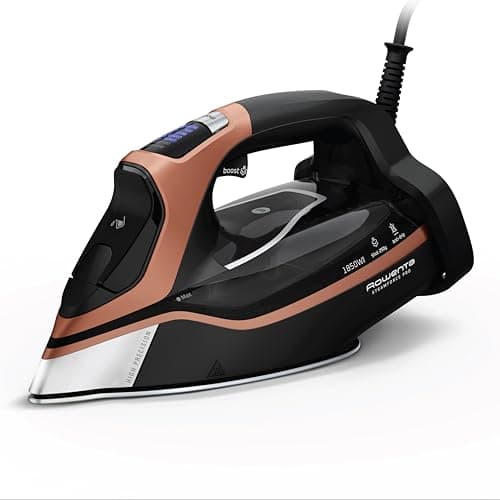
The honest answer starts with a correction: for piecing you want an iron, not a steamer. Steam has exactly two jobs in quilting, and they are worth buying for.
By Scooter M., enthusiast, crease control · Published
For piecing a quilt, buy an iron rather than a steamer — the Rowenta Steam Force Pro DW9580 — because patchwork needs a flat soleplate and pressure, and steam without pressure distorts a bias seam instead of setting it. A steamer earns its place in quilting for exactly two jobs: relaxing a finished top or a long-folded quilt before basting or display, where a standing unit like the SALAV GS18 works a hanging quilt without handling it, and refreshing a finished quilt you cannot wash. If you are pressing seams, this page is going to send you to the iron, and we earn a commission either way.
We earn a commission if you buy through the links on this page, at no extra cost to you. It does not change which steamer we rank first — the ranking comes from published specifications and the arithmetic on our method page. We have not tested these units. Full disclosure.
Why a steamer is the wrong tool for piecing
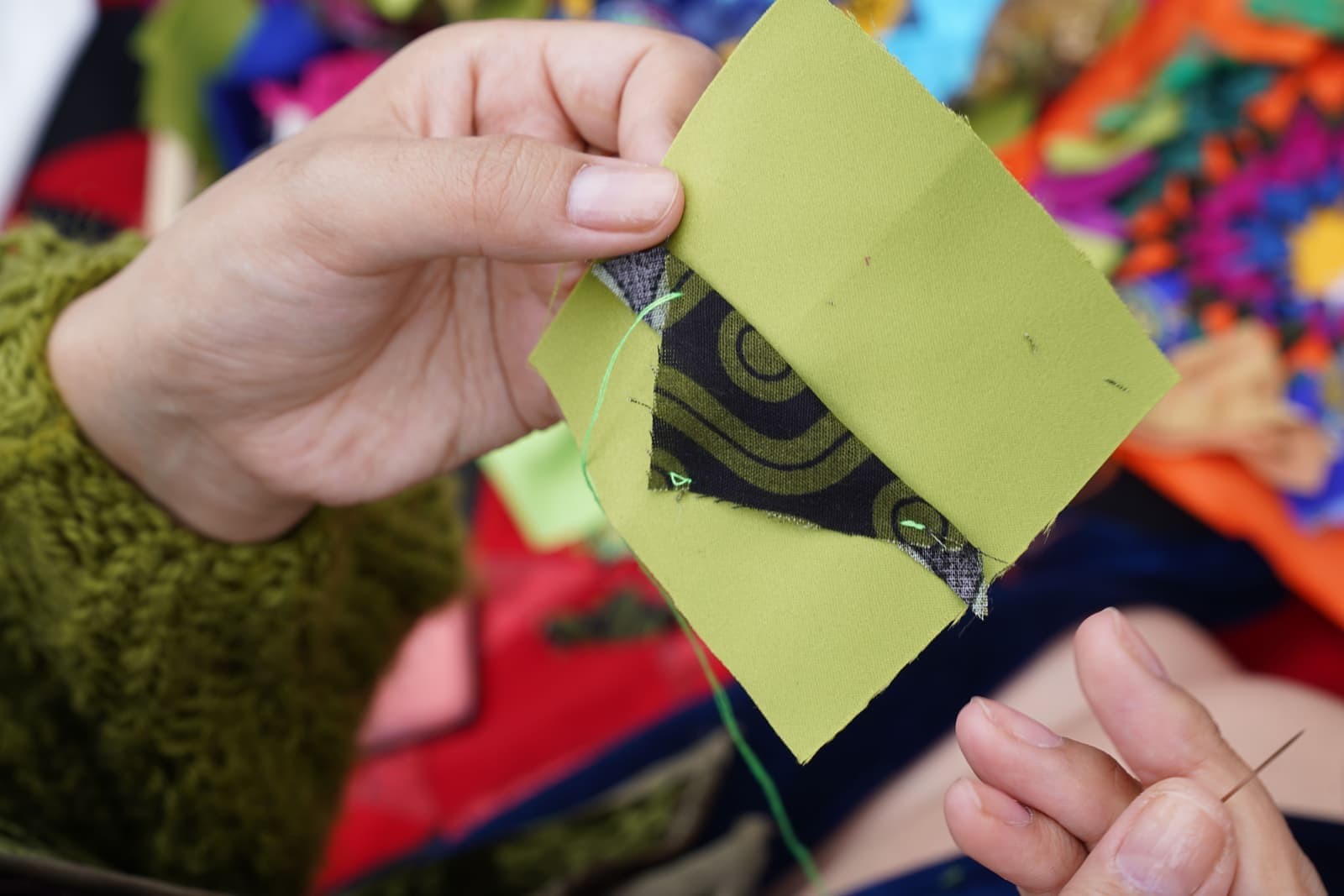
Quilting is almost entirely a pressing problem, and pressing is not steaming. Patchwork is assembled from cotton cut in every direction relative to the weave, which means a large share of the seams are on or near the bias — the diagonal, where woven cotton is at its stretchiest. The whole discipline of quilt pressing exists to set those seams flat and square without lengthening them.
Steam works against you there in a specific way. Steam relaxes the hydrogen bonds that hold cotton in its current shape so the fabric can move; that is exactly what you want for a wrinkle in a shirt and exactly what you do not want in a bias seam under its own weight. A damp bias edge handled while it is relaxed grows, and a block assembled from grown edges will not square up. This is the same mechanism the cotton fabric page describes for garments, pointed in an unhelpful direction.
The second problem is mechanical. A quilt seam is set by pressing it to one side or opening it flat and holding it there under pressure until it cools. Pressure is the one thing a steam head does not apply — it is why a steamer never produces a crease and why it cannot flatten a seam allowance either. A steamer relaxes; an iron relaxes and then presses. For piecing you need both halves.
The two jobs steam genuinely wins
Relaxing a finished top. A pieced top that has been folded over a chair for three weeks, or a quilt that came out of a storage bag with hard creases along the folds, is a steamer's problem rather than an iron's. The fabric needs to be relaxed over a large area without being handled seam by seam, and running an iron across a completed top risks setting new distortions into work you have already squared up. Hanging it and steaming it from a distance relaxes the fold lines and lets the quilt's own weight do the straightening.
Refreshing a quilt you cannot wash. A finished quilt with cotton batting, hand quilting or any age to it is often not a candidate for a machine wash. Steam at a distance relaxes the surface and lifts the fold memory without wetting the batting, which is the same argument the bedding roundup makes for duvets and comforters. It does not clean the quilt — steam does not clean anything, as the dry-cleaning comparison sets out — but it is the gentlest way to make one presentable.
How these picks were chosen
Piecing picks are judged on the things that matter to a flat seam: published wattage, whether the steam is controllable or always-on, and soleplate size. The steamer picks are judged on reach and run time, because relaxing a full top is a long job over a large area and a seven-minute tank will not finish it. Weight is weighted lightly here — unlike garment steaming, quilt pressing happens at a table, so a heavier machine is not the penalty it would be elsewhere.
The job, the tool, and the figure that decides it
Quilting job
Tool
The deciding figure
Pressing pieced seams and squaring blocks
Dry iron with controllable steam
Wattage and the ability to turn steam OFF
Long pressing sessions, many blocks
Steam station
Separate tank — no refilling a soleplate every ten minutes
Relaxing a finished top or a folded quilt
Standing steamer
Tank, measured in liters — this is a 20-minute job
Spot-relaxing a block, or a seam that will not lie down
Handheld steamer
Tank and the ability to work at an angle
Setting a sharp fold for display or binding
An iron, with pressure
No steamer does this at any price
One note on the largest tool in the registry. A full-size 34-inch steam press flattens a seam across the whole width of a block in one closure, which is genuinely the right machine for a production quilter — and at several hundred dollars it is the wrong recommendation for almost everyone else, so it is not among the picks. The steam-press comparison covers what it does and does not replace.
Every specification below was read off the product's own live Amazon listing and links back to it. We have not handled these units and have not quilted with them; what this page offers is the mechanism and the published figures, not a workshop test. Prices move, and the buttons carry the live figure.
The four, side by side
Ranked on published specifications. Tap a row for the full write-up; the price button goes to Amazon.
#
Product
Best for
Spec score
Price
1
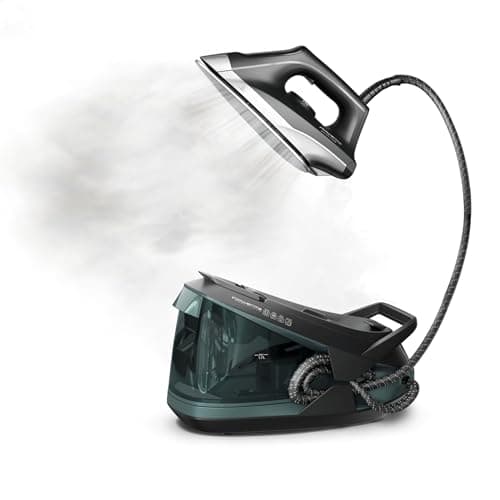
Rowenta Steam Force Pro DW95801,850 watts and a stainless soleplate — what you buy when the honest answer is 'iron'.
Rowenta does not publish tank capacity, heat-up time for this model, so those figures are excluded from the score rather than estimated.
What the numbers mean
Linen and heavy cotton want contact, weight and heat, and no vertical steamer supplies any of the three. This is the tool for those fabrics.
1,850 watts is at the top of what a domestic iron draws, and 4.2 pounds is heavy in the way that helps — the mass does part of the pressing for you.
Rowenta publishes neither a tank figure nor a heat-up time on this listing, so two of our four metrics are unavailable and the score is computed from the two that are.
Good
1,850W — the most powerful iron in this set
Stainless steel soleplate with published smart presets
4.2 pounds of useful mass for pressing
Not good
No published tank capacity or heat-up figure
Needs a board, which is the whole reason people buy steamers
Nothing an iron does helps a pleated, beaded or structured garment
Who should not buy it. Skip this if you do not own a board and will not buy one. An iron without a surface is a paperweight.
2. Iron · Pressing volume without refilling
Rowenta Master Steam Station
1,750 watts with a separate boiler — continuous steam a self-contained iron cannot sustain.
Rowenta does not publish tank capacity, heat-up time for this model, so those figures are excluded from the score rather than estimated.
What the numbers mean
A steam station separates the boiler from the iron, which is what lets it deliver steam continuously instead of in the bursts a self-contained iron manages.
Seven point one pounds is the heaviest unit on this site, and almost all of it is the base. The iron in your hand is light.
Rowenta publishes neither tank capacity nor heat-up time here. On a station the boiler capacity is the figure a buyer most needs, and its absence is a genuine mark against the listing.
Good
Separate boiler gives continuous rather than burst steam
1,750W
The iron itself is light because the mass sits in the base
Not good
No published boiler capacity — the key figure for a station
No published heat-up time
7.1 pounds and a two-piece footprint to store
Who should not buy it. Skip this if you press occasionally. A station earns its size only if you work through a basket at a time.
3. Standing · A whole wardrobe at once
SALAV GS18 Full-Size Steamer
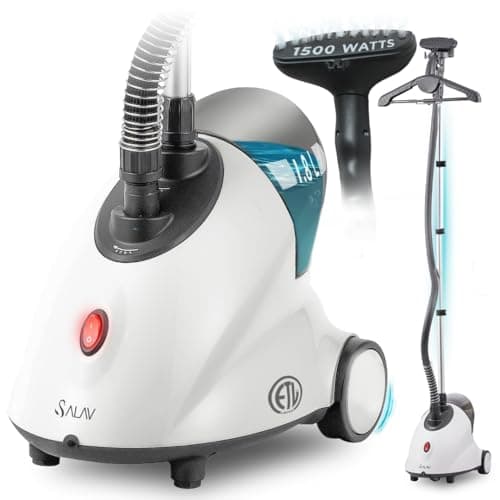
1.8 liters on a 65-inch pole — the point where steaming stops being a chore.
A 1.8 liter tank is roughly nine times what a good handheld carries. That is the entire argument for a standing steamer: fill it once and work through a rail without stopping.
SALAV publishes 60 minutes of steam per fill. Even discounted, that is an order of magnitude more than any handheld here.
Forty-five seconds to heat from 1,500 watts is respectable given the volume of water involved — a handheld is heating 200 ml, this is heating 1,800.
Good
1.8 liter tank — about an hour of continuous steam per the maker
65-inch pole holds a full-length dress or coat clear of the floor
1,500W with a published one-year warranty
Not good
Nine pounds and pole-mounted — this lives in one room
45-second heat-up is slower than the best handhelds
Assembly required, and the pole is what people complain about
Who should not buy it. Skip this if you steam two shirts a week. A standing unit you assemble and store is more machine than that job needs.
4. Handheld · The biggest tank in the class
Beautural 1200W Handheld Steamer
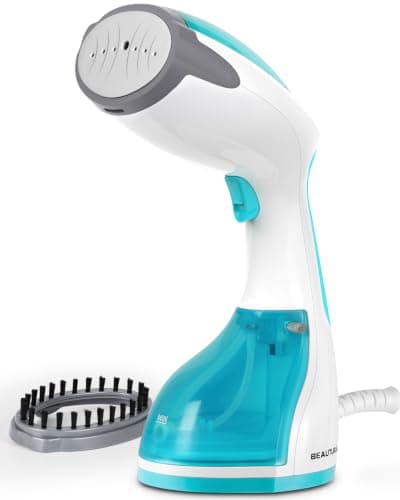
260 ml on a 1,200W handheld — the most run time per fill here, bought with output.
Tank capacity decides whether steaming is pleasant or annoying, and this carries 260 ml against the 190 to 216 ml the 1,875W units manage. More minutes per fill, fewer trips to the sink.
1,200 watts is a real step down from 1,875. On linen and heavy cotton you will feel it — the steam is wetter and you will make more passes. On the synthetics and knits that make up most wardrobes the difference is small.
Two pounds and 30 seconds to heat are both mid-table. Nothing here is remarkable except the tank, and the tank is the point.
Good
260 ml — the largest handheld tank in this set
30-second published heat-up, faster than the 1,875W Conair
Auto shut-off published as part of a nine-point safety design
Not good
1,200W struggles where 1,875W does not — linen especially
Filling means carrying the whole unit to the tap
Two pounds in the hand, the same as the far more powerful Conair
Who should not buy it. Skip this if linen or heavy cotton is most of what you own. Below about 1,500 watts you make three passes where a stronger unit makes one.
A note on scale, because quilters hit it harder than anyone
Quilt pressing is high-volume work: hours at a time, tank after tank. That makes the water question matter more here than for someone steaming two shirts a week. A unit run continuously on hard water will scale faster, and scale on a soleplate marks cotton. The distilled-water page has the full argument — the short version is that it matters most for exactly this kind of use, and that descaling is not optional at this duty cycle.
This page is also, in fairness, the thinnest-evidenced topic in this round: the search demand behind it is real but modest. It exists because the honest answer to the question is a correction, and a correction is worth writing down. If you came here to be told which steamer to buy for quilting, the most useful thing this site can tell you is that the question has an iron in it.
Questions people actually ask
+What is the best steamer for quilting?
For piecing, none of them — buy an iron, because setting a seam needs pressure and a flat soleplate and a steam head applies neither. The Rowenta Steam Force Pro DW9580 is the pick there at 1,850 W with controllable steam. For relaxing a finished top or a folded quilt, a standing steamer is right and the SALAV GS18 is the cheapest here with a tank big enough for the job.
+Should you use steam when pressing quilt blocks?
Quilters disagree, and the mechanism explains why. Steam makes cotton more willing to move, which helps flatten a stubborn seam and increases the risk of stretching a bias edge while it is relaxed. That is the argument for an iron whose steam you can switch off rather than a steamer whose steam is the only thing it does.
+Can you use a garment steamer on a finished quilt?
Yes, and it is the best use of a steamer in quilting. Hang the quilt, work six to eight inches away, and let the weight pull the fold lines out. It relaxes creases without wetting the batting and without running an iron over work you have already squared up. It does not clean the quilt — steam does not clean fabric.
+Will steaming shrink or distort quilting cotton?
Steam alone will not shrink cotton — shrinkage needs the fabric genuinely wet and then dried under tension. Distortion is the real risk, and it is mechanical rather than thermal: a bias seam handled while relaxed and damp will lengthen. Work at a distance, and do not pull on a damp edge.
+Do I need a steam station for quilting?
Only for volume. A steam station moves the water tank off the soleplate, so it presses for an hour or more without a refill and holds a steadier output. If you piece for whole afternoons that is a real gain; if you quilt a block at a time, a 1,850 W iron does the same job for a third of the price.