The machine that does the one thing a steamer cannot, and asks for a board and a countertop in exchange.
By Scooter M., enthusiast, crease control · Published
A steam station is an iron with its boiler moved off the soleplate into a separate tank. That buys two things a garment steamer cannot offer at any price: continuous steam that does not run out mid-garment, and pressure, which is the only way to make a crease or a genuinely crisp collar. What it costs you is an ironing board, a chunk of counter or cupboard, and a machine you set up rather than grab. Buy a station if your wardrobe is cotton shirting and tailoring; buy a garment steamer if it is knitwear, synthetics and dresses.
We earn a commission if you buy through the links on this page, at no extra cost to you. It does not change which steamer we rank first — the ranking comes from published specifications and the arithmetic on our method page. We have not tested these units. Full disclosure.
The three machines, side by side
What each one actually is
Garment steamer
Steam iron
Steam station
What it does
Vertical steam onto hanging fabric
Heated soleplate that also emits steam
Iron fed by a separate pressurized boiler
Needs a board
No
Yes
Yes
Makes a crease
No
Yes
Yes
Steam duration
Tank-limited
Small onboard tank
Largest tank, refill while hot on some
Setup time
Plug in and go
Board out, iron heats
Board out, boiler pressurizes
Footprint stored
A drawer
A shelf
A large shelf or cupboard
Weight in the hand
1-3 lb
3-4 lb
Lightest iron of the three — the boiler stays on the table
That last row is the point people miss about stations: because the water is not in the iron, the part you hold is lighter than a comparable standalone steam iron.
What the separate boiler actually changes
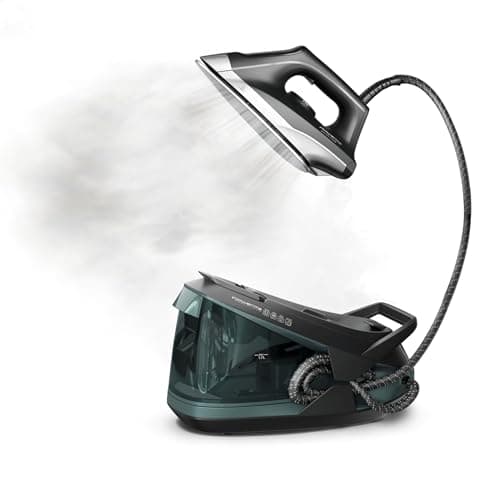
On a normal steam iron, the water sits in the soleplate assembly and is heated there. That limits how much steam it can make — a small tank close to a hot plate — and it puts the weight of the water in your hand. A station moves the water into a pressurized vessel on the table and pipes steam up to the iron.
Three consequences follow, and they are why the category exists. Steam is continuous rather than pulsed, so a cotton shirt takes fewer passes. The iron is lighter, because it is no longer carrying the water. And the tank is far larger, so a full basket of shirts does not mean refilling. The Rowenta Master Steam Station publishes 1,750 watts; it does not publish a tank figure, which we record as a gap rather than estimate.
Where a station beats a garment steamer outright
Crisp cotton shirting. A steamer gets a shirt presentable; a station gets it crisp. The dress-shirt verdict sets out exactly where that line falls.
Trouser creases. Pressure makes a crease and steam never can. The trousers page works through the split.
[Linen](/steamer-vs-iron/linen). Flax has almost no elastic recovery and must be held flat while it dries. This is the fabric where a steamer genuinely loses, and we say so despite earning nothing on it.
Heavy cotton twill and canvas. Too dense for vertical steam to reach the middle of the cloth.
Volume ironing. A basket at a time, where the continuous steam and large tank do real work.
Where a garment steamer beats a station outright
[Wool tailoring](/fabrics/wool). A station is still an iron. Pressure flattens a lapel roll and can glaze worsted wool permanently — steam is what tailors actually use on a jacket.
[Knitwear](/steamer-vs-iron/knitwear). Pressure crushes the loft that makes a knit warm. That damage does not come back.
Anything hanging.Curtains, a dress on a rail, a jacket you are about to put on. A station cannot touch a garment you do not take down.
Speed for one garment. Three minutes and a hanger against setting up a board and waiting for a boiler.
Storage. A handheld lives in a drawer. A station does not.
[Delicates](/steamers/for-delicates) and beaded or sequinned pieces, where nothing should touch the fabric at all.
"Steam station for delicate fabrics" — the honest answer
This is a common search and the honest answer is that it is usually the wrong question. A station's advantages — pressure, continuous output, a hot soleplate — are all things delicate fabrics want less of. Silk scorches under dry heat, satin dulls where a soleplate touches, velvet crushes, and chiffon is too light to iron comfortably at all.
If a station is the machine you own, use it vertically where it supports that, hold it off the fabric, and press through a cloth when you must press at all. But for a wardrobe that is genuinely delicate-heavy, a low-powered handheld steamer with good control is the better tool, and the delicates roundup explains why less power is correct there.
Station or plain steam iron?
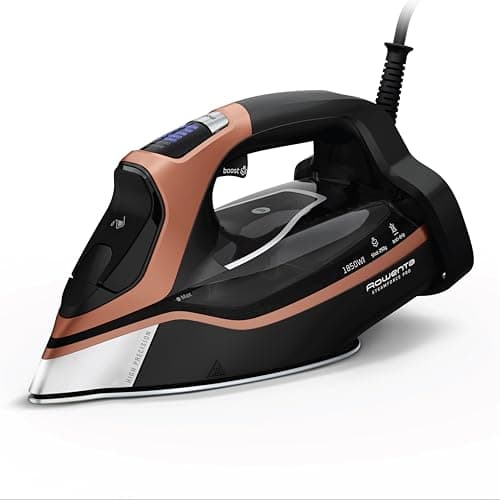
If you have already decided you need pressure, this is the remaining question, and it comes down to volume. A good standalone steam iron — the Rowenta Steam Force Pro publishes 1,850 watts and 4.2 pounds of useful mass — presses anything a station does, one garment at a time, from a shelf rather than a cupboard.
A station earns its footprint on volume: a basket of shirts, a household's worth of school uniforms, a sewing habit. For three shirts a week the iron is the more sensible object, and it stores in a fraction of the space. Neither publishes a tank figure or a heat-up time on its listing, which is worth knowing before you buy either.
Rowenta does not publish tank capacity, heat-up time for this model, so those figures are excluded from the score rather than estimated.
What the numbers mean
A steam station separates the boiler from the iron, which is what lets it deliver steam continuously instead of in the bursts a self-contained iron manages.
Seven point one pounds is the heaviest unit on this site, and almost all of it is the base. The iron in your hand is light.
Rowenta publishes neither tank capacity nor heat-up time here. On a station the boiler capacity is the figure a buyer most needs, and its absence is a genuine mark against the listing.
Good
Separate boiler gives continuous rather than burst steam
1,750W
The iron itself is light because the mass sits in the base
Not good
No published boiler capacity — the key figure for a station
No published heat-up time
7.1 pounds and a two-piece footprint to store
Who should not buy it. Skip this if you press occasionally. A station earns its size only if you work through a basket at a time.
2. Iron · The iron half of the argument
Rowenta Steam Force Pro DW9580
1,850 watts and a stainless soleplate — what you buy when the honest answer is 'iron'.
Rowenta does not publish tank capacity, heat-up time for this model, so those figures are excluded from the score rather than estimated.
What the numbers mean
Linen and heavy cotton want contact, weight and heat, and no vertical steamer supplies any of the three. This is the tool for those fabrics.
1,850 watts is at the top of what a domestic iron draws, and 4.2 pounds is heavy in the way that helps — the mass does part of the pressing for you.
Rowenta publishes neither a tank figure nor a heat-up time on this listing, so two of our four metrics are unavailable and the score is computed from the two that are.
Good
1,850W — the most powerful iron in this set
Stainless steel soleplate with published smart presets
4.2 pounds of useful mass for pressing
Not good
No published tank capacity or heat-up figure
Needs a board, which is the whole reason people buy steamers
Nothing an iron does helps a pleated, beaded or structured garment
Who should not buy it. Skip this if you do not own a board and will not buy one. An iron without a surface is a paperweight.
3. Handheld · The default handheld
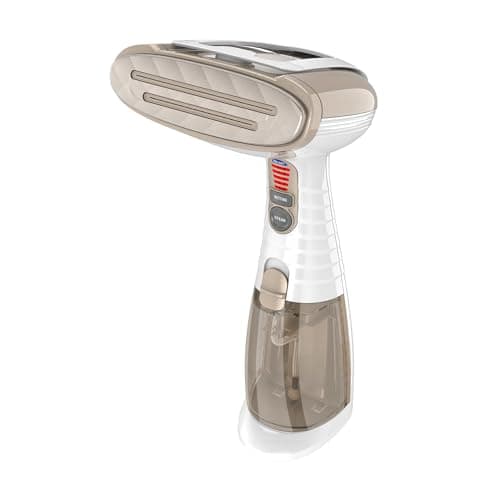
Conair Turbo ExtremeSteam GS59
The most-bought handheld in the category, and its published specs explain that rather than contradict it.
1,875 watts is the practical ceiling for a plug-in appliance on a US 15-amp circuit, and this unit sits right at it. Power is what turns water into dry steam fast enough to relax a fiber instead of soaking it, so on a handheld this is the figure that matters most.
The trade is the tank. 7.3 fluid ounces is a shade over 200 ml, which Conair pairs with a stated 20 minutes of run time. Call it two or three shirts before a refill.
40 seconds to heat is ordinary for this power class, not fast. The Rowenta Pure Force publishes a tenth of that at the same wattage.
Good
1,875W is the most power available in a handheld on a US circuit
Three attachments in the box, including a fabric brush for wool and a crease tool
Two-year limited warranty, which is unusual at this price
Not good
The tank is small for the power — high output empties it faster
40-second heat-up is beaten by several cheaper units
Over two pounds in the hand, which tells after a few garments
Who should not buy it. Skip this if you steam a whole rail at a time. At full output the tank runs dry before you get through a week of shirts, and a standing unit with a two-liter tank costs about the same.
Questions people actually ask
+What is the difference between a steam station and a garment steamer?
A steam station is an iron whose water sits in a separate pressurized boiler on the table, so it delivers continuous steam and applies pressure through a soleplate. A garment steamer applies vertical steam to hanging fabric and applies no pressure at all, which is why it can never make a crease.
+Is a steam station better than a garment steamer?
For crisp cotton shirting, trouser creases and linen, yes. For wool tailoring, knitwear, dresses, curtains and anything you do not want to take down, no — a steamer is the better tool and an iron of any kind can flatten or glaze those fabrics.
+Is a steam station good for delicate fabrics?
Usually not the right choice. Pressure, a hot soleplate and continuous output are all things delicates want less of. Silk scorches, satin dulls where the plate touches and velvet crushes. A low-powered handheld steamer with good control suits a delicate wardrobe better.
+Steam station or steam iron?
It comes down to volume. A station earns its footprint if you press a basket at a time — continuous steam and a much larger tank. For three shirts a week a standalone steam iron does the same job from a shelf instead of a cupboard.
+Does a steam station need an ironing board?
Yes. It is an iron, so it needs a surface, and that is the main practical difference from a garment steamer — which needs only a hanger and a plug.