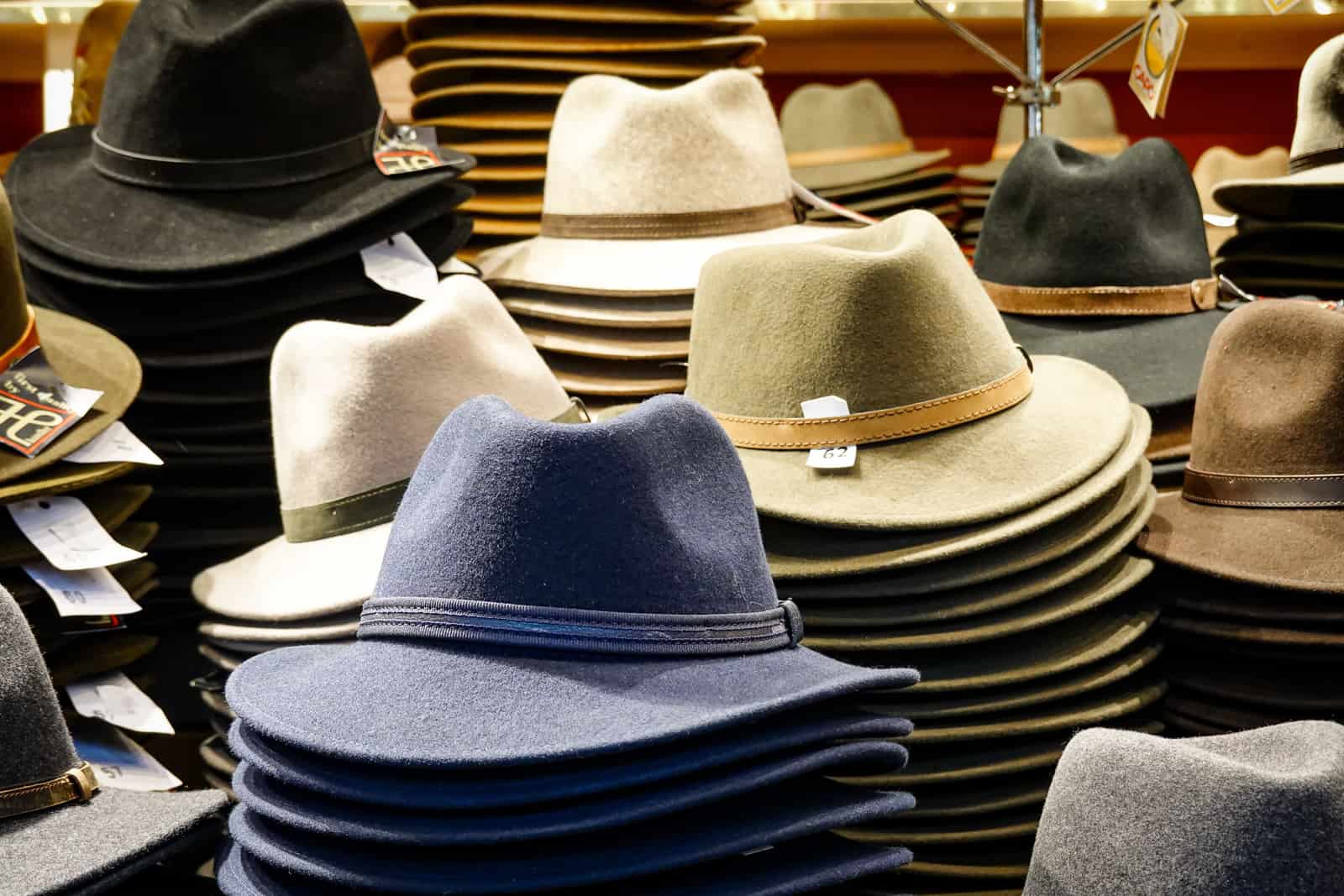
Steam is the traditional hat-shaping tool and still the right one. The fiber decides everything, and one common hat material must never go near it.
By Scooter M., enthusiast, crease control · Published
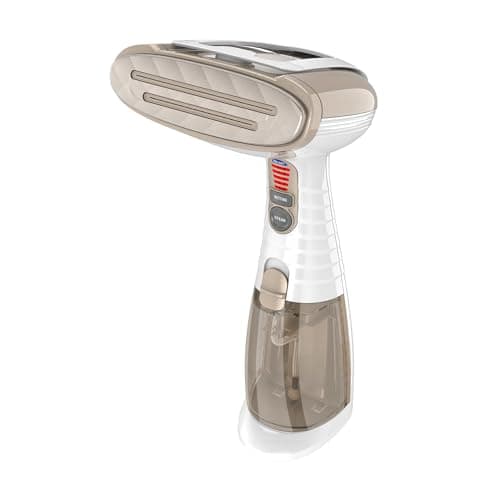
Steam is genuinely the right tool, and what you want is a concentrated nozzle rather than a wide head. Hat shaping is a precision job — you are working a brim edge or a crown crease, not a panel of fabric. Wool felt and fur felt take steam beautifully and this is how hatters have shaped them for a century. Straw takes it carefully.Leather and suede hats must never be steamed. The Conair Turbo ExtremeSteam leads because 1,875 watts through a focused head gives you the fastest, driest steam for felt.
We earn a commission if you buy through the links on this page, at no extra cost to you. It does not change which steamer we rank first — the ranking comes from published specifications and the arithmetic on our method page. We have not tested these units. Full disclosure.
What can and cannot be steamed
Hats by material
Material
Steam?
Notes
Wool felt
Yes — ideal
The classic case. Reshapes readily and holds the new shape as it dries
Fur felt (beaver, rabbit)
Yes
Takes steam even better than wool. This is how good hats are blocked
Straw (natural)
Yes, briefly
Steam softens it enough to reshape. Do not saturate — it can go brittle
Toyo and paper straw
Careful
Paper-based. Brief passes only; saturation destroys the weave
Water stiffens hide and mats suede nap. Neither reverses. A specialist job
Straw with a glued sweatband
Careful
Steam near adhesive softens it. Work away from the band
The two "no" rows are the same two fabrics the rest of this site refuses to steam, for the same reasons. The fabric matrix has the full list.
Why felt responds to steam the way it does
Felt is not woven or knitted — it is a mat of animal fibers interlocked under heat, moisture and pressure. That is literally how it was made, which is why reapplying heat and moisture lets it move again. The fibers relax, you push them into a new configuration, and as the felt dries and cools it sets there.
The practical consequence is that hat shaping is genuinely reversible in a way most garment work is not. A crown crease you dislike can be steamed out and put back differently. A brim that has gone wavy can be steamed and flattened. This is why steam and a hat block, rather than an iron, have been the trade's tools for a very long time.
Reshaping a felt hat
1Steam the area until the felt goes pliableHold the nozzle three to four inches away and move continuously. You will feel it soften — it stops being stiff and starts behaving like thick fabric.
2Shape it over something the right sizeA hat block if you own one; a bowl, a ball or your own head if you do not. The crown needs something to hold its diameter while it dries or it will shrink back.
3Work the brim with your hands, not toolsRoll or flatten the edge while the felt is warm. Fingers give you far more feedback than any implement and will not mark the surface.
4Set the crown crease lastPinch it in while warm and hold for a few seconds. A crease put in before the crown is shaped will be lost when you shape the crown.
5Let it dry completely on the blockSeveral hours. Taking it off warm is how the shape relaxes back out. This is the step people skip and then repeat the whole job.
The common jobs
A brim that has gone wavy. Steam along the edge, then press it flat between your palms or under a weight while it cools.
A crushed crown after packing. Steam from the inside where you can, then push the crown out over a bowl or a ball and let it dry.
A hat that is slightly too tight. Steam the sweatband area and stretch gently over a block. Modest gains only — this shifts a hat by a little, not by a size.
A misshapen baseball cap. Steam and reshape the crown; if the brim has gone flat, steam and curve it by hand and hold the curve while it cools.
Travel creases in a packable hat. Brief passes and reshape. Packable hats are usually made to recover, and steam speeds it up.
What steam will not do to a hat
It will not clean one. Steam reduces odor in a sweatband, which is worth knowing, but a stained felt hat needs a specialist and a sweat-marked band needs replacing rather than steaming. It also will not rescue a hat that has been genuinely soaked and dried out of shape — at that point the felt has already set somewhere wrong and you are reshaping from scratch, which sometimes works and sometimes does not.
Why the picks are what they are
The Conair Turbo ExtremeSteam leads because felt wants the driest, hottest steam you can get and 1,875 watts is the ceiling on a US circuit. It ships with three attachments including a concentrator, and publishes a two-year warranty — the longest of any handheld here. At 2.27 pounds it is the heaviest handheld we cover, which is a genuine cost when you are working a brim one-handed.
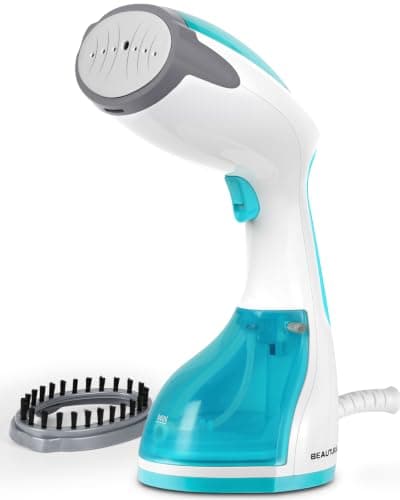
The Beautural 1200W is the better choice for straw and anything delicate, because 1,200 watts with real low-end control is easier to moderate than 1,875. Its 260 ml tank is ample for hat work, which is a short job. It publishes no warranty term.
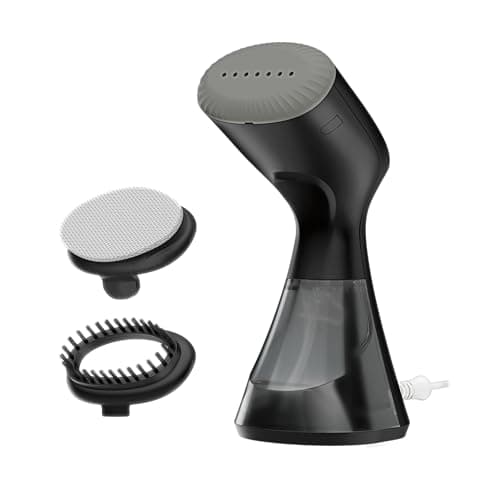
The Conair 1100W Compact is the one to hold for fiddly work — 1.3 pounds, which matters when you are steaming with one hand and shaping with the other. Its listing publishes no tank capacity at all, a gap we record rather than estimate; for hats, where sessions are short, it matters less than it would elsewhere.
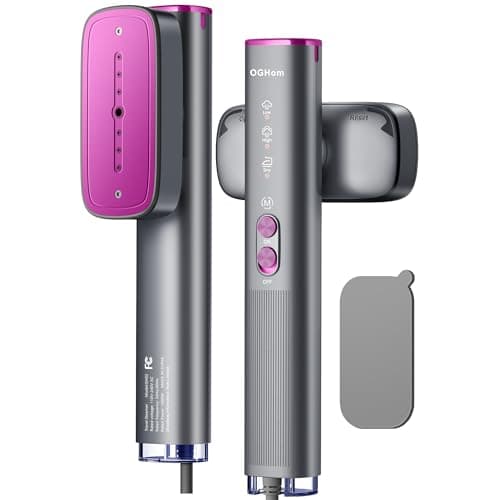
The OGHom GH02 is here for anyone who travels with a good hat: 110-240 V published dual voltage, a 15-second heat-up and 1.76 pounds. The 120 ml tank is the smallest on this page, which is fine for a hat and nothing like enough for a wardrobe.
The picks
Ranked on published specifications. Tap a row for the full write-up; the price button goes to Amazon.
#
Product
Best for
Spec score
Price
1
Conair Turbo ExtremeSteam GS59The most-bought handheld in the category, and its published specs explain that rather than contradict it.
1,875 watts is the practical ceiling for a plug-in appliance on a US 15-amp circuit, and this unit sits right at it. Power is what turns water into dry steam fast enough to relax a fiber instead of soaking it, so on a handheld this is the figure that matters most.
The trade is the tank. 7.3 fluid ounces is a shade over 200 ml, which Conair pairs with a stated 20 minutes of run time. Call it two or three shirts before a refill.
40 seconds to heat is ordinary for this power class, not fast. The Rowenta Pure Force publishes a tenth of that at the same wattage.
Good
1,875W is the most power available in a handheld on a US circuit
Three attachments in the box, including a fabric brush for wool and a crease tool
Two-year limited warranty, which is unusual at this price
Not good
The tank is small for the power — high output empties it faster
40-second heat-up is beaten by several cheaper units
Over two pounds in the hand, which tells after a few garments
Who should not buy it. Skip this if you steam a whole rail at a time. At full output the tank runs dry before you get through a week of shirts, and a standing unit with a two-liter tank costs about the same.
2. Handheld · The biggest tank in the class
Beautural 1200W Handheld Steamer
260 ml on a 1,200W handheld — the most run time per fill here, bought with output.
Tank capacity decides whether steaming is pleasant or annoying, and this carries 260 ml against the 190 to 216 ml the 1,875W units manage. More minutes per fill, fewer trips to the sink.
1,200 watts is a real step down from 1,875. On linen and heavy cotton you will feel it — the steam is wetter and you will make more passes. On the synthetics and knits that make up most wardrobes the difference is small.
Two pounds and 30 seconds to heat are both mid-table. Nothing here is remarkable except the tank, and the tank is the point.
Good
260 ml — the largest handheld tank in this set
30-second published heat-up, faster than the 1,875W Conair
Auto shut-off published as part of a nine-point safety design
Not good
1,200W struggles where 1,875W does not — linen especially
Filling means carrying the whole unit to the tap
Two pounds in the hand, the same as the far more powerful Conair
Who should not buy it. Skip this if linen or heavy cotton is most of what you own. Below about 1,500 watts you make three passes where a stronger unit makes one.
3. Handheld · Small spaces
Conair 1100W Compact Steamer GS81
1.3 pounds and 30 seconds to steam — with a tank figure Conair does not publish.
Conair does not publish tank capacity for this model, so that figure is excluded from the score rather than estimated.
What the numbers mean
At 1.3 pounds this is the lightest full-size handheld here, and 1,100 watts handles the knits, synthetics and light cotton that make up most wardrobes.
Conair publishes no tank capacity for this model. That is a real hole in a spec sheet — tank size is the single best predictor of whether a session is pleasant — and it costs the unit a metric in our scoring rather than earning it a guess.
Nine inches tall. It fits in a drawer, which is most of the argument for a compact steamer.
Good
1.3 pounds, the lightest non-travel handheld here
30-second published heat-up
Nine inches tall — genuinely drawer-sized
Not good
No published tank capacity, so run time is unknowable from the specs
1,100W is mid-table output
Compact bodies mean small tanks, and the silence is not reassuring
Who should not buy it. Skip this if run time matters to you. Until Conair publishes a tank figure there is no way to know what you are buying.
4. Travel · Dual voltage on a budget
OGHom GH02 Travel Steamer
110-240V and a 15-second heat-up in the cheapest dual-voltage body here.
The listing publishes 110-240V, which puts it in the small group of travel steamers that actually work on a European or Asian socket.
1,000 watts and 15 seconds to steam is the same headline pairing as the Jack & Rose, with 30 ml less tank.
1.76 pounds is heavy for a travel unit — most of this set is under 1.6 — and that is the trade for the price.
Good
110-240V published dual voltage
15-second published heat-up
1,000W, the top of the travel class
Not good
120 ml is the second-smallest tank here
1.76 pounds is heavy for the class
No published warranty term
Who should not buy it. Skip this if weight is what you are optimizing for. The nesugar is less than half of it.
Questions people actually ask
+Can you use a clothes steamer on a hat?
Yes, and for felt it is the correct tool — steam is how hats are blocked and shaped in the trade. Keep the nozzle off the surface, because contact leaves a permanent shine on felt. Leather and suede hats must never be steamed.
+How do you reshape a felt hat with steam?
Steam the area from three to four inches until the felt goes pliable, shape it over a block or a bowl, work the brim with your hands while it is warm, set the crown crease last, then leave it on the block until completely dry. Removing it warm lets the shape relax back out.
+Can you steam a straw hat?
Briefly, yes — steam softens natural straw enough to reshape it. Do not saturate it, because wet straw can become brittle as it dries. Paper-based straws like toyo need even shorter passes.
+Can you steam a baseball cap?
Yes. Steam and reshape the crown, and curve the brim by hand while it is warm, holding the curve as it cools. Watch for heat-applied logos and embroidery, and keep the nozzle off them.
+Will steaming shrink a hat?
It can slightly, if you steam the crown and let it dry without anything holding its diameter. That is why you shape over a block, a bowl or a ball. Conversely, steaming and stretching over a block gains you a little room in a hat that is marginally too tight.