Steam gets trousers wrinkle-free in two minutes. It will not give you a crease — and for a lot of trousers, that is the whole job.
By Scooter M., enthusiast, crease control · Published
Decide first whether you need a crease. For jeans, chinos, joggers, linen trousers and most casual pants, a steamer is the faster and better tool — hang them by the hem and the wrinkles drop out in two minutes. For suit trousers, uniform trousers or anything inspected for a knife-edge, no vertical steamer can help, because a crease is made by pressure and steam applies none. That case wants a 2-in-1 with a press plate or an iron, which is why the Rowenta Pure Force leads this page.
We earn a commission if you buy through the links on this page, at no extra cost to you. It does not change which steamer we rank first — the ranking comes from published specifications and the arithmetic on our method page. We have not tested these units. Full disclosure.
How this list was judged
Can it make a crease at all? On this page that is the first question, not a footnote. Only a plate or an iron can.
Power enough for woven cotton. Chinos and suit trousers are denser than a shirt; below 1,000 W you dampen them rather than smooth them.
Somewhere to hang them from the waistband, because trousers steam best hanging full-length under their own weight.
Published specifications, complete, with gaps recorded rather than estimated.
Currently purchasable, verified against the live listing before publication.
The crease question, settled
Steam breaks the hydrogen bonds holding a wrinkle and lets the fabric's own weight pull it straight — the fiber returns toward its resting shape. A crease is the opposite operation: the cloth is folded into a shape it did not have, held under pressure, and allowed to cool there. Only contact and weight do that, which is why the steamer-versus-iron hub puts trouser creases firmly in the iron's column.
The practical consequence is a clean split. Steam the legs to remove the wrinkles, then press the crease with a plate or an iron if the trousers need one. Doing it the other way round wastes the crease.
An iron glazes wool; press through a pressing cloth
Pleated trousers
Steamer, along the pleats
Work with the fold line, never across it
How to steam trousers
1Hang them from the hems, not the waistbandClip hangers on the hems let the waistband's weight pull the legs straight. It is the opposite of how most people hang trousers and it works considerably better for steaming.
2Work down one leg at a time, front then backHold the fabric lightly taut with your free hand. Two passes down a leg is usually the whole job on chinos or jeans.
3Keep the head moving over pockets and seamsPocket bags are a double thickness and hold moisture. Dwelling there leaves a damp rectangle that shows.
4Press the crease afterwards, if you want oneLine up the side seams, lay the leg flat and press along the existing crease line with a plate or an iron. On wool, use a pressing cloth — heat and pressure directly on worsted wool leaves a permanent shine.
5Hang them until dryWearing damp trousers is how the knees and seat bag out, and on wool it is how a crease you just made disappears.
Why the picks are what they are
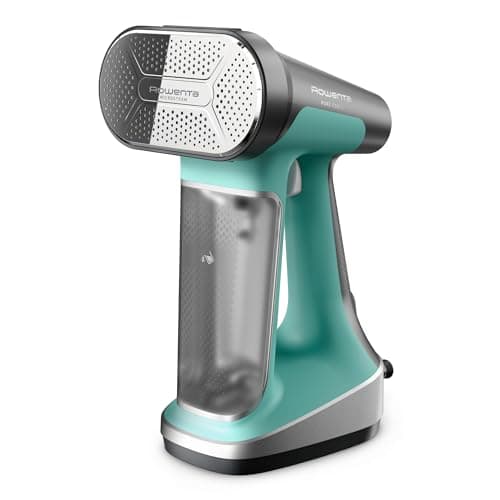
The Rowenta Pure Force 2-in-1 leads because it is the only machine here that answers both halves of the trouser question in one body: 1,875 W of vertical steam for the legs, a horizontal press plate for the crease, and a published 10-second heat-up, the fastest figure on this site by a factor of three. It weighs 3 pounds, the heaviest handheld we cover, and Rowenta publishes no warranty term for it.
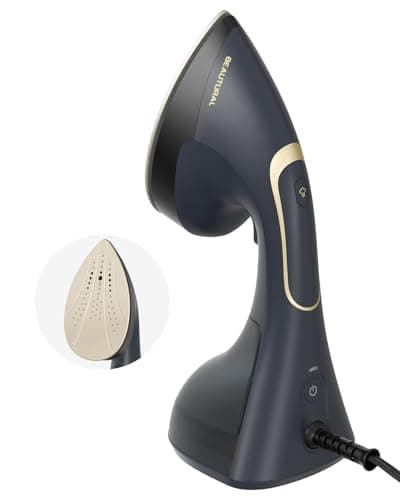
The Beautural 2-in-1 is the cheaper plate option: 1,200 W and a 30-second heat-up at 2.18 pounds. The plate is sized for a collar or a cuff rather than a full trouser leg, so a crease takes patience — and its 200 ml tank is 60 ml smaller than Beautural's own plain handheld, which is what the plate costs you. No published warranty.
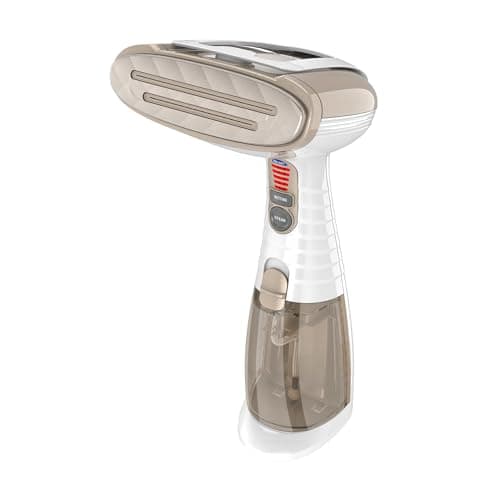
The Conair Turbo ExtremeSteam is the pick if your trousers never need a crease. 1,875 W, a 216 ml tank, a fabric brush that earns its place on wool, and a published two-year warranty. It makes no crease whatsoever — that is the trade, and on jeans and chinos it costs you nothing.
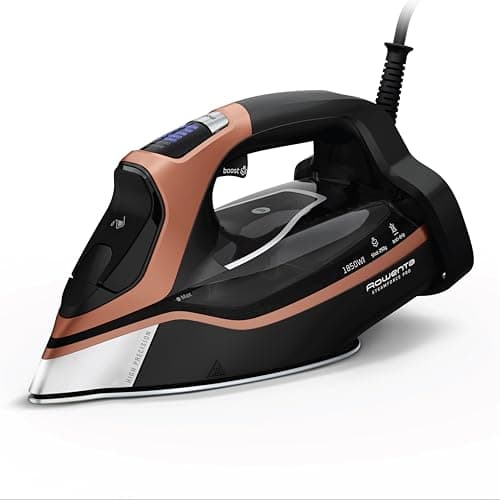
The Rowenta Steam Force Pro is the honest answer for anyone whose trousers are mostly tailored. It is an iron, at 1,850 W with a stainless soleplate and 4.2 pounds of useful mass, and it will do a knife-edge crease that no steamer on this site can approach. It needs a board, which is the whole reason people buy steamers, and Rowenta publishes neither a tank figure nor a heat-up time for it.
The picks
Ranked on published specifications. Tap a row for the full write-up; the price button goes to Amazon.
#
Product
Best for
Spec score
Price
1
Rowenta Pure Force 2-in-1 DR8822Steams vertically, presses horizontally, and publishes the fastest heat-up in this set by a factor of three.
Ten seconds to steam is the lowest published heat-up of anything on this page. If the thing that stops you steaming is the wait, this is the answer to it.
The horizontal plate is the real argument. A steamer relaxes a wrinkle; only contact and pressure will put a crease into a trouser leg or flatten a collar point. This does both, which is why for most wardrobes it genuinely replaces an iron and a board.
Three pounds is heavy for a handheld, and that weight is the soleplate. Judge it as a small iron that also steams, not as a light steamer that also presses.
Good
10-second published heat-up, the fastest on this site
Vertical steam and a horizontal press plate in one body
210 ml tank, larger than most 1,875W handhelds
Not good
Three pounds — the heaviest handheld here
A plate needs a surface, so it is not purely hang-and-go
Wider footprint than a pure steamer to store
Who should not buy it. Skip this if you only ever steam hanging garments. You would be carrying the weight of a soleplate you never put down.
2. Handheld · Pressing without a board
Beautural 2-in-1 Steam and Iron
The 1,200W Beautural with a plate added and 60 ml of tank given up for it.
Same 1,200W element and 30-second heat-up as the plain Beautural, plus a press plate, with 200 ml instead of 260 ml. The tank pays for the plate.
At 2.18 pounds it is about three ounces heavier than the plain version, which is a fair price for the added function.
If you are choosing between the two Beaturals, the only question is whether you need to press. If you do, 60 ml is not the deciding factor.
Good
Vertical steam and horizontal press in a sub-1,500W unit
30-second published heat-up
200 ml is still more tank than the 1,875W handhelds carry
Not good
60 ml less tank than the plain Beautural
1,200W caps what the plate can do on heavy cotton
120V only
Who should not buy it. Skip this if you already own an iron you like. A plate on a handheld is a travel convenience, not a replacement for a proper soleplate at home.
3. Handheld · The default handheld
Conair Turbo ExtremeSteam GS59
The most-bought handheld in the category, and its published specs explain that rather than contradict it.
1,875 watts is the practical ceiling for a plug-in appliance on a US 15-amp circuit, and this unit sits right at it. Power is what turns water into dry steam fast enough to relax a fiber instead of soaking it, so on a handheld this is the figure that matters most.
The trade is the tank. 7.3 fluid ounces is a shade over 200 ml, which Conair pairs with a stated 20 minutes of run time. Call it two or three shirts before a refill.
40 seconds to heat is ordinary for this power class, not fast. The Rowenta Pure Force publishes a tenth of that at the same wattage.
Good
1,875W is the most power available in a handheld on a US circuit
Three attachments in the box, including a fabric brush for wool and a crease tool
Two-year limited warranty, which is unusual at this price
Not good
The tank is small for the power — high output empties it faster
40-second heat-up is beaten by several cheaper units
Over two pounds in the hand, which tells after a few garments
Who should not buy it. Skip this if you steam a whole rail at a time. At full output the tank runs dry before you get through a week of shirts, and a standing unit with a two-liter tank costs about the same.
4. Iron · The iron half of the argument
Rowenta Steam Force Pro DW9580
1,850 watts and a stainless soleplate — what you buy when the honest answer is 'iron'.
Rowenta does not publish tank capacity, heat-up time for this model, so those figures are excluded from the score rather than estimated.
What the numbers mean
Linen and heavy cotton want contact, weight and heat, and no vertical steamer supplies any of the three. This is the tool for those fabrics.
1,850 watts is at the top of what a domestic iron draws, and 4.2 pounds is heavy in the way that helps — the mass does part of the pressing for you.
Rowenta publishes neither a tank figure nor a heat-up time on this listing, so two of our four metrics are unavailable and the score is computed from the two that are.
Good
1,850W — the most powerful iron in this set
Stainless steel soleplate with published smart presets
4.2 pounds of useful mass for pressing
Not good
No published tank capacity or heat-up figure
Needs a board, which is the whole reason people buy steamers
Nothing an iron does helps a pleated, beaded or structured garment
Who should not buy it. Skip this if you do not own a board and will not buy one. An iron without a surface is a paperweight.
Questions people actually ask
+Can you steam pants instead of ironing them?
For jeans, chinos, joggers and linen trousers, yes — steam removes the wrinkles faster than an iron and needs no board. For suit or uniform trousers that need a crease, no: a crease is made by pressure and no vertical steamer applies any.
+Can a steamer put a crease in trousers?
No. Steam relaxes fabric and lets it hang straight; a crease is a fold set under pressure while the cloth cools. You need a press plate or an iron. A 2-in-1 handheld does both jobs in one device.
+How do you steam trousers properly?
Hang them from the hems on clip hangers so the waistband's weight pulls the legs straight, then work down one leg at a time, front then back, holding the fabric lightly taut. Keep the head moving over pocket bags, which are double thickness and hold moisture.
+Can you steam linen pants?
You can, and they will come out relaxed rather than pressed. Flax has almost no elastic recovery, so it has to be held flat while it dries — which is an iron's job. Steam is still worth doing on linen trousers if a soft look is what you want.
+Should you steam jeans?
Yes, for softening and to drop the fold marks from a shelf or a suitcase. Neither a steamer nor an iron does much else to heavy twill, and denim does not want a crease.