The expensive machines do not make more steam than the mid-range ones. They are built to keep making it — and that is a different purchase.
By Scooter M., enthusiast, crease control · Published
At the top of this category you stop buying steam and start buying service life. The single most counterintuitive figure on this site is that the commercial Jiffy J-2000 draws 1,300 watts — five hundred fewer than a domestic upright costing a fraction of it. What the money buys is a metal boiler, a three-year published warranty against a category norm of one, and in the press and station classes, pressure — the one thing no steamer of any price can produce. If you steam weekly, none of that pays back.
We earn a commission if you buy through the links on this page, at no extra cost to you. It does not change which steamer we rank first — the ranking comes from published specifications and the arithmetic on our method page. We have not tested these units. Full disclosure.
How this list was judged
Criteria first, and the criteria here are deliberately not the ones on the flagship roundup. At this tier, wattage and tank stop separating the machines and three other things start to:
Published warranty term, because at this price it is the maker's own statement about expected service life — and it is the figure that most cleanly separates the tiers.
Construction that survives thermal cycling, above all a metal rather than plastic boiler.
A capability the cheap tier does not have at all — pressure, a full-width plate, continuous refill.
Whether the price ever pays back at a realistic frequency of use. Stated honestly for each pick, including where it does not.
Currently purchasable, verified against the live listing before publication.
The commercial row is the one people misread. Fewer watts, more money, and it is not a mistake — see below.
The commercial machine makes less steam, not more
This is worth stating plainly because the intuition runs the other way. The Jiffy J-2000 draws 1,300 watts against the 1,800 of a domestic SALAV upright, and costs several times as much. It is not underpowered by accident.
What Jiffy sells is a 2.84-liter metal boiler and a three-year warranty. A plastic boiler heated and cooled twice a week for years is fine; the same vessel heated and cooled eight times a day in a shop is not, and that is the duty cycle these machines are designed around. If your steamer runs daily for years, that construction is the entire product. If it runs on Sunday evenings, you are buying an insurance policy against a failure mode you will never reach — and the standing roundup has domestic uprights that produce more steam for far less.
Pressure is the capability money can actually add
Everything a vertical steamer does, a $40 handheld does in kind — less of it, less quickly, but the same thing. There is exactly one capability that more money genuinely unlocks, and it is the one this site keeps returning to: a steamer cannot make a crease.
A steam station is an iron with a separate pressurized boiler, so it delivers continuous steam and the soleplate's pressure at once — the full comparison is here. A steam press closes two heated plates over a whole panel, which does in one motion what an iron does in twenty passes. Both need a surface, both are large, and neither is a garment steamer. If crisp is what you are buying, they are the honest answer and no amount of vertical steam substitutes.
Where the premium tier is genuinely wasted
On a small wardrobe. A commercial boiler does not steam a shirt better than a mid-range handheld. It steams the ten-thousandth shirt as well as the first.
On [linen](/steamer-vs-iron/linen). No steamer at any price presses linen. That is the fiber, not the budget.
On storage-constrained homes. These are 62 to 70 inches assembled, or a press that needs a table. A machine you resent is a machine you do not use.
As a status purchase. There is no luxury tier in this category the way there is in coffee or audio — the expensive machines are trade equipment, and they look it.
If what you actually want is portability. Everything on this page is heavy and plugged in. Travel is a different purchase entirely.
Why the picks are what they are
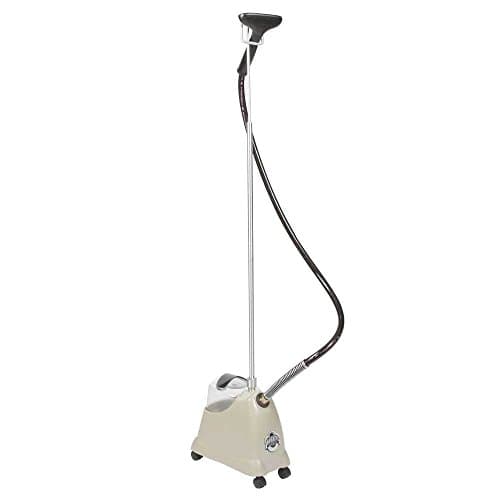
The Jiffy J-2000 is the machine the trade buys, and the reason is the three-year published warranty — three times what almost anything else on this site publishes — over a 2.84-liter metal boiler. The honest costs are blunt: 1,300 watts, fewer than domestic uprights costing far less; a published two-minute heat-up, the slowest on this site; and no published weight on the listing.
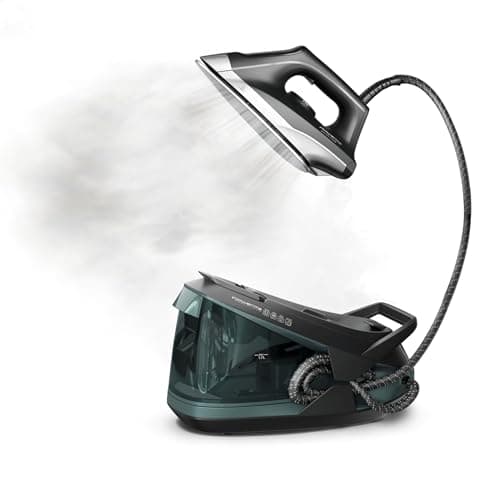
The Rowenta Master Steam Station is the pick when the real requirement is crisp rather than smooth. A separate boiler feeding an iron gives continuous steam plus pressure, which covers cotton shirting and trouser creases that vertical steam never will. It needs a board and a footprint, and it is the heaviest thing here to move.
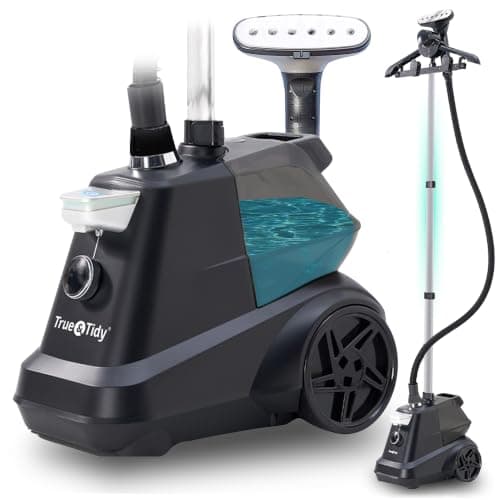
The True & Tidy SX3 is the upgrade that is not about warranty: 3 liters at 1,800 watts on a 70.5-inch pole, which is the most tank and power of any domestic upright on this site alongside the SALAV X3A. Its published 50-second heat-up is slower than the SALAV's 45, it weighs 12.1 pounds, and True & Tidy publishes no warranty term at all — which at this price is the thing to weigh.
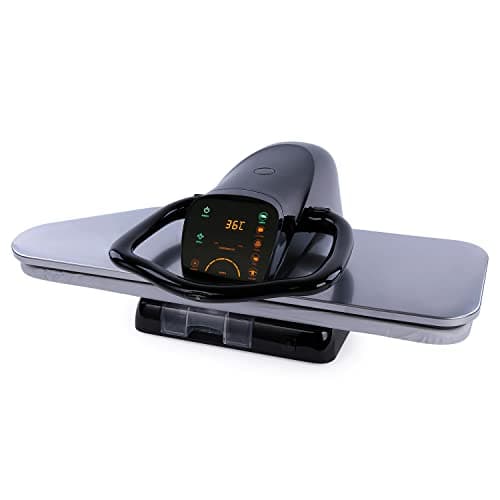
The LACIEL 34-inch Steam Press is the most expensive machine on this site and the most specialized. Two heated plates closing over a 34-inch panel will press a shirt front or a trouser leg in one motion, and nothing else here comes close for a genuinely pressed finish. It is furniture, it does one job, and for a wardrobe that is mostly knitwear it is the wrong purchase outright.
The picks
Ranked on published specifications. Tap a row for the full write-up; the price button goes to Amazon.
#
Product
Best for
Spec score
Price
1
Jiffy J-2000 Commercial Steamer2.84 liters, a metal boiler and a three-year warranty — the machine the dry cleaner owns.
The three-year warranty is the specification that separates this from everything else on the site. Every other unit here publishes one or two years, or nothing at all.
2.84 liters is the largest published tank in this set, and Jiffy rates the machine at roughly two hours of continuous steam.
Two minutes to heat is slow, and that is what heating nearly three liters in a metal boiler costs. This is a machine you switch on and then go and sort the rail.
Good
2.84 liter tank — the largest here
Three-year warranty, three times the category norm
Metal boiler rather than a molded plastic tank
Not good
Two-minute heat-up, the slowest here
1,300W is lower than the 1,800W domestic uprights
Costs several times what a good handheld costs
Who should not buy it. Skip this if the machine will sit idle most weeks. It is built for daily use and the price only makes sense against that.
2. Iron · Pressing volume without refilling
Rowenta Master Steam Station
1,750 watts with a separate boiler — continuous steam a self-contained iron cannot sustain.
Rowenta does not publish tank capacity, heat-up time for this model, so those figures are excluded from the score rather than estimated.
What the numbers mean
A steam station separates the boiler from the iron, which is what lets it deliver steam continuously instead of in the bursts a self-contained iron manages.
Seven point one pounds is the heaviest unit on this site, and almost all of it is the base. The iron in your hand is light.
Rowenta publishes neither tank capacity nor heat-up time here. On a station the boiler capacity is the figure a buyer most needs, and its absence is a genuine mark against the listing.
Good
Separate boiler gives continuous rather than burst steam
1,750W
The iron itself is light because the mass sits in the base
Not good
No published boiler capacity — the key figure for a station
No published heat-up time
7.1 pounds and a two-piece footprint to store
Who should not buy it. Skip this if you press occasionally. A station earns its size only if you work through a basket at a time.
3. Standing · The SALAV X3A's closest match
True & Tidy SX3 Standing Steamer
The same three liters and 1,800 watts, five seconds slower to heat, no published warranty.
Spec for spec this sits alongside the SALAV X3A: 1,800 watts, three liters, seventy and a half inches. The published differences are a 50-second heat-up against 45, and 12.1 pounds against 12.
Those margins are inside the noise of how a maker measures. Choose on price and stock, not on the spec sheet.
True & Tidy publishes no warranty term on this listing where SALAV does. That is the one difference we would actually act on.
Good
3 liter tank and 1,800W, matching the class leaders
Slightly narrower footprint than the SALAV
Straightforward pole-and-hanger design
Not good
No published warranty term
50-second heat-up, the slowest standing unit here
12.1 pounds
Who should not buy it. Skip this if the SALAV X3A is available at a similar price. Same specifications, and SALAV publishes a warranty.
4. Press · Flat cloth by the dozen
LACIEL 34-inch Steam Press
1,800 watts across a 34-inch heated plate — for people who press a lot of flat cloth.
LACIEL does not publish tank capacity, heat-up time, weight for this model, so those figures are excluded from the score rather than estimated.
What the numbers mean
Thirty-four inches of heated plate closing at once is a different category of tool. A shirt back is one press, not eight passes with an iron.
The maker publishes 1,800 watts and five fabric settings, and publishes neither tank capacity nor heat-up time. Two of the four figures our rubric uses are simply absent, and the score reflects only what was published.
This is the right machine for tablecloths, napkins and bed linen — flat, wide things where a steamer is the wrong tool entirely.
Good
34-inch pressing surface — a shirt back in one closure
1,800W, the most of any press here
Five published fabric settings
Not good
No published tank capacity or heat-up time
Takes a table-sized footprint and stays there
No use at all on anything you cannot lay flat
Who should not buy it. Skip this if your wardrobe is mostly hanging garments. A press is for flat cloth; a steamer is for everything on a hanger.
Questions people actually ask
+Are expensive garment steamers worth it?
Only if the machine runs often. Above the mid range you are not buying more steam — the commercial Jiffy draws fewer watts than a domestic upright — you are buying a metal boiler and a three-year warranty built for daily use. For weekly steaming, a mid-range machine produces more steam for far less.
+What is the most powerful garment steamer?
On peak wattage, the 1,875 W handhelds, which is the ceiling for a plug-in appliance on a US 15-amp circuit. On total steam per session, a 3-liter domestic upright. Notably it is not the commercial machine: the Jiffy J-2000 draws 1,300 watts.
+What does a commercial garment steamer give you that a domestic one does not?
A metal boiler built for repeated thermal cycling and a three-year published warranty against a category norm of one. It does not give you more steam. That construction matters if the machine runs daily for years and is irrelevant if it runs weekly.
+Should I buy a steam station or a garment steamer?
A steam station if you need crisp — it supplies pressure as well as continuous steam, and a steamer cannot make a crease at any price. A garment steamer if you want speed and no board. They are different tools rather than different price points.
+Is a steam press worth buying?
For a wardrobe of cotton shirting and tailored trousers, it does in one motion what an iron does in twenty passes. For knitwear, synthetics and dresses it is the wrong machine entirely, and it is the largest thing on this site.