The cheap end of this category is unusually good — and it fails in one specific, predictable way you should know about first.
By Scooter M., enthusiast, crease control · Published
The budget end of this category is better value than most, with one specific catch. Under $50 you can get 1,100 to 1,200 watts and a 260 to 300 ml tank — more water than the expensive 1,875 W handhelds carry. What you give up is peak power and a published warranty, and the practical consequence is narrow: cheap steamers handle knits, synthetics and light cotton well, and will not make a cotton dress shirt look pressed. If that is not your wardrobe, the money above $50 buys you very little.
We earn a commission if you buy through the links on this page, at no extra cost to you. It does not change which steamer we rank first — the ranking comes from published specifications and the arithmetic on our method page. We have not tested these units. Full disclosure.
How this list was judged
Criteria first, picks second — and none of them is a price we typed in. Every price on this page comes from the live data layer, is stamped with the date it was verified, and falls back to "Check price on Amazon" rather than showing a stale number. A price written into a sentence is wrong within a week.
At least 1,000 watts. Below that a steamer is a refresher rather than a wrinkle remover, and the gap shows on anything woven.
At least 240 ml of tank. Under that you refill mid-session, which is the single most common reason a steamer stops being used.
A published heat-up time, and a believable one. A listing that files a runtime in the heat-up field tells you something about the maker.
A complete specification sheet. Watts, tank, heat-up and weight all published. A missing figure is scored as missing, never estimated.
Currently purchasable, verified against the live listing before publication — not a model that was cheap last year and is now a dead page.
What a garment steamer actually costs
Across the twenty-five currently-listed models on this site the spread is wide — the cheapest handheld to the most expensive press is more than a twentyfold difference. Qualitatively it sorts into four tiers, and knowing which one you need is most of the buying decision:
The four price tiers, by what you get
Tier
Typical specification
Who it is for
Entry (the cheapest handhelds)
700-1,100 W, 240-300 ml, no published warranty
Knits, jersey, polyester, light cotton. A refresher, and an honest one
Mid handheld
1,200-1,875 W, 190-260 ml, sometimes a warranty
Everyday cotton and wool as well. The sweet spot for most households
Standing
1,500-1,800 W, 1.8-3 L, one-year warranty
A rail at a time, curtains, a week of shirts. Storage is the real cost
Commercial and presses
1,300-1,800 W, metal boiler, 3-year warranty
Daily use for years. The price never pays back on weekly use
Live prices for every model are on the product cards below and on the flagship roundup. We do not print price figures in prose anywhere on this site.
What the cheap end actually gives up
This is the part worth being specific about, because "budget" in this category does not mean what it means in most. Cheap steamers are not smaller or flimsier versions of expensive ones — they are differently specified, and the trade runs in both directions.
Budget against premium, on published specifications
Under $50
The 1,875 W units
Power
700-1,200 W
1,875 W
Tank
240-300 ml
190-216 ml
Heat-up
30 s typical (120 s at the bottom)
10-40 s
Published warranty
Usually none
One to two years
Specification completeness
Often a gap or two
Usually complete
Run time per fill
Longer — bigger tank, lower draw
Shorter
The tank row is not a typo. The entry-level brands compete on capacity precisely because they cannot compete on wattage, and for a long session on knits that is the more useful number.
What you should not compromise on, even at this price
Auto shut-off. A steamer left on is a vessel of boiling water. This is not a premium feature and you should not buy without it.
A tank you can see. Running dry is the second most common cause of "it stopped working" complaints, and a translucent tank prevents it.
Under about two pounds. You hold it at arm's length for the length of a session. Weight is the specification you feel most, and it is one the cheap units usually win.
A real published specification sheet. If a listing will not tell you the tank size, that is a finding about the seller rather than a detail you can fill in later.
Why the picks are what they are
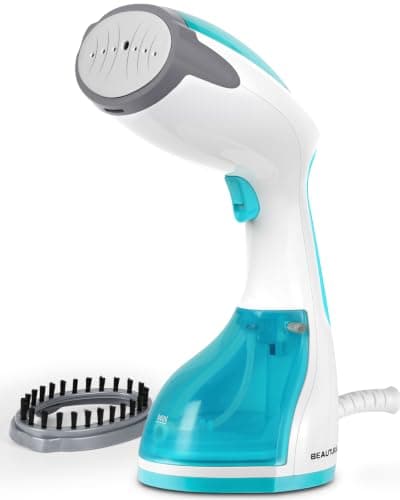
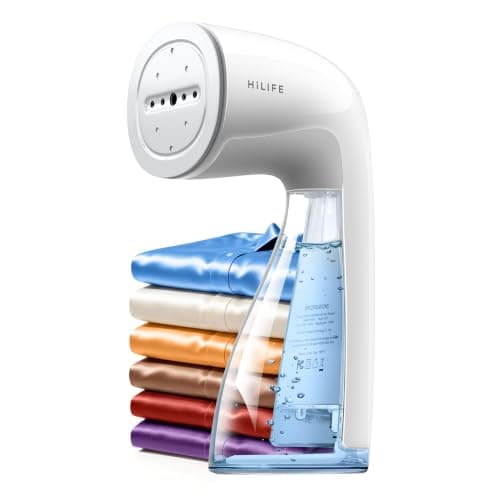
The HiLIFE HL9 leads on the one specification that matters most at this price: 300 ml, the largest handheld tank on this site, at 1,100 W with a 30-second heat-up. That combination is the budget argument in a single product. Its honest costs are that HiLIFE publishes no weight at all — which loses it a metric in our scoring, and we will not invent one — and no warranty term.
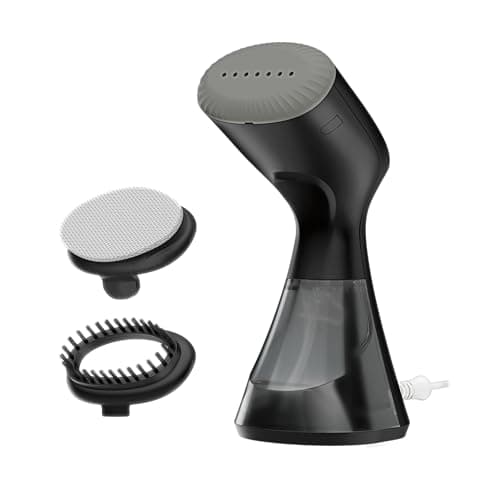
The Beautural 1200W is the pick if any of your wardrobe is woven cotton. It carries the extra hundred watts that show up exactly there, plus 260 ml and a published 2-pound weight, which makes it the most complete specification sheet in this group. Beautural's listing states a manufacturer warranty without naming a term, which we treat as not published.
The Conair 1100W Compact is the lightest genuinely usable option at 1.3 pounds, from the one brand here that publishes a warranty across its range. The catch is real: its listing publishes no tank capacity at all, so you cannot know your run time before buying, and it is scored without that metric rather than credited with a guess.
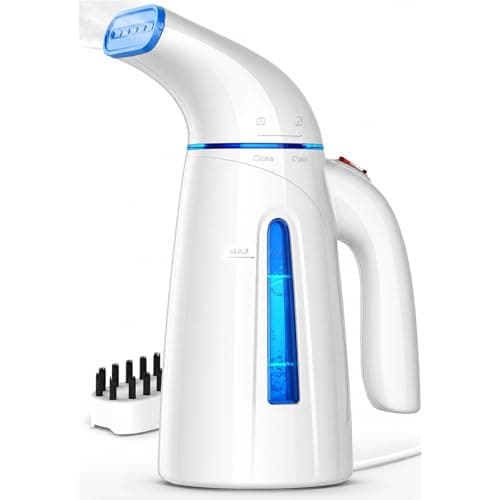
The OGHom HL6 is the cheapest thing on this site and is included honestly rather than enthusiastically. 240 ml at 1.26 pounds is a genuinely good ratio. But it is 700 watts — the site's power floor — its listing files a fifteen-minute runtime claim in the heat-up field so the real heat-up time is unknown, and it publishes no warranty. For jersey and light synthetics it works. For anything woven, it is the unit that creates the disappointment this page keeps warning about.
When spending more is the right call
Three cases, stated plainly because a budget page that never says "spend more" is not a buying guide:
You steam a rail at a time. No handheld tank survives it. A standing steamer holds six to twelve times as much and often costs less than two handhelds.
You need a crease. No steamer at any price makes one. That is a 2-in-1 or an iron, and it is a capability question rather than a budget one.
You want recourse if it fails. Under $50 you are relying on the retailer's returns window, because almost nothing at this price publishes a warranty term. Conair publishes two years and Jiffy three.
The budget picks
Ranked on published specifications. Tap a row for the full write-up; the price button goes to Amazon.
#
Product
Best for
Spec score
Price
1
HiLIFE HL9 1100W Steamer300 ml, 1,100 watts and 30 seconds — the HL7's three weaknesses answered.
HiLIFE does not publish weight for this model, so that figure is excluded from the score rather than estimated.
What the numbers mean
This is what the HL7 should have been: four hundred more watts, sixty more milliliters of tank, and a quarter of the heat-up time.
300 ml is the biggest handheld tank in this set. On a mid-power unit that is the right pairing — lower output empties a tank more slowly, so a big tank becomes real run time rather than a heavier device you refill just as often.
HiLIFE publishes no weight for this model. That is a gap, not something to infer: we have not held one and will not estimate it, so portability goes unscored.
Good
300 ml — the largest handheld tank here
30-second published heat-up, four times faster than the HL7
Leak-proof design published explicitly, which matters on a horizontal pass
Not good
No published weight, so portability cannot be scored
1,100W still sits below what linen wants
120V only
Who should not buy it. Skip this if you plan to travel with it. It is 120V only, and a dual-voltage travel unit costs less than the transformer you would otherwise need.
2. Handheld · The biggest tank in the class
Beautural 1200W Handheld Steamer
260 ml on a 1,200W handheld — the most run time per fill here, bought with output.
Tank capacity decides whether steaming is pleasant or annoying, and this carries 260 ml against the 190 to 216 ml the 1,875W units manage. More minutes per fill, fewer trips to the sink.
1,200 watts is a real step down from 1,875. On linen and heavy cotton you will feel it — the steam is wetter and you will make more passes. On the synthetics and knits that make up most wardrobes the difference is small.
Two pounds and 30 seconds to heat are both mid-table. Nothing here is remarkable except the tank, and the tank is the point.
Good
260 ml — the largest handheld tank in this set
30-second published heat-up, faster than the 1,875W Conair
Auto shut-off published as part of a nine-point safety design
Not good
1,200W struggles where 1,875W does not — linen especially
Filling means carrying the whole unit to the tap
Two pounds in the hand, the same as the far more powerful Conair
Who should not buy it. Skip this if linen or heavy cotton is most of what you own. Below about 1,500 watts you make three passes where a stronger unit makes one.
3. Handheld · Small spaces
Conair 1100W Compact Steamer GS81
1.3 pounds and 30 seconds to steam — with a tank figure Conair does not publish.
Conair does not publish tank capacity for this model, so that figure is excluded from the score rather than estimated.
What the numbers mean
At 1.3 pounds this is the lightest full-size handheld here, and 1,100 watts handles the knits, synthetics and light cotton that make up most wardrobes.
Conair publishes no tank capacity for this model. That is a real hole in a spec sheet — tank size is the single best predictor of whether a session is pleasant — and it costs the unit a metric in our scoring rather than earning it a guess.
Nine inches tall. It fits in a drawer, which is most of the argument for a compact steamer.
Good
1.3 pounds, the lightest non-travel handheld here
30-second published heat-up
Nine inches tall — genuinely drawer-sized
Not good
No published tank capacity, so run time is unknowable from the specs
1,100W is mid-table output
Compact bodies mean small tanks, and the silence is not reassuring
Who should not buy it. Skip this if run time matters to you. Until Conair publishes a tank figure there is no way to know what you are buying.
4. Handheld · The lightest cheap handheld
OGHom HL6 700W Steamer
A 240 ml tank at 1.26 pounds — lighter than the HiLIFE it otherwise mirrors.
OGHom does not publish heat-up time for this model, so that figure is excluded from the score rather than estimated.
What the numbers mean
Mechanically this is the same proposition as the HiLIFE HL7: 700 watts, 240 ml, entry price. The published difference is a third of a pound less to hold.
OGHom's listing states 15 minutes in the heat-up field, which is a runtime claim filed in the wrong place rather than a specification. We score neither figure and say so instead of inventing one.
At this power the honest use is refreshing knits and synthetics between wears.
Good
1.26 pounds — light enough for a long session
240 ml tank at the bottom of the price range
Compact 6.5 inch body
Not good
700W will not touch linen or heavy cotton
No usable published heat-up figure — the field carries a runtime claim
120V only
Who should not buy it. Skip this if you need it to work on anything structured. Seven hundred watts is a refresher, not a press.
Questions people actually ask
+What is the best budget garment steamer?
For most people the HiLIFE HL9 — 300 ml of tank at 1,100 W, which is more water than any 1,875 W handheld carries. If any of your wardrobe is woven cotton, the Beautural 1200W's extra hundred watts is worth having instead.
+How much does a garment steamer cost?
The range is wide — from the cheapest entry handheld to a full steam press is more than a twentyfold difference. Entry handhelds sit well under $50, mid-range handhelds and standing units above that, and commercial machines several times higher again. Live prices are on every product card on this site; we do not print price figures in prose because they go stale.
+Is a cheap clothes steamer any good?
For knits, jersey, polyester and light cotton, genuinely yes — and cheap units often carry larger tanks than expensive ones. What you give up is peak power, which shows on cotton shirting and anything heavy, and a published warranty.
+Is a $30 steamer worth buying?
If your wardrobe is knitwear and synthetics, yes. If you are buying it to press cotton dress shirts, no — that is the mismatch that makes people conclude steamers do not work. Buy at least 1,000 W and at least 240 ml of tank.
+What is the cheapest garment steamer that actually works?
The floor is about 1,000 watts and 240 milliliters of tank. Below the power figure you get a refresher rather than a wrinkle remover; below the tank figure you refill mid-session, which is how steamers end up unused in a cupboard.