Care
Cleaning and Storing a Garment Steamer
The thing that ends most steamers is not use. It is the water someone left in the tank in March.
By Scooter M., enthusiast, crease control · Published
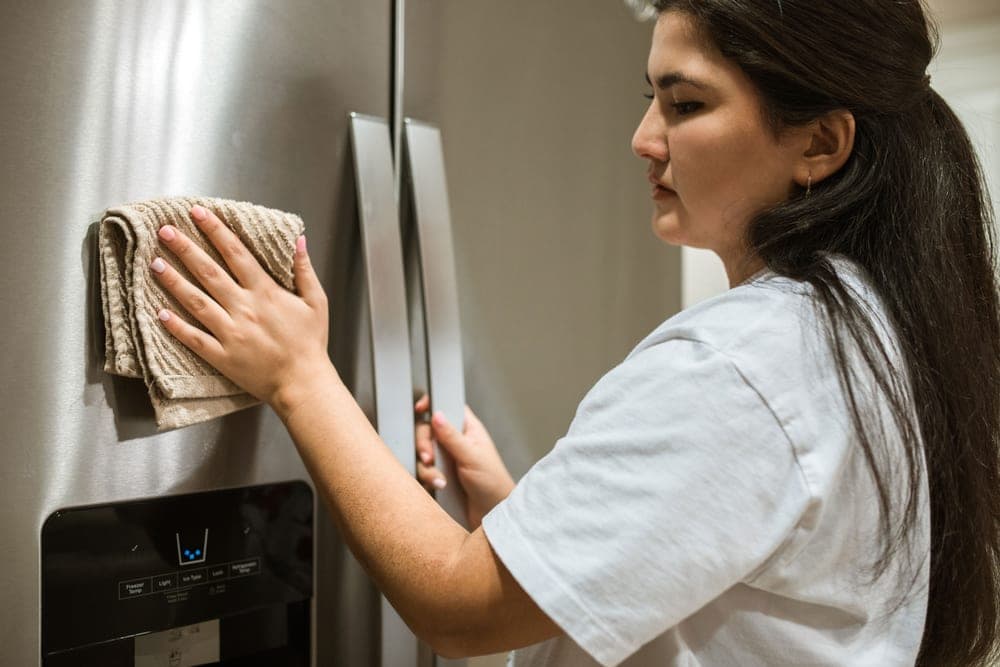
Empty the tank after every single session, and never store a steamer with water in it. That one habit prevents most of what goes wrong: standing water deposits scale as it evaporates, grows biofilm in a warm dark tank, and produces the stale smell people mistake for a broken machine. Then let it cool fully, wipe the head, leave the cap or tank open so the inside dries, and store it somewhere that does not freeze.
What standing water actually does
It is worth being specific, because "empty the tank" sounds like fussiness and is not. Three separate things happen to water left sitting in a steamer:
- It concentrates and deposits minerals. Water in a warm tank evaporates slowly and leaves everything dissolved in it behind, on the tank wall and around the outlet. That is scale forming while the machine is not even in use, and scale is the leading cause of reduced output and no steam.
- It grows things. A sealed plastic vessel with a little warm water in it is a good environment for biofilm. That is where the musty smell in a rarely used steamer comes from, and it comes back out through the head on the next session.
- It can freeze. A tank left full in a garage or a car over winter can crack when the water expands. This is the only failure on the list that is not repairable.
After every session
- 1Switch off and unplugBefore anything else, and before it is convenient. The safety page covers why a hot unit should not be opened.
- 2Let it cool completelyTen to fifteen minutes for a handheld. A vessel that still feels warm is still holding pressure.
- 3Empty the tank fullyTip it and let the last of it drain. A tablespoon left in the bottom is enough to cause every problem on this page.
- 4Wipe the head and the plateA damp cloth on a cool head. Mineral film around the steam holes is the beginning of a blockage, and it comes off easily now and not later.
- 5Leave it open to dryCap off, tank out if it detaches. The inside needs air to dry, and a sealed damp tank is the one thing you are trying to avoid.
- 6Coil the cord looselyTight wrapping around a hot body stresses the cord where it enters the housing, which is where cords eventually fail.
Cleaning the outside, the head and the attachments
The body takes nothing more than a damp cloth. No solvent, no abrasive, and nothing that goes near the vents. If the housing has picked up a sticky film — which happens if the machine lives near a kitchen — a cloth with a little dish soap on it, wrung out well, then a clean damp wipe.
The soleplate or head is the part that touches clothes, so it is the part that matters. Mineral haze around the steam holes wipes off with a cloth dampened in equal parts white vinegar and water, on a cool unit, followed by plain water. A blocked hole can be cleared with a wooden toothpick — never a pin or a needle, which will enlarge or deform the hole permanently.
Fabric brushes and lint attachments collect exactly what they are meant to collect. Pull the accumulated fibers out, rinse the brush in warm water, and let it dry fully before it goes back on or into a bag — a damp brush stored in a case grows the same things a damp tank does.
Descaling belongs to a schedule, not to this routine
Emptying the tank slows scale down; it does not remove what has already formed. That is a separate job on a separate cadence — every one to three months in a hard-water area, less often with soft or distilled water — and the descaling page sets out the method. The two are complementary: the routine here is what makes descaling an occasional task instead of a monthly one.
The related question of what water to put in is answered on the distilled water page, and it is genuinely conditional — some makers require distilled, some explicitly permit tap, and getting it wrong can affect a warranty claim.
Where to store it
| Place | Verdict |
|---|---|
| A closet shelf indoors | Best. Dry, stable temperature, off the floor |
| Under a sink | Acceptable if it is dry — many are not |
| A laundry room cupboard | Fine, provided the unit went in cold and empty |
| A garage or a shed | Avoid. Freezing risk, and a wide temperature swing |
| A car trunk | Avoid. The worst of both — heat in summer, freezing in winter |
| Its own carry case, damp | Avoid. A sealed case around a wet machine is the mold case exactly |
Store it standing on its base where you can. A handheld left face-down slowly deforms the seal around the head.
Putting one away for a season
If a steamer is going into storage for months — over a winter, or between the events you actually use it for — it is worth ten more minutes than the usual routine.
- Descale it first, so it does not spend the whole period with mineral deposits sitting on the element.
- Run it briefly on plain water afterward to flush out the descaling solution, then empty it completely.
- Leave it open and upright for a full day so the inside is genuinely dry rather than merely drained.
- Store it in the box or a breathable bag, not sealed in plastic.
- Bring it back into use with one short run on plain water into a sink or an old towel, before it goes anywhere near a garment.
Traveling with one
Everything above applies with more force in a suitcase. A travel steamer packed with water in it will leak into your clothes, and the tank cannot dry in a closed bag. Empty it, let it cool and dry, and pack it in a bag of its own. The hotel steaming page covers the rest of the practicalities.
Questions people actually ask
+Should you empty a garment steamer after every use?
Yes. Standing water deposits scale as it evaporates, grows biofilm in a warm sealed tank, and can freeze and crack the tank in cold storage. Emptying it is the single most valuable habit for a steamer's lifespan.
+How do you clean a garment steamer head?
On a cool, unplugged unit, wipe it with a cloth dampened in equal parts white vinegar and water, then again with plain water. Clear a blocked steam hole with a wooden toothpick, never a pin -- metal deforms the hole permanently.
+Why does my garment steamer smell?
Almost always water left standing in the tank. A warm sealed vessel with a little water in it grows biofilm, and that comes back out through the head. Empty it, descale, flush with plain water, and dry it open.
+Can you store a garment steamer in the garage?
Better not to. Freezing water expands and can crack a tank, and wide temperature swings are hard on seals. A closet shelf indoors is the right place.
+How do you store a garment steamer with attachments?
Clean the attachments, rinse the fabric brush and let everything dry completely before it goes into a case. A damp brush sealed in a bag develops the same problems a damp tank does.
Nothing on this page depends on which steamer you own, and a maintenance routine does not need a product link attached to it.