Care
Why Does My Garment Steamer Smell?
The smell is diagnostic. Musty is water you left in it; vinegar is a descale you did not finish; acrid is the one that means stop.
By Scooter M., enthusiast, crease control · Published

Identify the smell first — it points straight at the cause. A musty or mildew smell is water left standing in the tank, and it is by far the most common. Vinegar means a descale that was not flushed properly. A faint hot-plastic smell on a brand-new unit is normal for the first few heats. Scale smells faintly metallic and comes with white residue. What is not normal, at any age, is a sharp acrid or burning-electrical smell from the body of the machine — that one means unplug it and stop.
We earn a commission if you buy through the links on this page, at no extra cost to you. It does not change which steamer we rank first — the ranking comes from published specifications and the arithmetic on our method page. We have not tested these units. Full disclosure.
| What it smells like | Almost certainly | Cost to fix |
|---|---|---|
| Musty, mildew, stale | Standing water in the tank | Free — flush and a habit |
| Vinegar or sour | An unflushed descale | Free — two clean tanks |
| Hot plastic, on a new unit | First-heat off-gassing | Free, if it fades |
| Faintly metallic, with white marks | Mineral scale | A bottle of vinegar |
| Swimming-pool or chemical | Your water, concentrated | A jug of distilled water |
| Sharp, acrid, burning, fishy | Electrical — stop | Unplug it. Do not keep using it |
The sections below follow this order, which is roughly how often each one is the real answer.
1. Musty or mildew — water left in the tank
This is the cause the overwhelming majority of the time, and it is entirely self-inflicted. A steamer tank is a sealed plastic vessel that spends its life warm and damp. Leave a little water in it between sessions and you have made an excellent home for biofilm — the slimy film that grows on any wet surface left alone. That is what you are smelling, and on the next session it comes straight back out through the head and onto a garment.
The fix is a flush and then a habit. Empty the tank completely, rinse it with warm water, and run one full tank through as steam into a sink. If the smell persists, descale it — scale gives biofilm somewhere to hold on. Then adopt the habit that prevents it entirely: empty the tank after every single session and leave the cap off overnight so the inside dries. The storage page has the whole two-minute routine, and it is worth more to a steamer's life than anything you can buy for it.
2. Vinegar — a descale you did not finish
If the smell arrived immediately after you descaled, this is it, and it is the easiest on the page. Vinegar and citric acid are the right tools for dissolving scale, but they linger in a boiler far longer than people expect. Descaling is not finished when the solution is out; it is finished when the machine has been flushed.
Run two full tanks of clean water through as steam, into a sink rather than at fabric, and the smell goes. The descaling page sets out the full sequence — the flush is the last step and the one most often skipped, and a vinegar smell on a shirt is a very avoidable own goal.
3. Hot plastic on a new unit — usually just off-gassing
A faint hot-plastic or chemical smell the first few times you heat a brand-new steamer is common across small heating appliances. New housings, seals and heating elements carry manufacturing residues, and the first heats burn them off. It should be mild, and it should fade noticeably after two or three sessions.
Two conditions on treating that as normal, and both matter. Run the first tank into a sink rather than at clothes, so anything coming off does not land on a garment. And if the smell is strong, or has not faded after a few sessions, stop treating it as break-in and read section six — a persistent burning smell on a new machine is a fault, not a running-in period.
4. Faintly metallic, with white marks on dark fabric
Scale rarely smells of much on its own, but a heavily scaled boiler can give steam a flat, faintly metallic character — and the giveaway is what comes with it. White or chalky deposits on dark clothes, weakening output, and spitting are the same problem wearing three different hats.
Every mineral in the water stays behind when the water leaves as steam, and it accumulates on the element and around the outlet. Descaling removes it; emptying the tank after every session slows it down. If output has dropped as well, the no-steam diagnosis works through it in order, and the spitting page covers the white-residue version.
5. A chemical or swimming-pool smell — your water, concentrated
Municipal tap water is treated, and boiling concentrates whatever is in it. If your steam smells faintly of a swimming pool, the most likely explanation is the water going in rather than the machine itself — the same water that tastes fine cold can be noticeable once it has been through a boiler.
Try a tank of distilled or filtered water and see whether the smell goes with it. That is a diagnosis rather than a recommendation: whether you should use distilled water routinely depends on your manual and your local hardness, and some makers actively discourage it. The distilled water page is explicit that the answer is conditional and that getting it wrong can affect a warranty claim.
6. Sharp, acrid or burning — stop using it
This is the one section on this page that is not about convenience. A sharp, acrid, burning or distinctly electrical smell coming from the body of the machine rather than from the steam is a warning sign, and it does not get better with use. People describe it variously as burning plastic, hot wiring, or an odd fishy sharpness — overheating electrical components can smell like any of those.
- 1Unplug it at the wallNot the switch — the plug. Do this before anything else.
- 2Let it cool completely, away from anything flammableDo not put it back in a cupboard while you decide.
- 3Look at the plug, the cord and the housingDiscoloration, a melted patch, a scorch mark or a plug that was warm to the touch are all reasons to stop permanently.
- 4Do not keep using it to see whether it settlesA steamer is a 700 to 1,875 watt heating appliance on a cord. This is the one failure mode where continuing to test it is the wrong instinct.
Getting the smell out of the clothes
If a musty steamer has already been over a garment, the smell is usually in the fabric rather than set into it. Air the garment somewhere with moving air for a day — most of it leaves on its own, because the compounds behind everyday fabric odor are volatile. If it persists, the garment needs washing.
What will not fix it is more steaming, even from a clean machine. Steam drives off odor; it does not remove anything from the fabric, and it will not clean. The dry cleaning comparison sets out exactly where that line falls.
The routine that prevents five of the six
- Empty the tank after every session. The single highest-value habit for a steamer, and the one that prevents the most common smell outright.
- Leave the cap off overnight so the inside dries rather than sitting damp behind a seal.
- Descale on a schedule — monthly with hard water and weekly use, less often with soft or distilled.
- Flush twice after descaling. Two full tanks, steamed out into a sink.
- Run the first tank of a new machine into a sink, not at a garment.
- Store it cool, dry and open — not sealed damp in a case, not in a garage where it can freeze.
When the machine is genuinely finished
Most smells on this page are maintenance, not mortality. Replacement is the honest answer in two cases: an electrical smell with any visible discoloration or melting, and a musty smell that survives a proper flush and a full descale, which means biofilm has established somewhere you cannot reach.
If you are replacing rather than fixing, replace with the form factor that matches the job. If the old machine smelled because water sat in it between long sessions, a bigger tank will not fix a habit — but if you were refilling a handheld constantly and leaving the dregs in, a standing steamer genuinely changes the pattern. The worth-it page is the honest starting point if you are reconsidering the purchase altogether.
If it is genuinely finished
Ranked on published specifications. Tap a row for the full write-up; the price button goes to Amazon.
| # | Product | Best for | Spec score | Price |
|---|---|---|---|---|
| 1 | 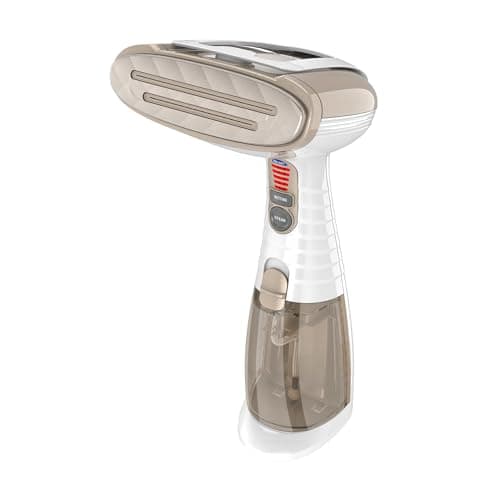 Conair Turbo ExtremeSteam GS59The most-bought handheld in the category, and its published specs explain that rather than contradict it. Conair Turbo ExtremeSteam GS59The most-bought handheld in the category, and its published specs explain that rather than contradict it. | The default handheld | 6.5/10 | |
| 2 | 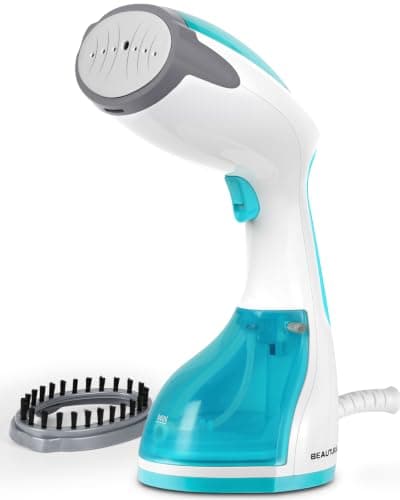 Beautural 1200W Handheld Steamer260 ml on a 1,200W handheld — the most run time per fill here, bought with output. Beautural 1200W Handheld Steamer260 ml on a 1,200W handheld — the most run time per fill here, bought with output. | The biggest tank in the class | 5.7/10 | |
| 3 | 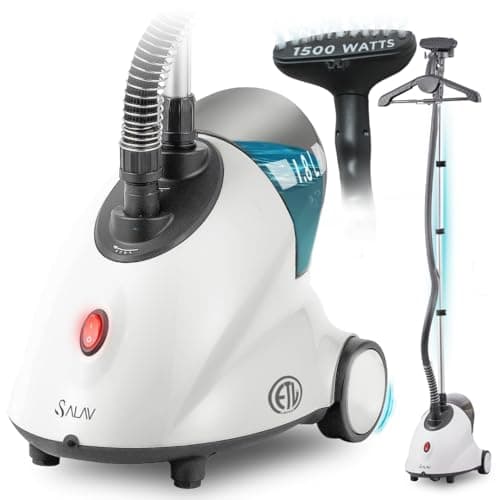 SALAV GS18 Full-Size Steamer1.8 liters on a 65-inch pole — the point where steaming stops being a chore. SALAV GS18 Full-Size Steamer1.8 liters on a 65-inch pole — the point where steaming stops being a chore. | A whole wardrobe at once | 4.4/10 |
Questions people actually ask
+Why does my garment steamer smell musty?
Water left standing in the tank. A warm, sealed plastic vessel with a little water in it grows biofilm, and that comes back out through the head on the next session. Empty and rinse the tank, run a full tank through as steam, descale if it persists, and then empty it after every session.
+Why does my steamer smell like vinegar?
A descale that was not flushed. Vinegar and citric acid linger in a boiler longer than people expect. Run two full tanks of clean water through as steam into a sink and it goes.
+Is it normal for a new garment steamer to smell like burning plastic?
A faint hot-plastic smell on the first few heats is common for small heating appliances as manufacturing residues burn off, and it should fade after two or three sessions. Run the first tank into a sink rather than at clothes. If the smell is strong or does not fade, treat it as a fault and stop using it.
+My steamer smells like burning — should I keep using it?
No. A sharp, acrid or electrical smell from the body of the machine means unplug it at the wall and stop. Check the plug, cord and housing for discoloration, melting or scorching. A steamer draws 700 to 1,875 watts, and this is the one fault where continuing to test it is the wrong instinct.
+Why does my steamer make my clothes smell?
Almost always because the tank has been sitting with water in it and the smell is traveling out with the steam. Flush and descale the machine, then air the garment for a day — everyday fabric odor is volatile and most of it leaves on its own. More steaming will not fix it.
+Can descaling stop a steamer smelling?
Often, yes — scale gives biofilm somewhere to hold on, so descaling removes the surface as well as the deposit. Flush twice afterwards with clean water, or you will trade a musty smell for a vinegar one.