The two cheapest machines on this site are matched on both figures that decide a handheld. What is left is half a pound, a smaller body, and one number only one brand will tell you.
By Scooter M., enthusiast, crease control · Published
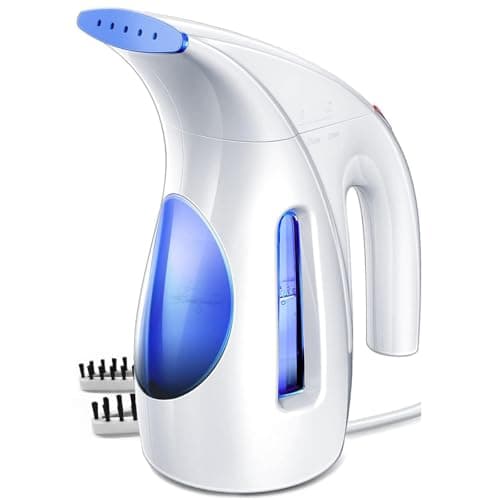
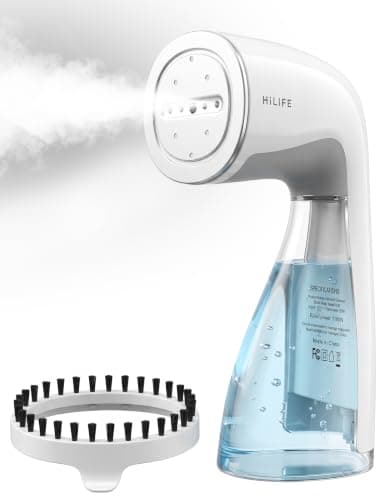
The OGHom HL6, on published figures — but read the last section before you buy either. These two publish the same 700 watts and the same 240 ml tank, and they are the two cheapest machines on this site. The OGHom is 1.26 pounds against the HiLIFE's 1.7 and occupies a visibly smaller body, which is the whole of its advantage. The HiLIFE answers with the one thing the OGHom does not publish at all: a heat-up time, which it states as two minutes — the slowest figure in the handheld class here. Both sit at seven hundred watts, and that ceiling matters more than anything separating them.
We earn a commission if you buy through the links on this page, at no extra cost to you. It does not change which steamer we rank first — the ranking comes from published specifications and the arithmetic on our method page. We have not tested these units. Full disclosure.
The published figures
OGHom HL6 against HiLIFE HL7, read from the live listings
OGHom HL6
HiLIFE HL7
Power
700 W
700 W
Tank
240 ml
240 ml
Heat-up
Not published
120 s
Weight
1.26 lb
1.7 lb
Dimensions
6.5" x 5.3" x 6.5"
6.8" x 5.5" x 7"
Voltage
120 V only
120 V only
Warranty
Not published
Not published
Two of the four figures this site scores are identical, and a third is missing on one side. The real separation is in the last three rows.
This is the closest pair of listings on the whole site. Two machines agreeing on wattage happens often enough; two agreeing on wattage and tank capacity happens exactly twice here, and the other instance — the SALAV X3A against the True & Tidy SX3, both 1,800 W and both 3 liters — is already written up. That page concluded the two differed only in what they were willing to put in writing. This one lands somewhere similar, with a physical difference on top.
What actually separates them is half a pound and a shape
Nearly half a pound, to be exact: 1.26 against 1.7. That is the lightest handheld on this site, and the gap is larger than it sounds because a handheld is held out at arm's length for the length of a session rather than set down between garments. The weight you are holding is the specification you notice most, and it is the one place these two genuinely diverge.
The bodies differ too. Multiply out the published bounding boxes and the OGHom occupies about 224 cubic inches against the HiLIFE's 262 — roughly a seventh less bulk for the same 240 ml of water. Put the two numbers together and the OGHom carries about 190 ml of tank for every pound of machine against the HiLIFE's 141, which is the best ratio of any handheld here. Nothing else on this site holds that much water in that little machine.
That is a real engineering difference rather than a marketing one, and it is the honest reason to prefer the OGHom of the two. It is not a reason to expect more steam, because the wattage that decides steam output is identical.
The heat-up only one of them publishes
HiLIFE states 120 seconds. That is the slowest published heat-up in the handheld class on this site by a wide margin — the next slowest figures are the 40-second Conair and Rowenta, so the HiLIFE waits three times as long as the machines a tier above it. It is not a defect so much as arithmetic: the same water with less energy going into it per second takes longer to boil.
OGHom publishes no heat-up at all. Its listing files fifteen minutes in the heat-up field, which is a run-time claim sitting in the wrong box rather than a time to first steam, so this site excludes it instead of printing a figure that would be wrong by a factor of several hundred. The Electrolux LX15002 has exactly the same problem with an eighteen-minute entry, and gets the same treatment.
The longest run time on this site belongs to the weakest machines
Here is the counterintuitive part, and it falls out of the arithmetic this site applies everywhere: a 1,875 W element boils roughly 30 ml of water a minute, and the rate scales with power. Seven hundred watts converts about 11 ml a minute, so 240 ml runs for about 21 minutes — on both machines, because both figures are identical.
That is the longest run time per fill of any handheld on this site, and these are its two cheapest and least powerful machines. They outlast the 296 ml Steamfast Virtuoso at about 18 minutes and the 300 ml HiLIFE HL9 at about 17, and they roughly double the 1,875 W units, which empty their smaller tanks in seven or eight minutes flat out.
It would be easy to sell that as an advantage and it is not one. A machine lasts a long time per fill because it is converting water slowly, and converting water slowly is the same thing as producing less steam. You are not getting more work out of the tank — you are getting the same work spread thinner. The right way to read the number is as a description of the output, not a feature.
Seven hundred watts, and the honest ceiling
Seven hundred watts is the power floor on this site; only these two machines publish it, and nothing here publishes less. It will relax jersey, polyester, light knits and thin blends, and it does that job perfectly well. It will not make a cotton dress shirt look pressed, it will do nothing at all for linen, and a structured jacket shoulder is out of reach of both.
This site puts the floor for woven cotton at 1,000 watts, which means both of these machines sit below the line for the fabric most people are actually trying to fix. That is worth stating plainly on a page that earns a commission either way. Buying one of these expecting it to replace an iron is the single most common route to concluding that steamers do not work — the mismatch, not the machine, causes the disappointment.
Why the answer for a lot of readers is neither
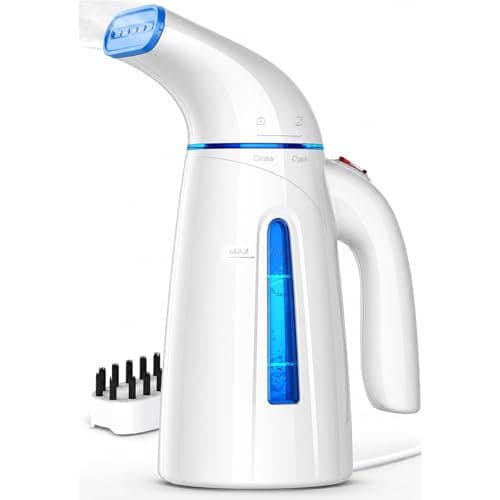
These two sit first and second on the price ladder here, and they are separated from each other by very little. The machine directly above them is the HiLIFE HL9, from the same maker as the HL7: 1,100 watts, a 300 ml tank and a published 30-second heat-up, for a small step up in price. That is four hundred more watts, sixty more milliliters, and a quarter of the wait.
Four hundred watts at this end of the range is not a marginal upgrade. It is the difference between a machine that refreshes knits and one that starts to make everyday cotton look presentable, which is a different job rather than the same job done slightly better. If the gap between these three machines is a few dollars on the day you buy — and the buy buttons above carry the live figures, because they move — the HL9 is the one to take. The HiLIFE brand page makes the same case and reaches the same conclusion.
The case for staying at 700 watts is narrow and real: you want the lightest thing on this site for long sessions over knitwear, you already know an iron handles anything structured, and you want to spend as little as possible. If that is you, the OGHom is the better of the two.
Where both are the same
Identical power and identical tank — 700 W and 240 ml, which is the whole reason this comparison is close.
Both publish 120 V only, stated in their own listing titles. Neither travels; a plug adapter changes the pin shape, not the voltage. The travel page has the dual-voltage units.
Neither publishes a warranty term. Your recourse on both is the retailer's returns window. Conair publishes two years and Jiffy three.
Both run about 21 minutes per fill, the longest in the handheld class here, and for both it is a consequence of low output rather than a feature.
Neither reaches cotton shirting or linen. Both are knits-and-synthetics refreshers, and the listings are honest enough about the power to let you work that out.
Both publish their dimensions, which is more than the PurSteam SteamPulse manages at nearly twice the price.
Who should buy which
The decision
If you
Buy
Want the lightest machine on this site
OGHom HL6 — 1.26 lb, and the same tank as the HiLIFE
Want the smallest body for the same water
OGHom HL6 — about a seventh less bulk, 190 ml per pound
Want to know the heat-up before you buy
HiLIFE HL7 — it states 120 s; OGHom states none
Steam knitwear and jersey, and nothing structured
Either. They are the same machine on the figures that decide that job
Between the two, the OGHom wins and it wins narrowly: the same steam from a lighter, smaller body for slightly less money, at the cost of a heat-up figure its maker declined to publish. That is a real if modest verdict. The larger one is that both machines are below the power floor for the fabric most buyers have in mind, and the few dollars between them matters far less than the few dollars between either of them and a 1,100 W machine. We earn a commission on all three; this is the honest ranking anyway.
The three machines
Ranked on published specifications. Tap a row for the full write-up; the price button goes to Amazon.
#
Product
Best for
Spec score
Price
1
OGHom HL6 700W SteamerA 240 ml tank at 1.26 pounds — lighter than the HiLIFE it otherwise mirrors.
OGHom does not publish heat-up time for this model, so that figure is excluded from the score rather than estimated.
What the numbers mean
Mechanically this is the same proposition as the HiLIFE HL7: 700 watts, 240 ml, entry price. The published difference is a third of a pound less to hold.
OGHom's listing states 15 minutes in the heat-up field, which is a runtime claim filed in the wrong place rather than a specification. We score neither figure and say so instead of inventing one.
At this power the honest use is refreshing knits and synthetics between wears.
Good
1.26 pounds — light enough for a long session
240 ml tank at the bottom of the price range
Compact 6.5 inch body
Not good
700W will not touch linen or heavy cotton
No usable published heat-up figure — the field carries a runtime claim
120V only
Who should not buy it. Skip this if you need it to work on anything structured. Seven hundred watts is a refresher, not a press.
2. Handheld · A first steamer, cheaply
HiLIFE HL7 700W Steamer
A 240 ml tank on 700 watts, and an honest reason it costs what it costs.
700 watts is the floor for a device that can still be called a garment steamer. It will relax a jersey T-shirt or a polyester blouse. It will not persuade a linen shirt, and no amount of technique changes that.
The tank is genuinely generous for the money at 240 ml, and that is a large part of why the listing reviews as well as it does — it runs a long time at a low output.
Two minutes to heat is the slowest published handheld figure here. That is what low wattage means: the same water, less energy per second, more waiting.
Good
240 ml tank at the bottom of the price range
1.7 pounds — light enough for a long one-handed session
Among the most-bought steamer listings in the category
Not good
700W is not enough for linen, heavy cotton or a structured jacket
Two-minute published heat-up, the slowest handheld here
No published warranty term on the listing
Who should not buy it. Skip this if you bought it to handle dress shirts. It is a refresher for knits and synthetics, and expecting more is exactly how people conclude that steamers do not work.
3. Handheld · The largest tank on a mid-power handheld
HiLIFE HL9 1100W Steamer
300 ml, 1,100 watts and 30 seconds — the HL7's three weaknesses answered.
HiLIFE does not publish weight for this model, so that figure is excluded from the score rather than estimated.
What the numbers mean
This is what the HL7 should have been: four hundred more watts, sixty more milliliters of tank, and a quarter of the heat-up time.
300 ml is the biggest handheld tank in this set. On a mid-power unit that is the right pairing — lower output empties a tank more slowly, so a big tank becomes real run time rather than a heavier device you refill just as often.
HiLIFE publishes no weight for this model. That is a gap, not something to infer: we have not held one and will not estimate it, so portability goes unscored.
Good
300 ml — the largest handheld tank here
30-second published heat-up, four times faster than the HL7
Leak-proof design published explicitly, which matters on a horizontal pass
Not good
No published weight, so portability cannot be scored
1,100W still sits below what linen wants
120V only
Who should not buy it. Skip this if you plan to travel with it. It is 120V only, and a dual-voltage travel unit costs less than the transformer you would otherwise need.
Questions people actually ask
+Is OGHom or HiLIFE better?
On published figures the OGHom HL6 wins narrowly. It matches the HiLIFE HL7 exactly on power (700 W) and tank (240 ml), and beats it on weight at 1.26 pounds against 1.7 and on size. The HiLIFE publishes a 120-second heat-up where OGHom publishes none at all. Both are below the 1,000 W floor for woven cotton.
+Are the OGHom HL6 and HiLIFE HL7 the same machine?
We cannot say that, and we do not. What is verifiable is that their listings publish the same wattage and the same tank capacity, and that only one other pair on this site does the same. They differ in published weight and dimensions, so they are at minimum not the same body.
+How long does a 700 W steamer run on one tank?
About 21 minutes for both of these, using the arithmetic applied across this site: 700 W converts roughly 11 ml of water a minute, and both hold 240 ml. That is the longest run time of any handheld here, and it is a consequence of low steam output rather than an advantage.
+Is 700 watts enough for a garment steamer?
Enough for jersey, polyester, light knits and thin blends. Not enough for woven cotton shirting, heavy cotton or a structured jacket, and nothing is enough for linen on a handheld. This site puts the floor for making woven cotton look pressed at 1,000 W, and both of these sit below it.
+How long does the OGHom HL6 take to heat up?
OGHom does not publish it. Its listing files 15 minutes in the heat-up field, which is a run-time claim in the wrong place rather than a time to first steam, so we exclude it instead of printing a figure we know measures something else. The HiLIFE HL7, on identical power and capacity, publishes 120 seconds.
+Should I just spend more?
For most buyers, yes. The HiLIFE HL9 sits a small step up in price with 1,100 W, a 300 ml tank and a published 30-second heat-up. Four hundred watts at this end of the range changes what the machine can do rather than how pleasant it is to use. Stay at 700 W only if you want the lightest possible machine for knitwear and nothing else.