A global appliance giant with one steamer in this market, and the best published output-per-watt figure here. The model it replaced is gone.
By Scooter M., enthusiast, crease control · Published · Updated
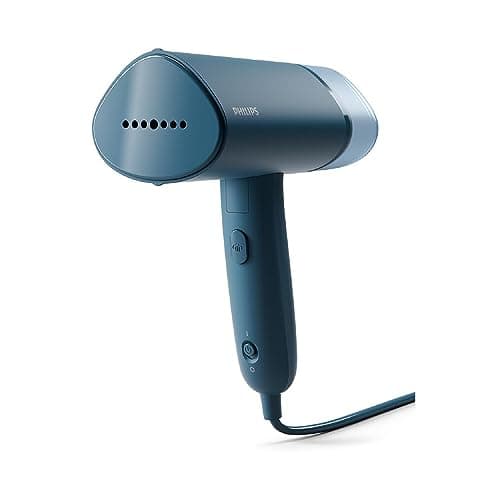
Philips sells one garment steamer on US Amazon: the 3000 Series STH3000, at 1,000 W with a 100 ml detachable tank, a plastic SmartFlow plate and a published output of up to 20 grams of steam a minute. That is not the highest output on this site, but divided by its wattage it is the best output per watt any listing here publishes - two grams a minute for every hundred watts. The tank is the catch: 100 ml is the bottom of the handheld range, and on Philips's own figure it runs about five minutes.
We earn a commission if you buy through the links on this page, at no extra cost to you. It does not change which steamer we rank first — the ranking comes from published specifications and the arithmetic on our method page. We have not tested these units. Full disclosure.
The model this page used to cover is gone
The 7000 published 1,500 W, a metal steam plate and up to 28 grams a minute - the highest output figure this site had ever recorded. It also carried a structured Voltage field reading 220 V against a 120 V US outlet, which we could never resolve and which this page warned about at length. Both the strength and the problem left with the listing. The 3000 is a smaller machine: less power, a plastic plate, a lower output, and no voltage field at all.
Why this page exists
Until September 2026 the compare hub listed Philips among the brands it would not rank, because no live, currently-buyable US Amazon listing could be confirmed for a Philips garment steamer. A re-check on September 26 found one, and this page followed. One model is still a finding in itself, for a maker this size. What Philips sells in other markets we are not going to tell you, because we have not read those listings and this site does not publish specifications it cannot cite - the model code here, STH3000/20, is the kind of regional variant code that implies a wider line somewhere, and that is as far as the evidence goes.
The published specifications
Philips 3000 Series STH3000, read from the live listing, October 16, 2026
Specification
Published
What it means here
Power
1,000 W
Clears the floor for woven cotton and no more. Below every Steamery here
Tank
100 ml, detachable
Exactly the bottom of the handheld range this site scores against
Steam output
Up to 20 g/min
Ties the Cirrus X. Per watt it is the best figure here - see below
Weight
1.74 lb (0.79 kg)
Light, and the body folds
Heat-up
Not published
The listing files no Heat Time field, so the metric is dropped rather than guessed
Voltage
Not published
A plain gap. The discontinued 7000 filed a contradictory 220 V; this one files nothing
Warranty
Not published
Common here, but Philips is not a marketplace brand
Dimensions
Not published
The listing files none
Every figure above is read from the listing's own structured specification table, not from marketing copy. Where the listing publishes nothing, the row says so rather than carrying an estimate.
Three of the eight rows read "not published", which is a lot for an established brand. The heat-up is the one you will miss most: it is one of the four figures our scoring uses, and its absence costs this machine a metric rather than being filled in with a guess.
The steam output, and what it says about our arithmetic
Philips publishes up to 20 g/min of continuous steam, stated in the listing's own highlight field and repeated in its feature copy. That is one of four published output figures on this site, alongside Steamery's 20 g/min on the Cirrus X and 0.74 oz/min on the Cirrus Core and CHI's 18 g/min on the 11590, rising to 26 on MAX. Philips does not lead that list on the raw number - it ties the Cirrus X.
It leads on the ratio. We assume throughout that a 1,875 W element boils roughly 30 ml of water a minute at full output and that the rate scales with power. At 1,000 W that predicts 16 ml a minute. Philips claims 20 - about a quarter more than the convention expects, and the most steam per watt of anything here.
The published steam outputs on this site, per watt
Last column is the published output divided by the published wattage. It is arithmetic on two figures each maker states, not a measurement of anything.
Two honest readings. Philips's boiler may genuinely be more efficient. Or the difference is in the phrase up to, which Philips uses and Steamery does not: a peak rate measured at the start of a full tank is a different number from an average across one. We have no way to distinguish those from published data, so the figure goes in the table with the qualifier Philips attached to it, and the run time below uses it as stated.
The tank is the same story as everywhere else in this tier
100 ml is exactly the floor of the handheld class range published on the methodology page, so the tank metric scores zero. On Philips's own 20 grams a minute, 100 ml is about five minutes of continuous steam; on our wattage arithmetic it is nearer six. The listing does not dress this up - it says the tank steams up to one outfit without a refill, which is the honest description.
The pattern by now is hard to miss. The design-led and premium handhelds on this site - Philips at 100 ml, the Steamery Cirrus line at 85 to 170 - all carry less water than the cheap ones do. The cheapest handhelds here carry 240 to 300 ml for a fraction of the money, so tank capacity is plainly not what the extra buys. What it buys in this tier is plate, finish and output, and what it costs you is time between refills. If that trade sounds wrong for your wardrobe, a standing steamer carries eighteen times this tank.
The 99.9 percent of germs claim
The listing states that the steamer "removes odour and kills 99.9%* of germs", with an asterisk whose footnote text we could not find anywhere on the page. We cannot read the test conditions, so we cannot tell you what was killed, on what, at what distance, or for how long.
What we can tell you is what this site says everywhere else, including on units we recommend: steaming is not sanitizing. Steam leaves the head at boiling point and cools rapidly across the gap to the fabric, and disinfection needs a temperature held for a period rather than a passing plume. Steaming genuinely reduces odor, which is useful. Treat a germ percentage on any garment steamer listing - this one included - as a laboratory number under conditions you are not reproducing in front of a wardrobe. Our page on steamers versus steam cleaners sets out where real sanitizing starts.
What the 3000 is actually good at
It is a travel and touch-up machine, and read that way the specification sheet is coherent. It weighs 1.74 pounds, the body folds, and the tank detaches for filling. The plate is the interesting part: Philips calls it SmartFlow and the listing's own description calls it plastic, stating it can be pressed against any ironable fabric with no risk of burning, silk included. A plate you can rest on the cloth is doing something a plume cannot - steam alone will not make a crease - though a plastic plate is a different object from the metal one the discontinued 7000 carried, and the listing is specific about which this is.
Against that: 1,000 watts, a 100 ml tank, and no published heat-up, dimensions or warranty. One thousand watts relaxes knits, synthetics, silk and light cotton and clears the floor for making woven cotton look pressed, but it does not go past it, and linen is out of reach as it is for every handheld here.
Who should buy it, and who should not
Buy it if you want a folding, light, press-and-steam handheld from a mainstream engineering brand for an outfit at a time. Buy the Rowenta XCEL instead if raw output and run time are what you are after: that review covers 1,875 W and 189 ml at 1.4 pounds. Buy a Steamery instead if the design and the dry-steam claim are what drew you here - the Cirrus line is the design-led alternative and publishes its output too. Buy neither if you are steaming a rail; none of the premium handhelds are built for it, and the cheapest machines here carry more than twice the water.
The unit reviewed
Ranked on published specifications. Tap a row for the full write-up; the price button goes to Amazon.
#
Product
Best for
Spec score
Price
1
Philips 3000 Series STH3000A published steam output on a 1,000 W handheld — the best grams-per-watt figure on this site, on a tank that runs about five minutes.
PHILIPS does not publish heat-up time for this model, so that figure is excluded from the score rather than estimated.
What the numbers mean
Philips files a steam output the way almost nobody in this category does: up to 20 grams a minute, stated in the listing’s own highlight field and again in its feature copy rather than buried in marketing. Only four listings on this site publish an output figure at all. The arithmetic this site uses everywhere — a 1,875 W element boils roughly 30 ml of water a minute, scaling with power — predicts 16 ml a minute at 1,000 W, so Philips is claiming about a quarter more than the convention expects. Per watt that is the best figure here: two grams a minute for every hundred watts, against Steamery’s 1.67 on the Cirrus X. Note the words up to, which Steamery’s figures do not carry.
The tank is 100 ml, exactly the bottom of the handheld range this site scores against, so it takes a zero on that metric. On Philips’s own 20 grams a minute that is five minutes of continuous steam; on our wattage arithmetic it is about six. Either way it is one outfit, and the listing says as much itself — it describes the tank as enough to steam up to one outfit without a refill. The tank is detachable and the body folds for packing.
One thousand watts clears the floor for making woven cotton look pressed rather than damp, and no more. What the listing does not publish is a heat-up time, dimensions or a warranty term, so three things you would want before buying are simply absent. There is no voltage field either — on this listing a plain gap, rather than the 220 V contradiction the discontinued 7000 Series carried.
Good
Up to 20 g/min published output — two grams a minute per 100 W, the best ratio any listing here states
SmartFlow plate the listing says can be pressed against any ironable fabric, including silk
Detachable 100 ml tank on a body that folds for packing
Not good
100 ml is the bottom of the handheld range — about five minutes of steam on Philips’s own figure
1,000 W clears the woven-cotton floor and no more; linen and structured tailoring are out of reach
No published heat-up time, no dimensions and no warranty term
Who should not buy it. Skip this if you steam more than an outfit at a time. A 100 ml tank is a touch-up capacity whatever the output rate, and several cheaper handhelds here carry two to three times the water.
The brands still without a page
PurSteam came off that list the same week, on the one SteamPulse handheld it turns out to sell here. If you are choosing between this and the other design-led handhelds, Steamery against Philips puts the two lines side by side on published figures. Electrolux has since been verified on live listings and has its own page; Tefal still has no live US Amazon listing for a garment steamer that we could find, so it stays in the section on the compare hub explaining which brands we will not rank and why.
Questions people actually ask
+What happened to the Philips 7000 Series STH7020?
Its US Amazon listing went to "Currently unavailable" with no purchasable offer, so we removed the buy link and this page now covers the 3000 Series STH3000 instead. The 7000 published 1,500 W, a metal plate and up to 28 g/min; the 3000 publishes 1,000 W, a plastic SmartFlow plate and up to 20 g/min. None of the 7000's figures apply to it.
+Is the Philips 3000 garment steamer 110V or 220V?
The listing publishes no voltage at all, so we do not state one. That is a plain gap rather than a contradiction - the discontinued 7000 Series filed a structured Voltage of 220 V against a 120 V US outlet, which is a different and worse problem. If voltage matters to you, ask the seller in writing before the return window closes.
+How many Philips garment steamers are sold in the US?
One, at the time of this check: the 3000 Series STH3000 handheld. What Philips lists in other markets is outside what we can cite from a US listing, so we do not report it.
+How long does the Philips 3000 run on one tank?
About five minutes of continuous steam. That is the published 100 ml tank divided by Philips's own published output of up to 20 grams a minute. Philips describes it as enough for one outfit, and in normal stop-start use it lasts longer than five minutes because you are not holding the trigger down the whole time.
+Does the Philips 3000 really kill 99.9% of germs?
Philips publishes that claim with an asterisk whose footnote we could not find on the listing, so the test conditions are not readable. This site's position on every steamer, including ones we recommend, is that steaming reduces odor but does not sanitize: disinfection needs a temperature held for a period, and steam cools fast across the gap to the fabric.
+Philips 3000 or Rowenta XCEL?
On published figures the Rowenta, for most people. It draws 1,875 W against the Philips 1,000, holds 189 ml against 100, and weighs 1.4 pounds against 1.74. The Philips answers with a plate you can press against the cloth, which a pure vertical steamer like the Rowenta does not have, and with the best published output per watt on this site.