The two design-led handhelds on this site, and the only two brands here that publish how much steam they make.
By Scooter M., enthusiast, crease control · Published · Updated
Steamery, for most people, and by more than it used to be. These are the two design-led handheld brands here and the only two that publish a steam output at all. The Cirrus Core brings 1,350 W against the Philips 3000's 1,000, 1.4 pounds against 1.74, and a published 15-second heat-up where Philips publishes none at all. Philips answers on water rather than watts: a 100 ml tank against the Core's 85, about five minutes a fill against 3.9, and the best published output per watt on this site - 20 g/min from 1,000 W. If you want the most machine, that is Steamery now.
We earn a commission if you buy through the links on this page, at no extra cost to you. It does not change which steamer we rank first — the ranking comes from published specifications and the arithmetic on our method page. We have not tested these units. Full disclosure.
Side by side, on published figures
Philips 3000 STH3000 against the Steamery Cirrus line, read from the live listings, October 2026
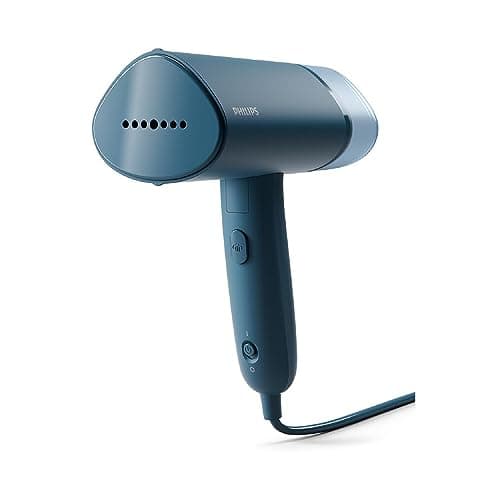
Philips 3000
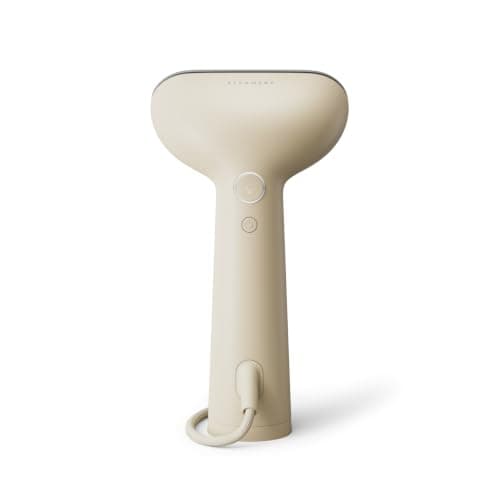
Cirrus Core
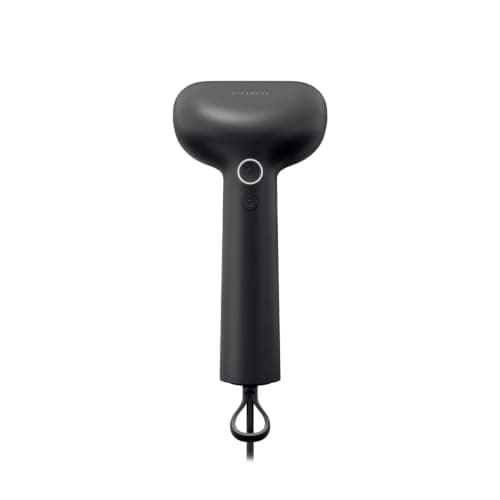
Cirrus Icon
Power
1,000 W
1,350 W
Not published
Tank
100 ml
85 ml
170 ml
Heat-up
Not published
15 s
30 s
Weight
1.74 lb
1.4 lb
1.5 lb
Published output
Up to 20 g/min
0.74 oz/min (~21.9)
Not published
Output per 100 W
2.00 g/min
1.62 g/min
Cannot be calculated
Minutes per fill
5.0
3.9
Cannot be calculated
Warranty
Not published
Not published
Not published
Missing spec
No heat-up, no voltage
None
No wattage at all
Minutes per fill is arithmetic: tank divided by published output where the maker states one. Output per 100 W is the published output divided by the published wattage - two stated figures, not a measurement.
Output: the one figure nobody else in the category publishes
Between them these two brands account for most of the published steam-output figures on this site. Philips files up to 20 grams a minute in its listing highlight; Steamery prints 20 g/min on the Cirrus X and 0.74 oz/min on the Core, in the product titles. Everybody else leaves you to infer output from wattage, which is what this site does throughout - a 1,875 W element boils roughly 30 ml of water a minute, scaling with power.
On the raw number Steamery's Core is now ahead, at about 21.9 grams a minute against 20. Per watt Philips leads, and leads clearly: two grams a minute for every hundred watts, against 1.62 on the Core. That is the most efficient published figure on this site and it is the strongest single argument for the 3000. The qualifier still applies - Philips writes up to and Steamery does not, and a peak measured on a full tank is a different number from an average across one. On published data there is no way to settle that, and this page will not pretend otherwise.
The tanks are small on both sides
This is the part neither brand's marketing leads with. Every model in this comparison holds less water than any mainstream handheld on the site: the floor outside this tier is the Rowenta XCEL's 189 ml, and the largest tank here is the Cirrus Icon's 170.
In minutes, the Philips runs about 5.0 on its own published output and the Core about 3.9, so the smaller-wattage machine lasts the longer - the same effect that makes the two cheapest machines here the longest-running of all. Both are still one-outfit machines. If you are choosing between them for a wardrobe rather than a jacket, you are choosing between the wrong two machines: a standing steamer carries eighteen times the Philips tank and several cost less than either of these.
The figure Philips no longer publishes
The old 7000 listing filed a Voltage of 220 V on a 120 V market and never resolved it, and this page used to treat that as the single biggest difference between the two brands. That listing is gone. The 3000 does not repeat the error - it simply publishes no voltage at all, which is a plain gap rather than a contradiction.
What it also does not publish is a heat-up time. There is no Heat Time field on the listing, so this site states none, and the machine loses a metric in the scoring rather than having a number guessed for it. That is the live disclosure gap in this comparison now, and it runs the same direction as the old one: three of the four Cirrus listings publish a voltage and all four publish a heat-up, so Steamery remains the brand that tells you more about what you are buying.
Where the scores land, and why they mislead
On this site's rubric the Philips 3000 scores 2.8, the Cirrus Core 5.4 and the Cirrus Icon 5.8. The Philips fell from the 5.0 its discontinued predecessor earned, and the reason is arithmetic rather than judgement: five hundred fewer watts, and a heat-up metric it can no longer be scored on. All three sit well behind a Rowenta XCEL at 7.2 costing a fraction as much.
That is the rubric working as designed and also the rubric's blind spot. It weighs power, tank, heat-up and weight, because those are the four figures the category files. It has no column for a press plate, for dry steam that does not spot fabric, for a flat base that lets the thing live on a shelf, or for published output - the one measure on which Philips leads everything here. Both brands sell heavily on exactly those things. Read the scores as a statement about water and watts, not as a verdict on the objects.
Buy the Philips if
Efficiency per watt is what interests you. Two grams a minute per 100 W is the best published ratio on this site.
You want the longer run between refills of the two machines that publish an output: about five minutes against 3.9.
A plate you can press against the cloth matters, and you accept that the 3000's is plastic rather than the metal one the discontinued 7000 carried.
You only want one machine and one decision. Philips sells exactly one garment steamer in this market.
Buy the Steamery if
Power, weight or speed decide it: 1,350 W, 1.4 pounds and 15 seconds against 1,000 W, 1.74 pounds and no published figure at all.
You want a choice of bodies. Four Cirrus models are live, from the 85 ml Core to the 170 ml Icon.
You want a specification sheet with no unanswered question in it - with the honest exception of the Icon, which publishes no wattage.
The dry-steam and no-water-marks claims are what drew you to this tier. Philips does not lead on them; Steamery does.
Buy neither if
You are steaming more than an outfit at a time, you want a published warranty, or you want the best specification your money can buy. None of these listings publishes a warranty term, and every one of them is beaten on the rubric by handhelds costing well under half as much. The handheld roundup ranks the mainstream field; the premium page explains what the extra money does and does not buy.
The three models compared
Ranked on published specifications. Tap a row for the full write-up; the price button goes to Amazon.
#
Product
Best for
Spec score
Price
1
Steamery Cirrus CoreThe most power, the fastest heat-up and the least weight in the line — attached to the smallest tank on this site.
Philips 3000 Series STH3000A published steam output on a 1,000 W handheld — the best grams-per-watt figure on this site, on a tank that runs about five minutes.
Steamery publishes the figure almost nobody else in this category publishes: a steam output, 0.74 ounces a minute, printed in the listing title. Output is what a steamer actually does, and everywhere else on this site we have to infer it from wattage. The Core's tank is filed as 2.87 ounces and the Cirrus X's identical tank is filed directly as 85 ml, which tells you Steamery's ounces are fluid ounces — so read the Core as roughly 22 ml a minute.
Run that against the tank and the result is stark. 85 ml at 22 ml a minute is under four minutes of continuous steam. The smallest published tank on any other handheld here is the Rowenta XCEL at 189 ml, which is about six minutes flat out. You will refill the Core twice in the time the XCEL runs once.
1,350 W at 1.4 pounds is the most power Steamery offers in the least weight, and the 15-second published heat-up is the second fastest of any handheld on this site, behind the Rowenta Pure Force's 10 seconds. Those are real advantages. They are also the advantages of a tool built for one outfit at a time.
Good
1,350 W — the most power in the Cirrus line — in its lightest body at 1.4 lb
15-second published heat-up, second only to the Rowenta Pure Force here
Publishes a steam output figure, which almost no maker in this category does
Not good
85 ml ties the Cirrus X for the smallest published tank of any handheld here
1,350 W is well short of the 1,875 W ceiling cheaper handhelds reach
No published warranty term on the listing
Who should not buy it. Skip this if you steam more than an outfit at a time. Under four minutes per fill is a touch-up tool, not a wardrobe tool, and the price sits at the top of this site's range rather than the bottom.
2. Handheld · The only Cirrus with a usable tank
Steamery Cirrus Icon
Double the tank of the rest of the line, and the only product on this site whose maker does not publish a wattage.
Steamery does not publish power draw for this model, so that figure is excluded from the score rather than estimated.
What the numbers mean
The Icon is the one listing here with no wattage in it. Every scoring metric that depends on power is therefore dropped and the score is computed from the three figures Steamery did file — the rubric this site publishes never treats a missing figure as a zero. The gap is itself the finding: on a listing with room in its title for the phrase Scandinavian design, the power draw is absent.
It also disagrees with itself in exactly the way the Rowenta XCEL does. The title advertises a 25-second heat-up; the structured Heat Time field on the same listing reads 0.5 minutes, which is 30. We score the filed field, here as everywhere.
What it has is the line's only tank worth the name: 170 ml, double the Core and the X. That is still below the 189 ml floor set by every other handheld on this site. Without a published wattage we cannot put a runtime on it at all — at the Cirrus 3's 1,200 W it would be about nine minutes, but that is our arithmetic resting on a figure Steamery has not supplied.
Good
170 ml — double the tank of the rest of the Cirrus line
Heated front plate, two steam modes, and a descaling function the listing names
Ships with a steaming pad for collars, cuffs and hems
Not good
No published wattage — the only product on this site whose power draw its maker does not state
The title says 25 seconds to heat; the listing's own Heat Time field says 30
No published warranty term, at the highest price on this page
Who should not buy it. Skip this if you want a figure for everything before you spend. This is the least completely documented listing on the site and also the most expensive Steamery, which is an uncomfortable combination.
3. Handheld · The most steam per watt anyone here publishes
Philips 3000 Series STH3000
A published steam output on a 1,000 W handheld — the best grams-per-watt figure on this site, on a tank that runs about five minutes.
PHILIPS does not publish heat-up time for this model, so that figure is excluded from the score rather than estimated.
What the numbers mean
Philips files a steam output the way almost nobody in this category does: up to 20 grams a minute, stated in the listing’s own highlight field and again in its feature copy rather than buried in marketing. Only four listings on this site publish an output figure at all. The arithmetic this site uses everywhere — a 1,875 W element boils roughly 30 ml of water a minute, scaling with power — predicts 16 ml a minute at 1,000 W, so Philips is claiming about a quarter more than the convention expects. Per watt that is the best figure here: two grams a minute for every hundred watts, against Steamery’s 1.67 on the Cirrus X. Note the words up to, which Steamery’s figures do not carry.
The tank is 100 ml, exactly the bottom of the handheld range this site scores against, so it takes a zero on that metric. On Philips’s own 20 grams a minute that is five minutes of continuous steam; on our wattage arithmetic it is about six. Either way it is one outfit, and the listing says as much itself — it describes the tank as enough to steam up to one outfit without a refill. The tank is detachable and the body folds for packing.
One thousand watts clears the floor for making woven cotton look pressed rather than damp, and no more. What the listing does not publish is a heat-up time, dimensions or a warranty term, so three things you would want before buying are simply absent. There is no voltage field either — on this listing a plain gap, rather than the 220 V contradiction the discontinued 7000 Series carried.
Good
Up to 20 g/min published output — two grams a minute per 100 W, the best ratio any listing here states
SmartFlow plate the listing says can be pressed against any ironable fabric, including silk
Detachable 100 ml tank on a body that folds for packing
Not good
100 ml is the bottom of the handheld range — about five minutes of steam on Philips’s own figure
1,000 W clears the woven-cotton floor and no more; linen and structured tailoring are out of reach
No published heat-up time, no dimensions and no warranty term
Who should not buy it. Skip this if you steam more than an outfit at a time. A 100 ml tank is a touch-up capacity whatever the output rate, and several cheaper handhelds here carry two to three times the water.
Questions people actually ask
+Is Philips or Steamery better?
Steamery, on published figures, and by a clearer margin than before. The Cirrus Core publishes 1,350 W against the Philips 3000's 1,000, 1.4 pounds against 1.74, and a 15-second heat-up where Philips publishes none. Philips answers with a bigger tank than the Core, a longer run per fill, and the best published steam output per watt on this site.
+What happened to the Philips 7000 Series?
Its US Amazon listing went to "Currently unavailable" with no purchasable offer, so we removed the buy link. Philips now sells the 3000 Series STH3000 in this market: 1,000 W rather than 1,500, a plastic SmartFlow plate rather than a metal one, and up to 20 g/min rather than 28. None of the 7000's figures apply to it.
+Which has more steam, the Philips 3000 or a Steamery Cirrus?
The Steamery Cirrus Core, narrowly, on the raw number: about 21.9 grams a minute from its published 0.74 oz/min, against the Philips 3000's up to 20 g/min. Per watt Philips is well ahead, at 2.00 grams a minute per 100 W against 1.62. Note that Philips writes up to and Steamery does not, so the figures are not measured the same way.
+Do Philips or Steamery steamers come with a warranty?
Neither publishes a warranty term on its US Amazon listings. That is common at the marketplace end of this category and unusual at this price, and it applies equally to both brands.
+Are either of these worth it over a cheap 1,875 W handheld?
Not on the four figures this site scores. A Rowenta XCEL publishes 1,875 W and 189 ml for a fraction of the price and scores 7.2, against 5.4 for the Cirrus Core and 2.8 for the Philips 3000. What the premium tier buys is plate, finish, dry-steam claims and published output, none of which the rubric can measure.