Care
Steamer Not Removing Wrinkles?
Steam is coming out and the shirt still looks slept in. That is usually technique or a fabric mismatch, not a broken machine.
By Scooter M., enthusiast, crease control · Published
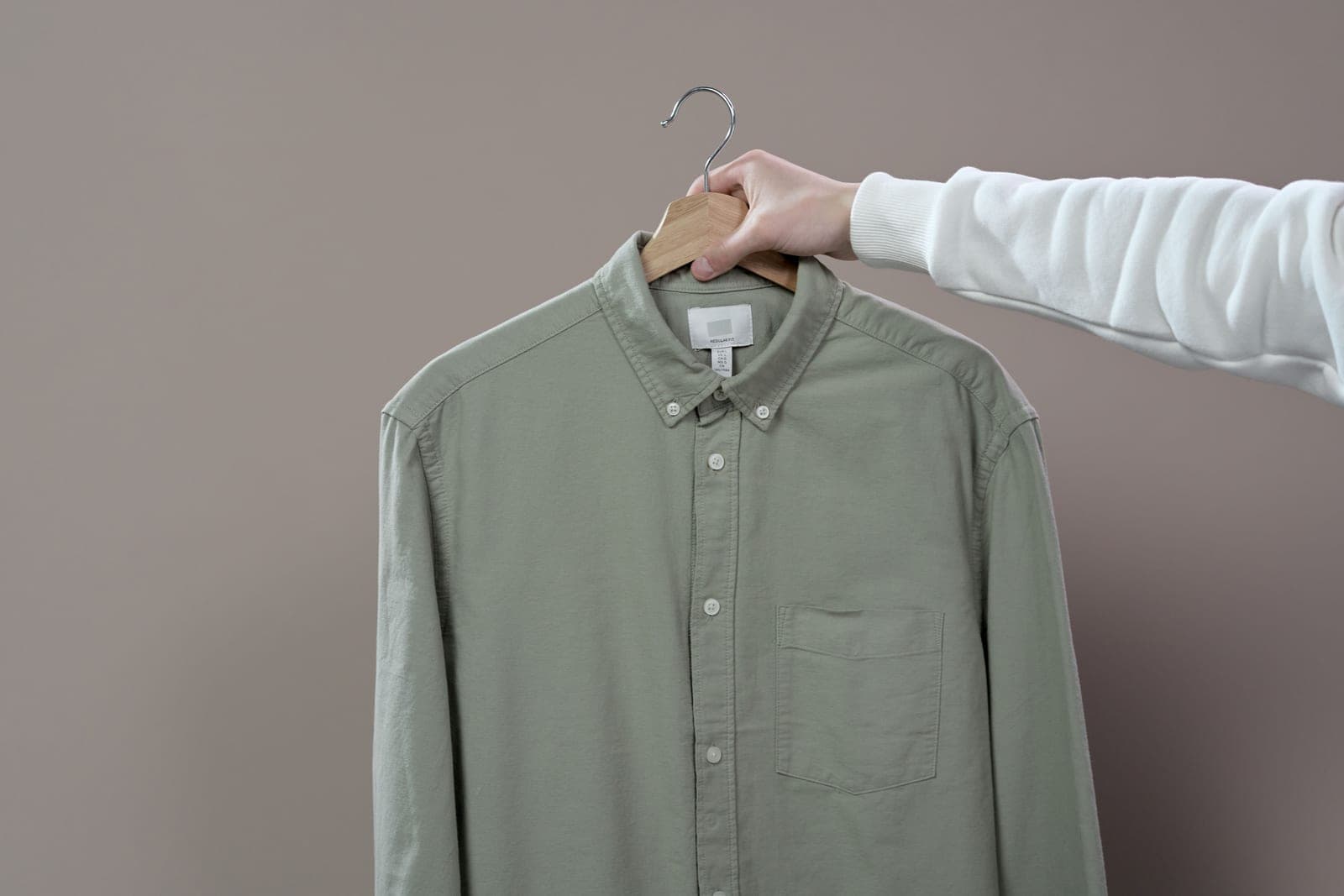
If steam is coming out and wrinkles are not coming out, work through these in order. In rough order of how often each is the real cause: you are not holding the fabric taut; you are working too close; the steamer is underpowered for that fabric; the fabric will not respond to steam at all; the head has not fully heated; scale has cut the output. The first two are free, take thirty seconds to correct, and account for most of it. Only the third is a reason to buy a different machine.
We earn a commission if you buy through the links on this page, at no extra cost to you. It does not change which steamer we rank first — the ranking comes from published specifications and the arithmetic on our method page. We have not tested these units. Full disclosure.
1. You are not holding the fabric taut
This is the single most common cause and almost nobody does it unprompted. Steam does not pull a wrinkle out. Steam breaks the hydrogen bonds holding the fiber in a bent shape, and then something else has to pull it straight. On a hanging garment that something is either the garment's own weight or your free hand.
A loose panel of fabric simply moves away from the vapor and relaxes back into the same wrinkle as it cools. Take the hem or the opposite edge in your free hand, pull gently — not hard — and run the head down the fabric with tension on it. The difference is immediate and it is the single biggest technique improvement available.
2. You are working too close
Closer feels like it should be stronger and it is not. Steam leaves the head as vapor and needs a short distance to stay vapor. Held against the cloth, a head delivers condensate — liquid water — which wets the fabric rather than relaxing it. The result is a garment that is damp and still creased, which is exactly the complaint this page exists for.
Six inches is the general working distance, four to six on heavy cotton and wool, eight or more on silk and chiffon. If the fabric is visibly darkening where you work, you are too close.
3. The steamer is underpowered for the fabric
This is the cause that is not free to fix, and it is the reason a lot of people conclude the whole category does not work. Below about 1,000 watts a steamer is a refresher: it will relax jersey, polyester and light knits and it will not make woven cotton look pressed. That is physics rather than technique, and holding the head closer or longer does not change it — it just wets the shirt.
| Power | Handles | Will not touch |
|---|---|---|
| 700-900 W | Jersey, polyester, light knits | Cotton shirting, tailoring |
| 1,000-1,200 W | Most everyday cotton and synthetics | Heavy twill, structured jackets |
| 1,500-1,875 W | Cotton, wool, most tailoring | Linen — which wants an iron regardless |
If you own a 700 W unit and you are trying to press cotton dress shirts, the machine is working correctly and was the wrong purchase. The budget guide is explicit about where that line falls.
4. The fabric will not respond to steam at all
Before blaming the machine, check the fabric is one steam can actually fix. Two categories never come right no matter what you own:
- [Linen](/steamer-vs-iron/linen). Flax has almost no elastic recovery, so it has to be held flat while it dries. Steam relaxes a linen wrinkle and the wrinkle returns as it dries. This is the clearest case on the site of the honest answer being an iron.
- Heavy cotton twill, canvas and duck. Too dense for vertical steam to reach the middle of the cloth.
- A set-in crease in a thermoplastic. A permanent pleat in polyester was heat-set at the factory. Nothing you own will undo it, and you would not want it to.
- Anything you need genuinely crisp. Steam produces presentable. A sharp collar, cuff or trouser crease needs contact and pressure — an iron or a press plate.
5. The head has not finished heating
Using a steamer before it reaches temperature gives you weak, wet steam and often spitting. Published heat-up times across the models on this site run from 10 seconds to two minutes, and the slow ones are slow enough that people genuinely start early. Wait for the ready light, or for the full published time.
The related version: a large session drops the water temperature as you work. If output falls off noticeably after several minutes on a small tank, that is the element struggling to keep up rather than a fault.
6. Scale has reduced the output
If the machine used to work and now does not, this is the likeliest cause of the six. Every mineral in the water stays behind when the water leaves as steam, and it accumulates on the element and in the outlet. Output falls gradually enough that you may not notice until it stops being useful.
Descaling costs a bottle of vinegar and half an hour, and it is worth doing before concluding the machine is finished. Choosing the right water and emptying the tank after every session is what stops it coming back.
The diagnosis, in order
| Symptom | Most likely cause | Fix |
|---|---|---|
| Fabric is damp and still creased | Too close, or underpowered | Back off to six inches; check the wattage band above |
| Wrinkles relax then come back as it dries | The fabric — probably linen | An iron. No steamer fixes this |
| Works on T-shirts, not on shirts | Underpowered for woven cotton | 1,200 W and up, or a 2-in-1 for the collar |
| Was fine, now weak | Scale | Descale it |
| Weak for the first minute | Not fully heated | Wait for the ready light |
| Spitting water as well | Too close, overfilled, or tilted | Ranked causes here |
| No steam at all | Different problem entirely | Diagnosis here |
When a new machine genuinely is the answer
Only really in one case: you have confirmed the technique, the fabric is one steam suits, the unit is descaled and fully heated, and it still will not cope. That is a power mismatch, and the fix is a machine in the right band for what you own — 1,200 watts and up for everyday cotton, or a standing steamer if the actual problem is that you run out of water halfway through the job.
If it is genuinely a power mismatch
Ranked on published specifications. Tap a row for the full write-up; the price button goes to Amazon.
| # | Product | Best for | Spec score | Price |
|---|---|---|---|---|
| 1 | 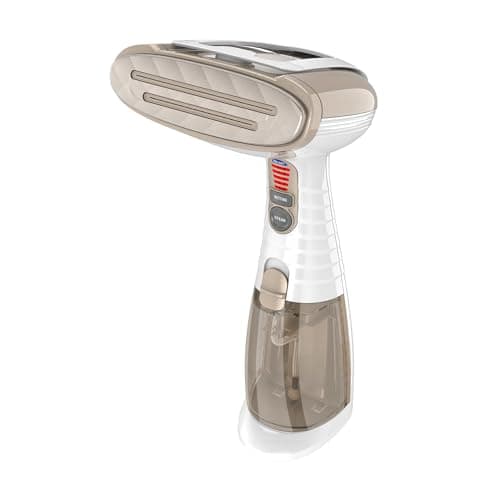 Conair Turbo ExtremeSteam GS59The most-bought handheld in the category, and its published specs explain that rather than contradict it. Conair Turbo ExtremeSteam GS59The most-bought handheld in the category, and its published specs explain that rather than contradict it. | The default handheld | 6.5/10 | |
| 2 | 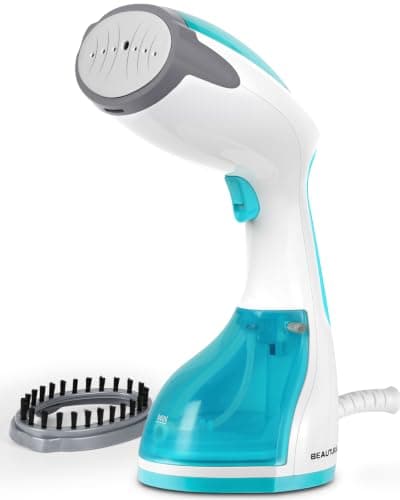 Beautural 1200W Handheld Steamer260 ml on a 1,200W handheld — the most run time per fill here, bought with output. Beautural 1200W Handheld Steamer260 ml on a 1,200W handheld — the most run time per fill here, bought with output. | The biggest tank in the class | 5.7/10 | |
| 3 | 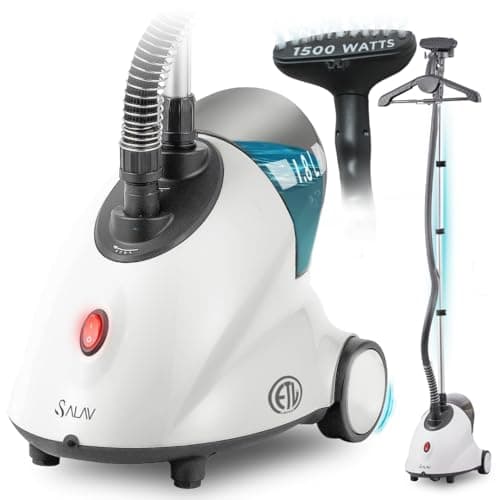 SALAV GS18 Full-Size Steamer1.8 liters on a 65-inch pole — the point where steaming stops being a chore. SALAV GS18 Full-Size Steamer1.8 liters on a 65-inch pole — the point where steaming stops being a chore. | A whole wardrobe at once | 4.4/10 |
Questions people actually ask
+Why is my steamer not removing wrinkles?
In order of likelihood: you are not holding the fabric taut, you are working too close so the head delivers water rather than vapor, the steamer is underpowered for that fabric, the fabric is one steam cannot fix such as linen, the head has not finished heating, or scale has reduced the output. The first two are free to fix.
+Why are my clothes wet after steaming?
Almost always working too close. Steam needs a short distance to stay vapor; held against the cloth it arrives as liquid water. Back off to about six inches and keep the head moving.
+Why does my steamer work on T-shirts but not dress shirts?
A power mismatch. Jersey relaxes at low wattage; woven cotton needs considerably more energy to reach the middle of the cloth. Below about 1,000 watts a steamer is a refresher rather than a wrinkle remover.
+The wrinkles come back as the garment dries. Why?
That is the signature of linen, or of a fiber with very little elastic recovery. Steam relaxes the bond and nothing holds the fiber straight while it dries, so it returns to where it was. Linen needs an iron and pressure.
+Does holding the steamer closer work better?
No, and it makes things worse. Closer delivers condensate instead of vapor, which wets the fabric without relaxing it and can leave a water spot on silk or satin.