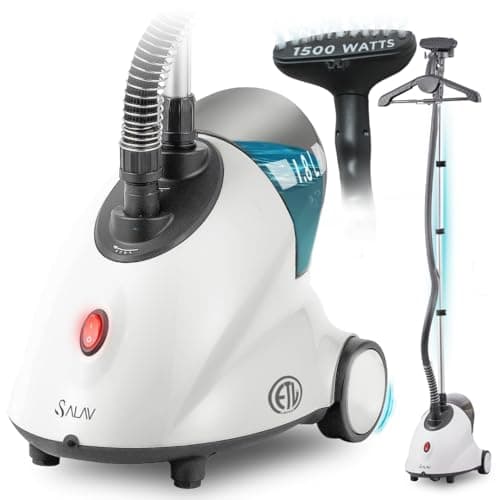
You can steam a duvet cover without taking it off the bed, which is the whole reason to own one for this job. Just do not expect it to clean anything.
By Scooter M., enthusiast, crease control · Published
Buy on tank capacity, and buy a standing unit if you do more than one bed. A king duvet cover is roughly 100 square feet of fabric — several times any garment you own — and it is the one textile you can steam in situ, already stretched flat over the bed. That makes the job easy and long. A 300 ml handheld will not finish a single cover; the SALAV GS18 at 1.8 liters will do a whole bed and the pillowcases without a refill. What none of them does is clean a mattress or deal with bed bugs.
We earn a commission if you buy through the links on this page, at no extra cost to you. It does not change which steamer we rank first — the ranking comes from published specifications and the arithmetic on our method page. We have not tested these units. Full disclosure.
How this list was judged
Tank capacity first. This is a square-footage job. Everything else is secondary and it is not close.
Working height and reach. A bed is a low horizontal surface. A standing unit's hose lets you work across it without crouching; a handheld means bending over the mattress for twenty minutes.
Horizontal operation. Bedding is steamed flat, not hanging. Some handhelds spit when tilted past level, which on a duvet cover means water spots.
Enough power for cotton. Most bedding is cotton or a cotton-poly blend, which wants 1,000 W and up. Below that you dampen the cover rather than smooth it.
Currently purchasable, verified against the live listing before publication — not a model that has quietly gone out of stock.
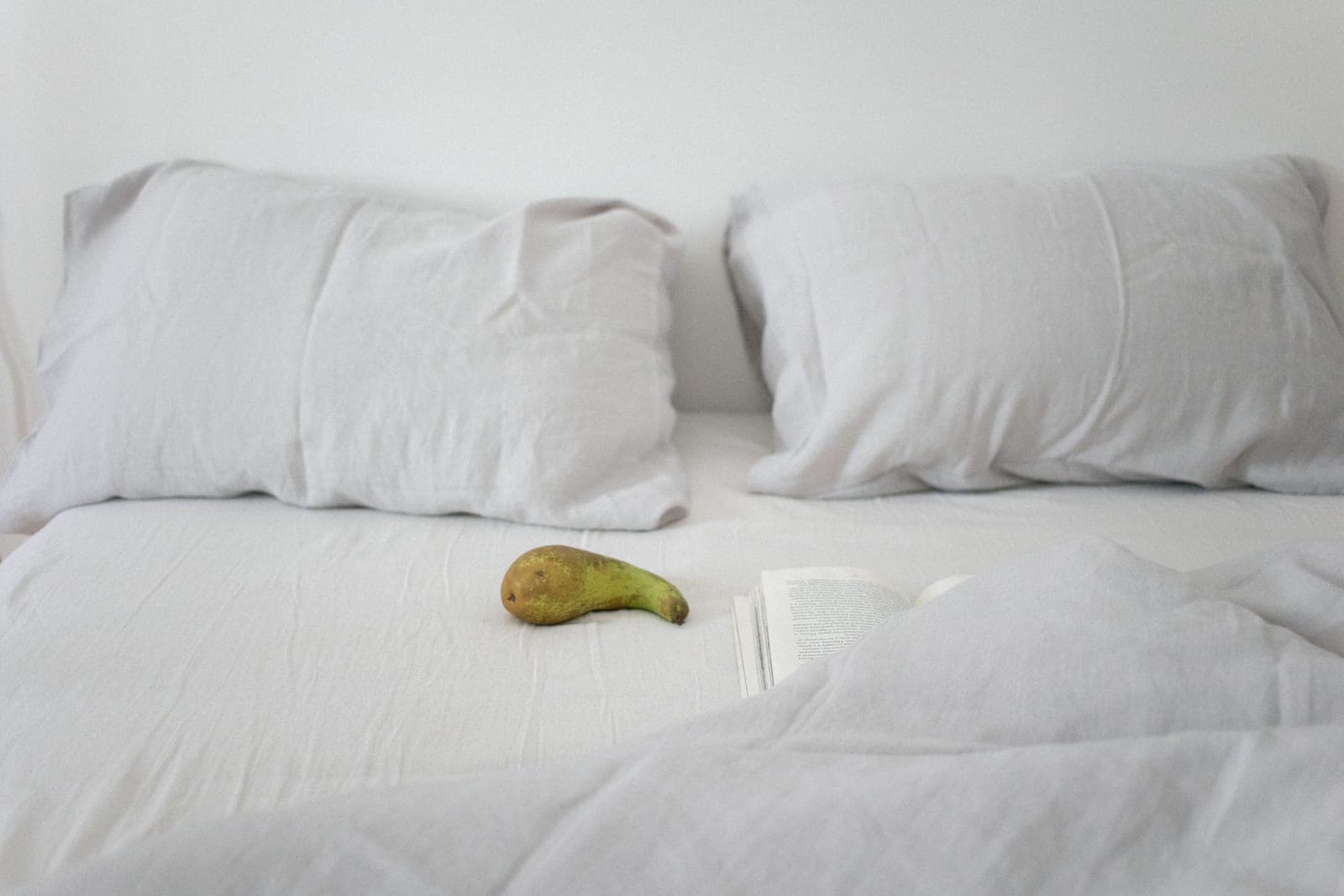
Steaming the bed made up is the whole trick
This is the reason a steamer beats an iron for bedding by a wide margin, and it is worth stating plainly because most people do not think of it. You do not take the duvet cover off. Put it on the bed, pull it taut, and steam it where it lies. The mattress underneath holds the fabric flat and provides the tension that steam needs — the job an ironing board does for a shirt, except the bed is already the right size and shape.
Compare that with the alternative. Ironing a king duvet cover means folding roughly 100 square feet of fabric into panels small enough for a board, pressing each one, and then finding that the act of putting it back on the bed creases it again. It is genuinely an afternoon. Steaming it in place is fifteen or twenty minutes with no setup at all.
Everything above is about wrinkles. Nothing above is about cleaning, and the difference matters more on bedding than anywhere else on this site.
What a steamer will not do to your bed
This needs saying clearly, because the search results around bedding are thick with claims that blur two different machines. A garment steamer applies moist heat to a surface. It has no vacuum and no extraction, so nothing it loosens is ever removed.
It does not kill bed bugs. That claim belongs to high-temperature steam cleaners used with a specific technique, dwell time and surface temperature, and to pest control professionals. A garment steamer's plume has cooled substantially by the time it reaches fabric a few inches away. Treating an infestation with a clothes steamer is a good way to believe you have solved a problem you have not.
It does not sanitize a mattress. Same reason: disinfection needs a temperature held for a period, not a passing plume.
It does not clean anything. No stain, no soiling, no dust mites in any meaningful sense. The steamer versus steam cleaner page sets out what the other machine actually does.
It will not dry quickly if you soak it. A mattress or a wadded quilt that has been saturated takes a long time to dry, and damp bedding is a genuinely bad outcome.
Fresh out of the packet, and fresh out of the wash
Two moments when bedding needs this most, and they behave differently. New bedding carries hard fold lines from being flat-packed, sometimes for months, and those take longer to release than everyday creases. Put it on the bed, steam it, and accept that a second pass the next day will finish the job the first one started.
Washed bedding is the easier case and there is a trick to it: put the cover on the bed while it is very slightly damp from the line or the end of a dryer cycle, then steam. It relaxes and dries stretched to the exact dimensions of the bed, which is the same principle that makes steaming a slipcover in place work so well.
How much tank you actually need
The arithmetic is the same as everywhere on this site and it lands harder here than anywhere. A 1,875 W element boils roughly 30 ml of water per minute at full output, so a 216 ml handheld tank is about seven minutes of continuous steam. A king duvet cover is not a seven-minute job.
Refilling a handheld mid-job is not just inconvenient: the vessel is under pressure while hot, so you wait for it to cool first. The safety page covers why.
Why the picks are what they are
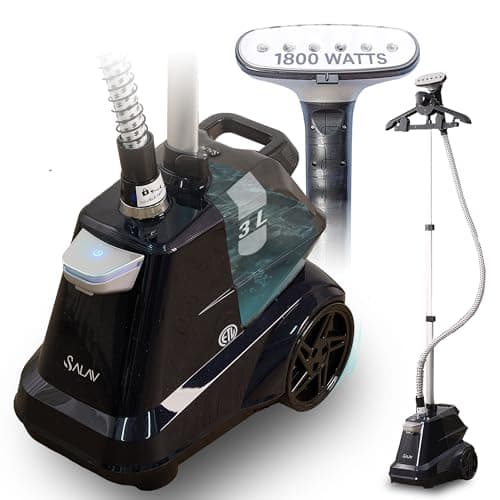
The SALAV GS18 leads because it is the right size for the actual job. 1.8 liters at 1,500 watts is about an hour of continuous steam, which covers a bed and its pillowcases with room to spare, and it publishes a one-year warranty. The hose and 65-inch pole let you work across a bed without crouching. The honest costs: it is nine pounds, it does not fold, and it stays in whichever room you build it.
The SALAV X3A is the same argument scaled up for a household changing several beds at once — 3 liters at 1,800 watts, the most tank and the most power of any domestic machine here, with foot pedals. It is seventy and a half inches assembled and twelve pounds, so measure the ceiling and mean it. For a single bed it is more machine than the job needs.
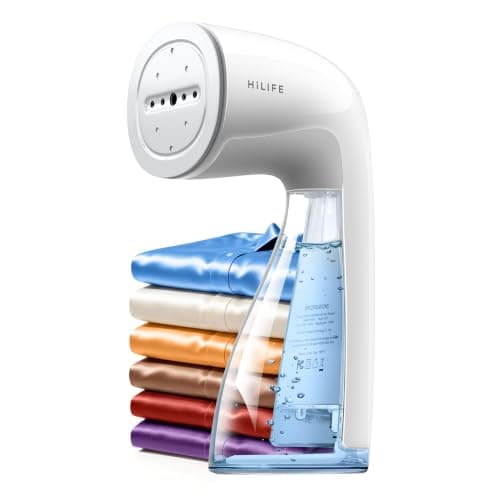
The HiLIFE HL9 is the handheld that gets furthest: 300 ml, the largest handheld tank on this site, at 1,100 W with a 30-second heat-up, and it is the cheapest thing on this page by a wide margin. It will do a duvet cover with one refill. HiLIFE publishes no weight at all, which costs it a metric in our scoring and matters here because you are leaning over a bed with it — we will not estimate a figure we have not measured.
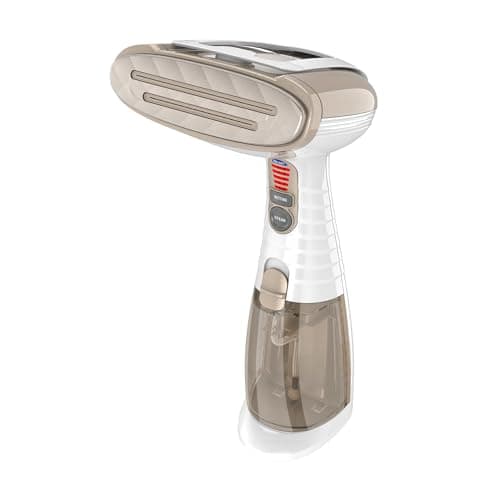
The Conair Turbo ExtremeSteam is the pick if bedding is an occasional job rather than a regular one and you want one machine for clothes as well. 1,875 watts is the most power available on a US circuit, the fabric brush is genuinely useful on quilts, and the two-year warranty is the longest of any handheld here. Its 216 ml tank is the whole limitation for this job: two or three refills for one bed.
None of the four cleans anything, and the two standing units are pieces of furniture rather than appliances you put away. Those are the trades.
The picks
Ranked on published specifications. Tap a row for the full write-up; the price button goes to Amazon.
#
Product
Best for
Spec score
Price
1
SALAV GS18 Full-Size Steamer1.8 liters on a 65-inch pole — the point where steaming stops being a chore.
A 1.8 liter tank is roughly nine times what a good handheld carries. That is the entire argument for a standing steamer: fill it once and work through a rail without stopping.
SALAV publishes 60 minutes of steam per fill. Even discounted, that is an order of magnitude more than any handheld here.
Forty-five seconds to heat from 1,500 watts is respectable given the volume of water involved — a handheld is heating 200 ml, this is heating 1,800.
Good
1.8 liter tank — about an hour of continuous steam per the maker
65-inch pole holds a full-length dress or coat clear of the floor
1,500W with a published one-year warranty
Not good
Nine pounds and pole-mounted — this lives in one room
45-second heat-up is slower than the best handhelds
Assembly required, and the pole is what people complain about
Who should not buy it. Skip this if you steam two shirts a week. A standing unit you assemble and store is more machine than that job needs.
2. Standing · Volume, at home
SALAV X3A Commercial-Style Steamer
Three liters, 1,800 watts and foot pedals — a commercial layout at a domestic price.
Three liters is the largest tank we found outside the true commercial machines, and 1,800 watts is the practical ceiling for a US household circuit at this size.
Foot pedals matter more than they sound. Steaming a rail means constantly starting and stopping, and doing that without setting the head down is the difference between an hour and ninety minutes.
Seventy and a half inches tall. Measure the ceiling before you buy — this is nearly six feet of assembled pole.
Good
3 liter tank, the largest here outside the Jiffy
1,800W — the most power of any standing unit in this set
Foot pedal control, rare below commercial prices
Not good
Twelve pounds and 70.5 inches — it does not get put away
45 seconds to heat three liters, so it is not a grab-and-go
One-year warranty against the Jiffy's three
Who should not buy it. Skip this if your ceilings are low or your storage is a closet. Seventy inches assembled is a piece of furniture.
3. Handheld · The largest tank on a mid-power handheld
HiLIFE HL9 1100W Steamer
300 ml, 1,100 watts and 30 seconds — the HL7's three weaknesses answered.
HiLIFE does not publish weight for this model, so that figure is excluded from the score rather than estimated.
What the numbers mean
This is what the HL7 should have been: four hundred more watts, sixty more milliliters of tank, and a quarter of the heat-up time.
300 ml is the biggest handheld tank in this set. On a mid-power unit that is the right pairing — lower output empties a tank more slowly, so a big tank becomes real run time rather than a heavier device you refill just as often.
HiLIFE publishes no weight for this model. That is a gap, not something to infer: we have not held one and will not estimate it, so portability goes unscored.
Good
300 ml — the largest handheld tank here
30-second published heat-up, four times faster than the HL7
Leak-proof design published explicitly, which matters on a horizontal pass
Not good
No published weight, so portability cannot be scored
1,100W still sits below what linen wants
120V only
Who should not buy it. Skip this if you plan to travel with it. It is 120V only, and a dual-voltage travel unit costs less than the transformer you would otherwise need.
4. Handheld · The default handheld
Conair Turbo ExtremeSteam GS59
The most-bought handheld in the category, and its published specs explain that rather than contradict it.
1,875 watts is the practical ceiling for a plug-in appliance on a US 15-amp circuit, and this unit sits right at it. Power is what turns water into dry steam fast enough to relax a fiber instead of soaking it, so on a handheld this is the figure that matters most.
The trade is the tank. 7.3 fluid ounces is a shade over 200 ml, which Conair pairs with a stated 20 minutes of run time. Call it two or three shirts before a refill.
40 seconds to heat is ordinary for this power class, not fast. The Rowenta Pure Force publishes a tenth of that at the same wattage.
Good
1,875W is the most power available in a handheld on a US circuit
Three attachments in the box, including a fabric brush for wool and a crease tool
Two-year limited warranty, which is unusual at this price
Not good
The tank is small for the power — high output empties it faster
40-second heat-up is beaten by several cheaper units
Over two pounds in the hand, which tells after a few garments
Who should not buy it. Skip this if you steam a whole rail at a time. At full output the tank runs dry before you get through a week of shirts, and a standing unit with a two-liter tank costs about the same.
Questions people actually ask
+What is the best steamer for bedding?
A standing unit chosen on tank capacity. A king duvet cover is roughly 100 square feet of fabric, so a handheld's 200 to 300 ml tank will not finish one. The SALAV GS18 at 1.8 liters covers a bed and its pillowcases without a refill.
+Can you steam a duvet cover on the bed?
Yes, and it is the main reason to use a steamer for bedding. The mattress holds the fabric flat and supplies the tension steam needs, which is the job an ironing board does for a shirt. Work top to bottom in overlapping strips.
+Can a garment steamer kill bed bugs?
No. That claim belongs to high-temperature steam cleaners used with a specific dwell time and surface temperature, and to pest control professionals. A garment steamer's plume has cooled substantially by the time it reaches the fabric. Treating an infestation with a clothes steamer risks believing you have solved a problem you have not.
+Can you steam clean a mattress with a clothes steamer?
No. A garment steamer has no vacuum and no extraction, so nothing it loosens is removed, and disinfection needs a temperature held for a period rather than a passing plume. It also risks leaving a mattress damp, which is slow to dry and a bad outcome in itself.
+How do you get wrinkles out of a new duvet cover?
Put it on the bed and steam it in place, then give it a second pass the next day. Hard fold lines from flat packing take longer to release than everyday creases, and the first session will not always finish them.
+Can you steam linen bedding?
Yes, on a high setting, but do not expect a pressed finish. Flax has almost no elastic recovery, so linen relaxes rather than flattens and the soft rumpled look is inherent to the fabric rather than a failure of technique.