The garment a steamer was made for. One machine covers almost every dress you own — with one exception that no steamer handles.
By Scooter M., enthusiast, crease control · Published
A dress is close to the ideal case for a steamer, and almost any decent handheld will do it. It hangs, it is rarely structured, and it is usually polyester, silk, satin, chiffon, jersey or a viscose blend — every one of which steam handles better than an iron does. 1,000 to 1,200 watts is plenty; more power is not better here, because the risk on a dress is always too much moisture rather than too little. The one thing no steamer does is put a pleat back.
We earn a commission if you buy through the links on this page, at no extra cost to you. It does not change which steamer we rank first — the ranking comes from published specifications and the arithmetic on our method page. We have not tested these units. Full disclosure.
How this list was judged
Low-end control before power. Most dress fabrics want a gentle setting. A machine you cannot turn down is worse here than one that cannot turn up.
A tank that covers a full-length garment. A maxi dress is more fabric than a shirt, and stopping halfway to refill is where water marks come from.
Weight you can hold at shoulder height, because a dress is steamed top to bottom in one pass.
Published specifications, complete. Every figure here is read off the product's own live listing; a gap is recorded as a gap rather than estimated.
Currently purchasable, verified against the live listing before publication.
Dresses by fabric
The dress is not the variable — the cloth is. Work down to whatever yours is made of and use that row.
If a dress mixes fabrics — a silk bodice on a lined skirt, chiffon over jersey — work to the most fragile one on the garment.
The pleat problem
This is the one case where a dress defeats a steamer, and it is worth understanding before you buy. A steamer cannot create a pleat, and on some dresses it can flatten one.
A pleat is a fold set under pressure. Where a pleated dress is polyester, the pleats were heat-set at the factory and are effectively permanent — steam will not remove them and nothing you do at home will put them back if they ever do relax. Where a pleated dress is a natural fiber, the pleats were pressed in, and enough steam will relax them out. Either way, steam is not the tool that makes them.
How to steam a dress properly
1Hang it on a decent hanger, clear of the wallA wire hanger distorts the shoulders under steam. A broad hanger holds the shape while you work, and steam passing through the fabric should not land on paint or wallpaper.
2Let the head reach full temperature before it goes near the dressThis is the single most important step on silk and satin. A head that has not finished heating spits water, and one droplet on a silk dress is a ring you then have to fix.
3Work top to bottom, holding the hem lightly tautSteam relaxes the fiber and something has to pull it straight. On a dress that is your free hand at the hem, plus the garment's own weight.
4Do the lining separately if there is oneLinings are usually rayon or acetate and want less heat than the face fabric. Turn the dress inside out and give the lining brief passes.
5Leave it hanging until completely dryTwenty minutes minimum, longer for anything heavy. Putting on a dress that is still damp is how it stretches at the shoulders and seat.
The shower trick, and when it is enough
Hanging a dress in a steamy bathroom genuinely works on polyester, jersey and light synthetics — give it fifteen to twenty minutes with the door shut and smooth the fabric by hand while the room is humid. It does very little for cotton or linen, because ambient humidity supplies a fraction of the heat a steam head does. The hotel steaming page sets out which fabrics it helps and which it does not.
Why the picks are what they are
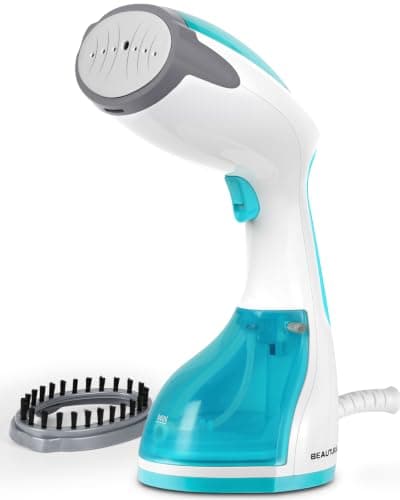
The Beautural 1200W leads because dresses want control more than power, and this is the best-balanced machine at that setting: 1,200 W with genuine low-end control, 260 ml so a maxi dress does not run you dry, and a published 2-pound weight. Beautural's listing states a manufacturer warranty without naming a term, which we treat as not published.
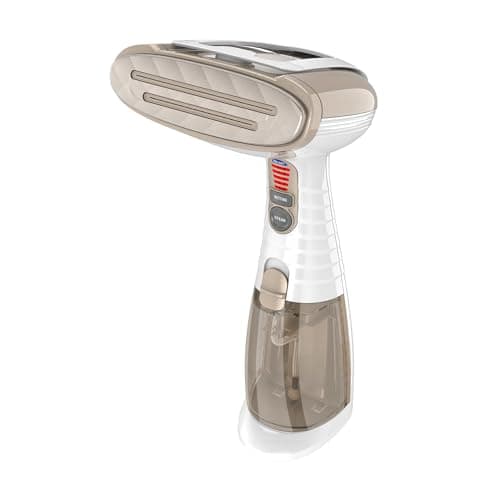
The Conair Turbo ExtremeSteam is the pick if your dresses include cotton shirt dresses or anything you want genuinely crisp. At 1,875 W it is the most power available on a US circuit, with three attachments and a published two-year warranty — the longest of any handheld here. It is 2.27 pounds, the heaviest handheld we cover, which tells after a full-length dress, and its 216 ml tank is small for the power.
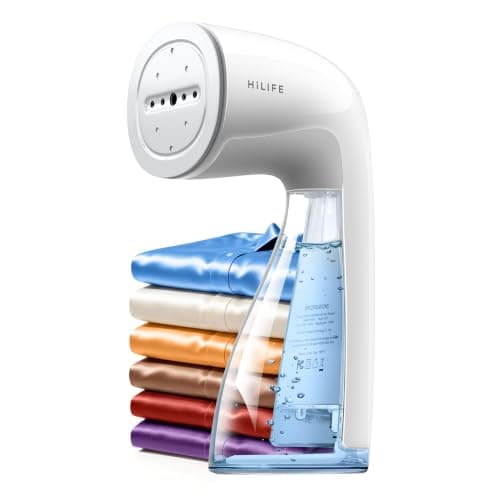
The HiLIFE HL9 carries 300 ml, the largest handheld tank on this site, which is the most useful specification if you are steaming several dresses in a sitting. It is also the cheapest thing on this page by a wide margin. HiLIFE publishes no weight at all, which costs it a metric in our scoring and matters here, because you hold it up for the length of a dress.
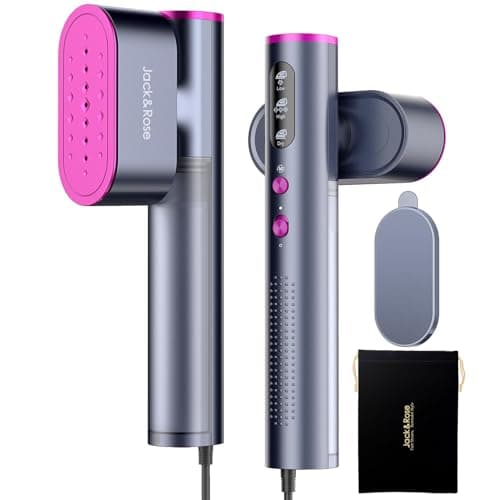
The Jack & Rose K1 is for anyone whose dress problem happens away from home — a wedding, a conference, a hotel room. Genuine 100-240 V dual voltage, a published 15-second heat-up and 1.6 pounds. The 150 ml tank is one garment per fill, so it is an event machine rather than a wardrobe one, and it publishes no warranty term.
The picks
Ranked on published specifications. Tap a row for the full write-up; the price button goes to Amazon.
#
Product
Best for
Spec score
Price
1
Beautural 1200W Handheld Steamer260 ml on a 1,200W handheld — the most run time per fill here, bought with output.
Tank capacity decides whether steaming is pleasant or annoying, and this carries 260 ml against the 190 to 216 ml the 1,875W units manage. More minutes per fill, fewer trips to the sink.
1,200 watts is a real step down from 1,875. On linen and heavy cotton you will feel it — the steam is wetter and you will make more passes. On the synthetics and knits that make up most wardrobes the difference is small.
Two pounds and 30 seconds to heat are both mid-table. Nothing here is remarkable except the tank, and the tank is the point.
Good
260 ml — the largest handheld tank in this set
30-second published heat-up, faster than the 1,875W Conair
Auto shut-off published as part of a nine-point safety design
Not good
1,200W struggles where 1,875W does not — linen especially
Filling means carrying the whole unit to the tap
Two pounds in the hand, the same as the far more powerful Conair
Who should not buy it. Skip this if linen or heavy cotton is most of what you own. Below about 1,500 watts you make three passes where a stronger unit makes one.
2. Handheld · The default handheld
Conair Turbo ExtremeSteam GS59
The most-bought handheld in the category, and its published specs explain that rather than contradict it.
1,875 watts is the practical ceiling for a plug-in appliance on a US 15-amp circuit, and this unit sits right at it. Power is what turns water into dry steam fast enough to relax a fiber instead of soaking it, so on a handheld this is the figure that matters most.
The trade is the tank. 7.3 fluid ounces is a shade over 200 ml, which Conair pairs with a stated 20 minutes of run time. Call it two or three shirts before a refill.
40 seconds to heat is ordinary for this power class, not fast. The Rowenta Pure Force publishes a tenth of that at the same wattage.
Good
1,875W is the most power available in a handheld on a US circuit
Three attachments in the box, including a fabric brush for wool and a crease tool
Two-year limited warranty, which is unusual at this price
Not good
The tank is small for the power — high output empties it faster
40-second heat-up is beaten by several cheaper units
Over two pounds in the hand, which tells after a few garments
Who should not buy it. Skip this if you steam a whole rail at a time. At full output the tank runs dry before you get through a week of shirts, and a standing unit with a two-liter tank costs about the same.
3. Handheld · The largest tank on a mid-power handheld
HiLIFE HL9 1100W Steamer
300 ml, 1,100 watts and 30 seconds — the HL7's three weaknesses answered.
HiLIFE does not publish weight for this model, so that figure is excluded from the score rather than estimated.
What the numbers mean
This is what the HL7 should have been: four hundred more watts, sixty more milliliters of tank, and a quarter of the heat-up time.
300 ml is the biggest handheld tank in this set. On a mid-power unit that is the right pairing — lower output empties a tank more slowly, so a big tank becomes real run time rather than a heavier device you refill just as often.
HiLIFE publishes no weight for this model. That is a gap, not something to infer: we have not held one and will not estimate it, so portability goes unscored.
Good
300 ml — the largest handheld tank here
30-second published heat-up, four times faster than the HL7
Leak-proof design published explicitly, which matters on a horizontal pass
Not good
No published weight, so portability cannot be scored
1,100W still sits below what linen wants
120V only
Who should not buy it. Skip this if you plan to travel with it. It is 120V only, and a dual-voltage travel unit costs less than the transformer you would otherwise need.
4. Travel · Travel abroad
Jack & Rose K1 Travel Steamer
True 100-240V, 15 seconds to steam, 1.6 pounds — the travel spec sheet done right.
Dual voltage is the entire question for a travel steamer, and this one publishes 100-240V rather than the 120V-only that most compact units quietly ship with. In a European socket it works; a 120V unit on 230V is a fire.
Fifteen seconds is the joint-fastest published heat-up on this site. In a hotel room, before a dinner you are already late for, that is the number that matters.
150 ml is a hotel-room tank, not a wardrobe tank. Judge it as two garments per fill.
Good
Genuine 100-240V dual voltage, published on the listing
15-second published heat-up, joint-fastest here
Steamer and press plate in one 1.6 pound body
Not good
150 ml means refilling for anything beyond two garments
1,000W is modest — it will not fight linen
You still need the physical plug adapter for the country
Who should not buy it. Skip this if it will be your only steamer at home. It is built for a suitcase, and the tank says so.
Questions people actually ask
+What is the best steamer for dresses?
A handheld with good low-end control rather than maximum power — 1,000 to 1,200 watts is plenty, because the risk on a dress is too much moisture rather than too little. The Beautural 1200W balances control and tank best; the HiLIFE HL9 carries more water if you steam several dresses at once.
+How do you steam a dress?
Hang it on a broad hanger clear of the wall, let the steamer reach full temperature, then work top to bottom holding the hem lightly taut with your free hand. Do any lining separately and inside out, and leave the dress hanging at least twenty minutes before wearing it.
+Can you steam a pleated dress?
Carefully, and only along the line of the pleats with the garment hanging. Never steam across a pleated panel or press the head into the folds. A steamer cannot create a pleat, and on natural fibers enough steam will relax factory pleats out permanently.
+Can you steam a silk dress?
Yes, on the lowest setting from six to eight inches. The risk is water spotting rather than heat, so let the head come fully up to temperature before it goes near the fabric — a cold head spits droplets, and a droplet on silk dries as a visible ring.
+How long should you leave a dress after steaming?
At least twenty minutes on the hanger, and longer for anything heavy or lined. The fabric has taken on moisture, and wearing a damp dress is how it stretches at the shoulders and seat.